Annual Employment Numbers Recovered to Pre-COVID-19 Levels Last Year
However, Number of 'Underemployed' with Short Working Hours Surpasses 1.07 Million
42.7% Increase Compared to 2019... Concerns Over Deterioration in 'Employment Quality'
New Term 'Chwijun-junsaeng' Emerges for Job Seekers Moving Between Short-Term Part-Time Jobs
Experts Warn "If Income and Employment Stability Worsen, Job Quality Declines"
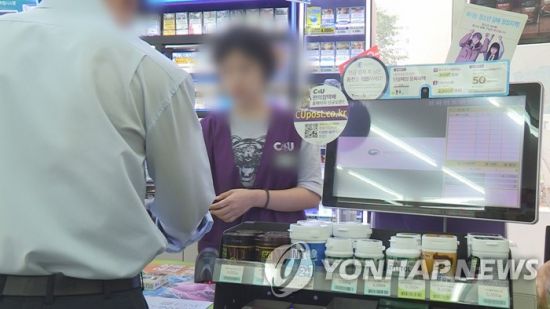 The number of 'underemployed' workers working less than 36 hours per week on average exceeded 1.07 million last year. The photo shows a convenience store part-time worker. This is unrelated to any specific expression in the article. / Photo by Yonhap News
[Asia Economy Reporter Lim Juhyung] There are concerns that the domestic job market has yet to fully recover from the economic slowdown caused by the COVID-19 pandemic. Although statistics classify these individuals as employed, the number of 'underemployed workers'?those working very short hours but willing to work additional hours?has surpassed one million. This means that while the quantity of jobs has increased, the quality has not improved to pre-COVID-19 levels. Experts point out that job quality is deteriorating particularly among low-income working-class groups and advise that systematic government support is necessary.
According to data released on the 18th by the National Statistical Office's National Statistics Portal, the annual number of employed persons last year was 27,273,000, an increase of 369,000 (1.4%) compared to the previous year. In 2020, when COVID-19 infections began in earnest, the number of employed persons decreased by 219,000 compared to the previous year. In other words, the number of employed persons has recovered to pre-COVID-19 levels.
However, the quality of employment remains poor. Last year, the number of 'time-related underemployed persons' totaled 1.07 million. These workers work less than 36 hours per week and are willing to work additional hours, thus classified as 'underemployed.'
The number of these workers increased by a staggering 42.7% compared to 2019, before the COVID-19 crisis, and their share of total employed persons rose from 2.8% in the same year to 3.9% last year, an increase of 1.1 percentage points.
The largest increases in underemployed persons were seen in face-to-face service sectors sensitive to social distancing and other quarantine guidelines, such as wholesale and retail trade, educational services, and accommodation and food services. Comparing the increase between 2019 and 2021, accommodation and food services saw an increase of 41,000, followed by wholesale and retail trade with 38,000, and educational services with 36,000.
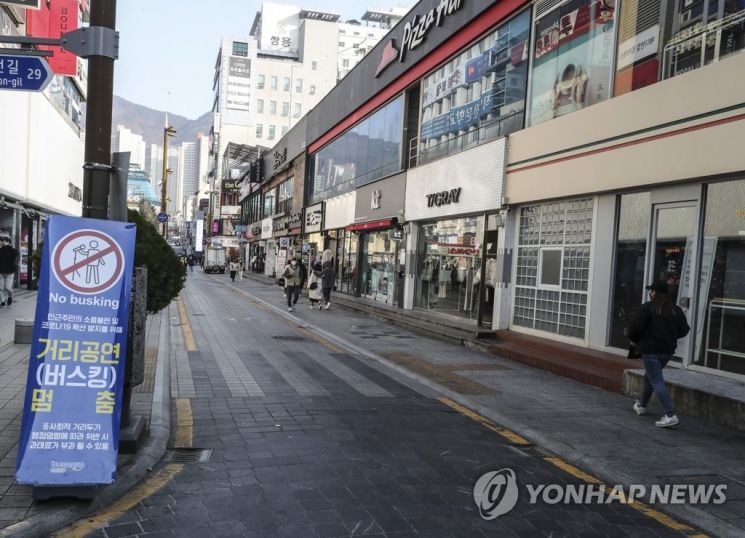 The Youth Street in Busan was empty on December 24, 2020, when the spread of COVID-19 did not stop / Photo by Yonhap News
Performances and concerts, which were scaled down or canceled altogether due to fears of mass infections, also impacted jobs. The number of underemployed persons in arts, sports, and leisure-related services increased by 33,000.
Some citizens lamented that due to the sudden loss of income caused by the COVID-19 pandemic, they had no choice but to rely on 'ultra-short-term part-time jobs.'
A 31-year-old freelancer, A, living in the metropolitan area, said, "I work in stage-related jobs, but when social distancing was strict, there was no work at all. It was tough to survive on just the government’s support funds for artists." He added, "I wasn’t prepared or qualified enough to immediately get a regular office job. In the end, the only option was to work as a delivery rider."
He continued, "Because I worked irregularly, I don’t even know how many hours I worked. One thing is certain: it was really hard and even made me feel a sense of self-loathing during that period."
Given this situation, a new term 'chwijun-junsaeng' has recently emerged. 'Chwijun-junsaeng' is a shortened form of 'job preparation preparer,' referring to those who supplement their living expenses with short-term part-time jobs while actively seeking employment.
B, 26, currently job hunting, said, "I found a translation assistant job through a short-term part-time job platform. I work 3 to 4 hours a day, using the money earned to cover meals and transportation, and spend the rest of the time preparing for employment." He added, "The term 'chwijun-junsaeng' perfectly describes my current situation."
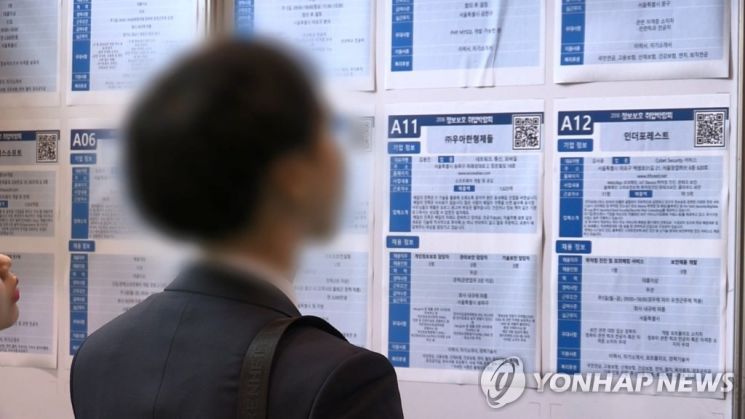
Another 'chwijun-junsaeng,' C, 27, said, "I thought having fewer working hours would mean more leisure time, but when you include commuting, it’s never short. My stamina is drained, and I don’t earn enough money." He lamented, "Sometimes I worry I’ll just keep moving from one part-time job to another for the rest of my life, and that anxiety keeps me up at night."
A survey conducted early last year by the job matching platform 'Saramin' of 351 job seekers found that 46.2% of respondents identified themselves as 'chwijun-junsaeng.'
These 'chwijun-junsaeng' rely on ultra-short-term part-time jobs, working an average of 19 hours per week, with a monthly average income of 860,000 won. Additionally, 84% of them reported feeling burdened by simultaneously preparing for employment and engaging in economic activities.
Despite this, the majority (63.6%) cited 'insufficient living expenses such as food, clothing, and shelter' as the reason they cannot give up economic activities.
Experts warn that a rapid increase in underemployment risks deteriorating the overall quality of employment.
Professor Kim Taegi of Dankook University’s Department of Economics explained, "Short-term part-time jobs and mini-jobs can make the labor market more flexible and benefit workers, but that only applies when income is guaranteed. Most workers falling into underemployment now suffer significant income losses and face worsening job security, so it is accurate to say job quality is deteriorating."
He added, "To solve the underemployment problem, economic revitalization is important, but the government must also activate the labor market with appropriate policies. Rather than simply flooding the market with cash support policies, long-term and systematic support measures for workers are needed."
© The Asia Business Daily(www.asiae.co.kr). All rights reserved.