Korea Real Estate Board January Third Week Apartment Price Trends
National Rise Pauses Amid Interest Rate Hike and Weakened Buying Demand
Incheon Jeonse Prices Turn Down After 2 Years and 5 Months
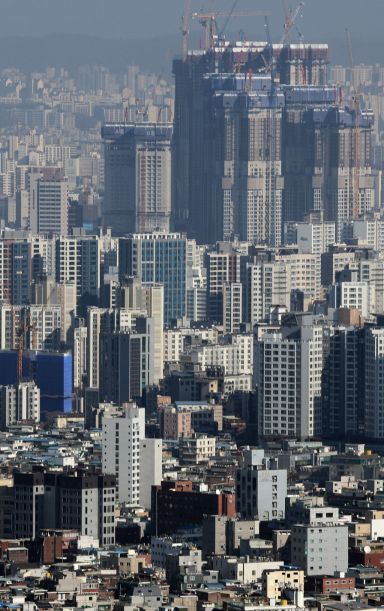
The apartment price increase rate in Seoul has dropped to 0.01% due to rising loan interest rates and the widespread perception that housing prices have peaked. This marks the sixth consecutive week of slowdown. In Nowon-gu, Seongbuk-gu, and Eunpyeong-gu, the decline in apartment prices widened this week, and in the Gangnam area, overall buyer sentiment weakened, causing the upward trend to stall. Meanwhile, jeonse prices are also stabilizing, with Incheon experiencing a decline this week for the first time in about 2 years and 5 months.
According to the weekly apartment price trend report for the third week of January released by the Korea Real Estate Board on the 20th, as of the 17th, apartment prices in Seoul rose by 0.01%, narrowing from the previous week's 0.02%. The Real Estate Board explained, "In Seoul, various downward pressures such as additional interest rate hikes, rising loan interest rates at commercial banks, and falling jeonse prices have continued, leading to a slowdown in the rate of increase for six consecutive weeks."
In Seoul, Seongbuk-gu (-0.02%), Nowon-gu (-0.02%), and Eunpyeong-gu (-0.02%) saw a larger decline this week. Yongsan-gu (0.03%), which had shown a high rate of increase, also weakened as transaction volumes decreased. In the Gangnam area, including Seocho-gu (0.03%), Gangnam-gu (0.02%), and Songpa-gu (0.02%), prices rose mainly in complexes perceived as undervalued, but the rate of increase also narrowed.
In Incheon (0.06%→0.04%) and Gyeonggi-do (0.02%→0.01%), the rate of increase also decreased. In Gyeonggi-do, Anseong-si (0.23%), Icheon-si (0.21%), and Paju-si (0.16%) showed relatively high growth rates, but overall buying demand declined. Among the 45 cities and districts in Gyeonggi-do, Suwon's Jangan-gu and Paldal-gu, Gunpo, Anyang, and Uijeongbu shifted to a decline, while Hanam, Hwaseong, and Siheung maintained a downward trend. Suji-gu in Yongin shifted to a stable trend.
In Sejong, apartment prices fell by 0.22% this week, a smaller decline compared to the previous week's -0.28%. The Real Estate Board explained, "Demand continued in areas with good school districts, slightly reducing the decline, but the downward trend persisted due to the impact of new housing supply."
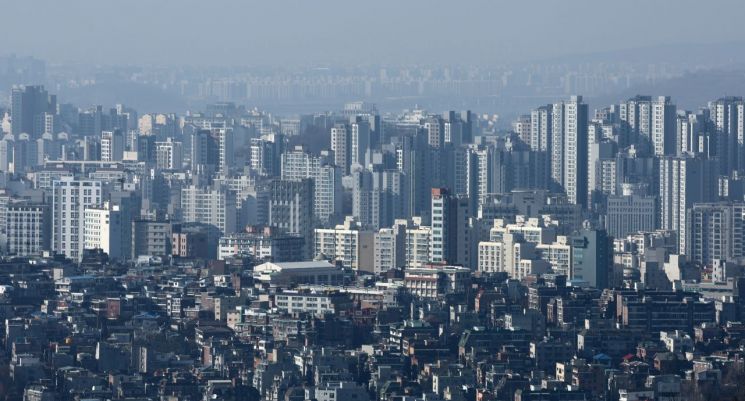
The apartment jeonse market also shows signs of stabilization this week, with the metropolitan area shifting to a stable trend and Incheon turning to a decline for the first time in about 2 years and 5 months.
Seoul's jeonse price increase rate decreased from 0.02% last week to 0.01% this week. Eunpyeong-gu (-0.02%), Seodaemun-gu (-0.01%), and Jung-gu (-0.01%) shifted to a decline as listings accumulated, while Seongbuk-gu (-0.02%), Nowon-gu (-0.04%), and Geumcheon-gu (-0.01%) maintained a downward trend.
South of the Han River, Gangnam-gu (0.03%), Songpa-gu (0.01%), and Seocho-gu (0.01%) continued their upward trend, while Gangdong-gu (0.00%) and Yangcheon-gu (0.00%) shifted to a stable trend. The Real Estate Board explained, "Due to the rise in loan interest rates following the base rate hike, jeonse loan interest rates have approached the 5% range, leading to a nationwide reduction in the rate of jeonse price increases."
In particular, Incheon declined by -0.03% this week, marking the first drop since the third week of August 2019, about 2 years and 5 months ago. Gyeyang-gu (0.06%) and Dong-gu (0.05%) rose, but the decline widened in Yeonsu-gu (-0.22%) and Seo-gu (-0.10%).
Gyeonggi-do, which fell by 0.01% last week, shifted to a stable trend this week. Anyang Dongan-gu (-0.31%) saw a larger decline due to increased new housing supply, and Uijeongbu-si (-0.06%) and Suwon Jangan-gu (-0.03%) shifted to a decline.
© The Asia Business Daily(www.asiae.co.kr). All rights reserved.