Auditor Meeting... Delivery of This Year's Key Anti-Corruption and Integrity Policies and Initiatives
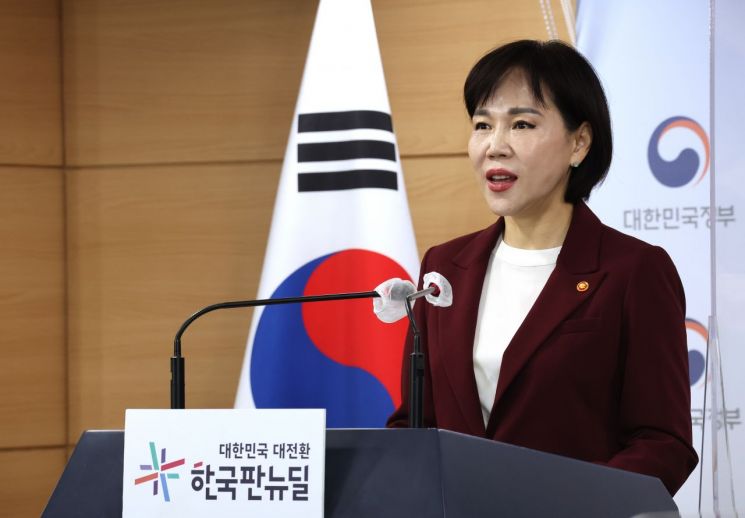 Jeon Hyun-hee, Chairperson of the Anti-Corruption and Civil Rights Commission. (Image source=Yonhap News)
[Sejong=Asia Economy Reporter Moon Chaeseok] The Anti-Corruption and Civil Rights Commission announced on the 20th that it plans to hold the 'Anti-Corruption Integrity Policy and Task Delivery Meeting' four times by the 26th for auditors of public institutions. This is to convey essential content to secure a place within the top 20 in the 2020 global Corruption Perceptions Index (CPI), where Korea ranked 33rd, and to complete anti-corruption and fairness reforms in response to changes such as COVID-19 and the 4th Industrial Revolution.
The meetings will be held via video conference, starting with central administrative agencies on the 20th, metropolitan local governments on the 21st, basic local governments on the 25th, and public-related organizations on the 26th, targeting their auditors.
The Commission stated that the goal is to create tangible results that the public can feel by implementing the 'four major strategies': advancement of anti-corruption and integrity systems, continuous inspection and supplementation of corruption-prone areas, establishment of anti-corruption and integrity awareness and cooperation, and strengthening proactive and preemptive protection for whistleblowers. Various tasks to secure a place within the top 20 of the CPI will be announced and discussed during the meetings.
First, the Commission revealed that it will establish an operational foundation for the smooth implementation of the 'Conflict of Interest Prevention Act,' which will take effect on May 19, across all levels of public institutions, and from this year, it will operate an integrated comprehensive evaluation system combining integrity measurement and anti-corruption policy evaluation, which has been in place since 2002. It plans to strengthen a swift and fair response system for corruption issues of high public interest, such as workplace harassment. Workplace harassment in the public sector will be included under the concept of 'gapjil' (abuse of power), and detailed behavioral standards in the Code of Conduct for Public Officials will be newly established to enhance protection for victims of gapjil. The improvement of public institution regulations, initiated in 2020, will be completed.
Additionally, elected public officials and heads of institutions will be required to attend integrity education in person. The completion records of integrity education at each institution will be disclosed on their websites to enhance the effectiveness of the education. Measures to strengthen protection for public interest whistleblowers will be taken. Even before the Commission’s final protection decision, if the reporting requirements are met, the whistleblower status will be recognized and protective measures provided.
Chairperson Jeon Hyun-hee of the Anti-Corruption and Civil Rights Commission said, "In a situation where the COVID-19 pandemic continues and the public feels considerable fatigue, I hope that auditors at all levels will actively carry out the crucial task of completing anti-corruption and fairness reforms with firm hope," and added, "I urge everyone to do their best in their respective positions to create a clean and fair Republic of Korea."
© The Asia Business Daily(www.asiae.co.kr). All rights reserved.
![From Bar Hostess to Organ Seller to High Society... The Grotesque Con of a "Human Counterfeit" [Slate]](https://cwcontent.asiae.co.kr/asiaresize/183/2026021902243444107_1771435474.jpg)
















