This Year, Electric Vehicle Subsidy Allocation Expanded to a Total of 207,500 Units
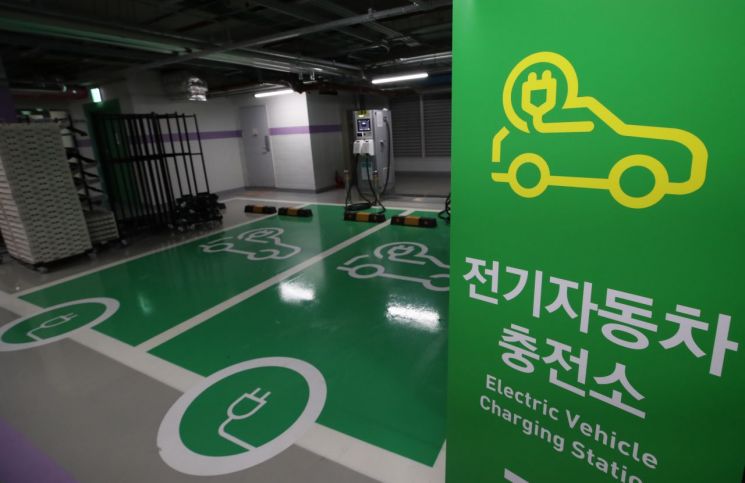
[Sejong=Asia Economy Reporter Kwon Haeyoung] The government will expand the number of electric vehicle subsidies to a total of 207,500 units, more than double compared to last year, to promote the spread of eco-friendly vehicles. The vehicle price limit eligible for subsidies will also be lowered to encourage the proliferation of affordable electric vehicles.
The Ministry of Trade, Industry and Energy, the Ministry of Environment, and the Ministry of Economy and Finance announced on the 19th that they will publicly notify the "2022 Electric Vehicle Subsidy Processing Guidelines Revision Plan" by the 25th.
This revision plan was prepared based on discussions among related ministries and stakeholders, considering the increasing need to accelerate the transition to zero-emission vehicles such as electric and hydrogen cars, and to enhance the effect of improving air quality.
According to the revision plan, the supply volume by vehicle type will be significantly expanded from 101,000 units last year to 207,500 units this year. Specifically, passenger cars will increase to 164,500 units, cargo trucks to 41,000 units, and buses to 2,000 units. However, the maximum subsidy per vehicle type will be reduced: passenger cars can receive up to 7 million KRW, small cargo trucks up to 14 million KRW, and large buses up to 70 million KRW based on national funds.
Various incentives will also be provided to encourage companies to lower electric vehicle prices and accelerate popularization.
To promote the spread of affordable vehicle models, the government will lower the upper limit of vehicle prices eligible for subsidies. ▲The 100% support criterion changes from vehicles priced under 60 million KRW last year to under 55 million KRW this year ▲The 50% support criterion changes from 60 million to 90 million KRW to 55 million to 85 million KRW ▲The non-support price threshold lowers from over 90 million KRW to over 85 million KRW. If the price of affordable vehicles under 55 million KRW is reduced compared to the previous year, an additional subsidy of 30% of the reduction amount, up to a maximum of 500,000 KRW, will be provided.
Furthermore, to accelerate the transition of commercial vehicles with high air quality improvement effects to zero-emission vehicles, the additional subsidy of 2 million KRW for electric taxis will be maintained, and 10% of the total passenger car supply will be separately allocated for taxis. Twenty percent of the cargo truck supply will be allocated to corporate and institutional quotas to support the mass transition of commercial cargo trucks such as delivery vehicles to zero-emission vehicles. An additional subsidy of 5 million KRW will be provided when purchasing electric buses for children's school transport vehicles, which have long idling times and frequent engine idling. An additional subsidy of 500,000 KRW will also be given when purchasing ultra-small passenger cars or cargo trucks for transfer or tourism purposes within specific regions.
In addition, support for high-performance and high-efficiency vehicles will be strengthened, and information necessary for evaluating the residual value of batteries will be provided to promote battery recycling by electric vehicle manufacturers and importers. Procedures will also be improved to be easier for the public to understand, such as unifying qualification requirements by local governments and mandating at least two public announcements.
Detailed information can be found on the Zero-Emission Vehicle Integrated Website.
An official from the Ministry of Trade, Industry and Energy stated, "The government will finalize the revision plan based on collected opinions to accelerate the spread of zero-emission vehicles," adding, "We plan to lead the era of electric vehicle popularization by closely responding to supply conditions and demand changes to achieve the national greenhouse gas reduction target (NDC) in the transportation sector without fail."
© The Asia Business Daily(www.asiae.co.kr). All rights reserved.
![User Who Sold Erroneously Deposited Bitcoins to Repay Debt and Fund Entertainment... What Did the Supreme Court Decide in 2021? [Legal Issue Check]](https://cwcontent.asiae.co.kr/asiaresize/183/2026020910431234020_1770601391.png)