[Asia Economy Reporter Yujin Cho] Last year, private investment in space companies reached an all-time high. This was the result of billionaires such as Elon Musk, CEO of Tesla and the world's richest person, and Jeff Bezos, founder of Amazon, making massive investments in space tourism, satellite internet businesses, and more. With the global power competition intensifying, the United States and China are aggressively increasing their budgets to gain an advantage in space development, making this year’s space race expected to be even fiercer.
According to the U.S. economic media outlet CNBC on the 18th (local time), Space Capital, a space industry venture capital firm headquartered in New York, reported that the amount invested in space infrastructure companies worldwide last year reached $14.5 billion (approximately 17.2912 trillion KRW). This represents an increase of more than 50% compared to the previous year and is the largest annual amount ever recorded.
Space Capital’s survey covered 328 space companies related to infrastructure, distribution, and applications, accounting for 3% of the total global venture capital investment last year.
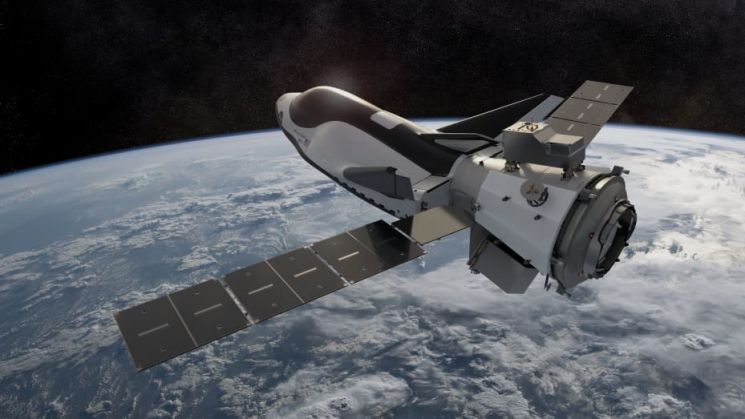
Among these infrastructure-related companies are SpaceX, led by Musk, Blue Origin, founded by Bezos, as well as Planet Labs, Sierra Space, and others that manufacture rockets, satellites, and space stations. SpaceX is conducting private space tourism and the Starlink satellite internet business, while Sierra Space is developing the low Earth orbit space station "Orbital Reef" in collaboration with Blue Origin, the space exploration company founded by Amazon’s Jeff Bezos.
Chad Anderson, managing partner of Space Capital, analyzed, "The record-breaking investment last year is related to the growing space industry, which is creating significant opportunities from an investment perspective."
As the space competition between the U.S. and China heats up, both governments are pouring massive budgets into the sector. China is accelerating its space ambitions with the construction of its independent space station, Tiangong, while the U.S. is also intensifying efforts to build space capabilities.
The U.S. plans to invest $100 billion by 2025 in the Artemis program, which aims to send astronauts back to the Moon. China is also investing an astronomical budget with the goal of building a lunar research base around 2027, eight years earlier than originally planned.
While the space industry and related financial markets are expanding, risks due to external environmental changes also exist. Space Capital forecasts that record-breaking investments like last year’s will be difficult to achieve this year, as rising interest rates are impacting tech stocks and the number of space companies failing to monetize for several years is increasing.
Managing partner Anderson said, "The space industry requires long-term vision and insight for investment. This year will be a time when overvalued companies are reassessed, and excellent companies recognized for their technology and fundamentals will be spotlighted, leading to a market sorting of the wheat from the chaff."
© The Asia Business Daily(www.asiae.co.kr). All rights reserved.