[Seoul District News] Seongbuk-gu Confirms Safety of Jongam Intersection Underpass on Naebu Sunhwan-ro (Jongam-dong 3-1288 Area) Amid Vehicle Congestion; Plans 2021 Opening of Complex Cultural Arts Space with Small Performance Hall, Community Area, and Sports Facilities... Gangseo-gu Launches ‘District Office Website Renewal Event’ from 19th... Yangcheon-gu Selected as Excellent Institution in Anti-Corruption Policy Evaluation... Gangnam-gu Enables PCR Test Results Viewing via Mobile App ‘The Gangnam’ at Operated Screening Clinics.
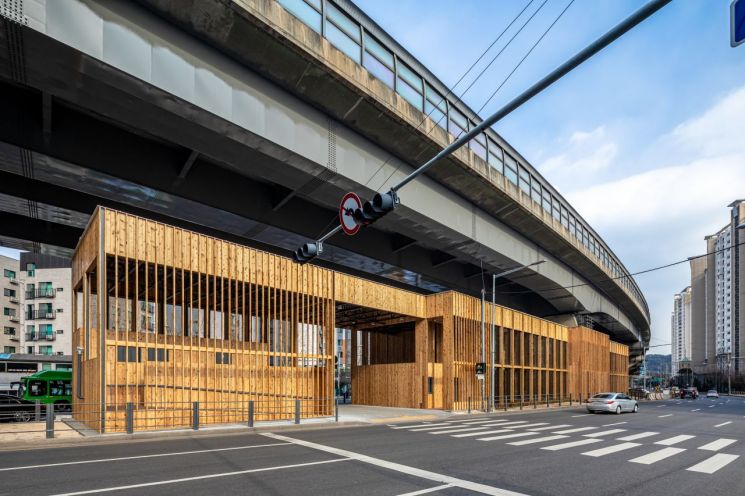
[Asia Economy Reporter Park Jong-il] Seongbuk-gu (Mayor Lee Seung-ro)'s 'Jongam Box Park' won the grand prize in the Small Cultural Space category at the 7th Korea Cultural Space Awards.
The Korea Cultural Space Awards were established in 2015 by the Korea Cultural Space Architecture Society to introduce excellent and valuable cultural space buildings and to discover and award buildings that provide a new vision of cultural spaces.
This award selects domestic cultural space works completed within the last 2 to 3 years, divided into four categories: performance halls, museums, libraries, and small cultural spaces. Jongam Box Park won in the small cultural space category.
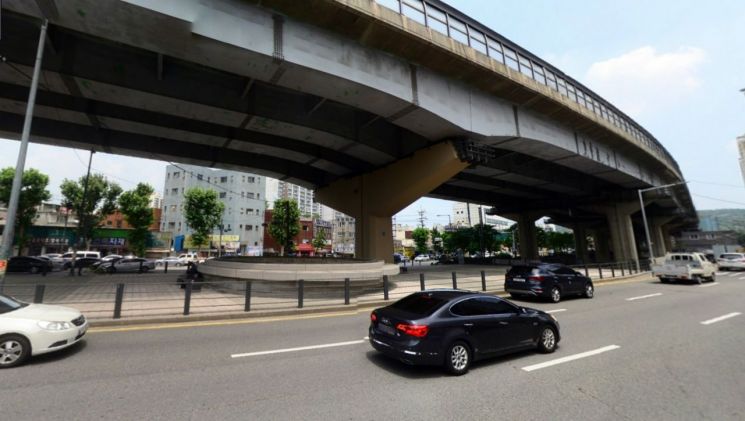
The area under the Jongam Intersection Inner Circular Road bridge (around Jongam-dong 3-1288) was a kind of traffic island where many vehicles crossed, causing noise and congestion. To improve this environment, Seongbuk-gu gathered opinions from local residents and experts, confirmed safety through a detailed safety inspection, and opened the cultural and artistic space Jongam Box Park in 2021 on a site of 1,455㎡ (441 pyeong) with a single floor and a total floor area of 692.5㎡ (210 pyeong).
The previously shaded and barren space under the overpass transformed into Jongam Box Park, consisting of various sports spaces, a small performance hall, community and rest areas for residents. This transformation naturally attracted local residents to gather, interact, and rest, connecting the previously disconnected local living area and enhancing residents' convenience.
A Seongbuk-gu official said, “Jongam Box Park is flexibly operated as a space for residents' sports activities, a festival venue, and a place for rest and healing,” adding, “Since the residents are the main users of the space, we hope for much interest and use.”

Gangdong-gu (Mayor Lee Jeong-hoon) will screen the video ‘Hope Drops, Citizens’ Hope Messages’ containing the wishes of Gangdong-gu residents for 2022 on the open yard media wall of the district office.
The district installed a Christmas tree themed ‘Hope Drops’ in the open yard of Gangdong-gu Office and placed a hope message box in front of the tree, collecting over 2,000 messages containing residents’ hopes over two weeks.
Among the hope messages, 20 messages from Gangdong-gu residents, children, and COVID-19 related workers were selected and made into a video. The video includes warm wishes from Gangdong-gu citizens, such as consolation for small business owners struggling due to COVID-19, hopes to return to daily life, and prayers for happiness and well-being in the new year.
Lee Jeong-hoon, Mayor of Gangdong-gu, said, “I hope the new year’s hope messages filled with the warm hearts of Gangdong-gu residents will provide some comfort to residents exhausted by COVID-19,” and added, “We will do our best to gather residents’ hopes and return to normal life in 2022.”
The ‘Hope Drops, Citizens’ Hope Messages’ video will be screened on the open yard media wall of Gangdong-gu Office until the end of February, and the ‘Hope Drops’ Christmas tree will be displayed until January 24.
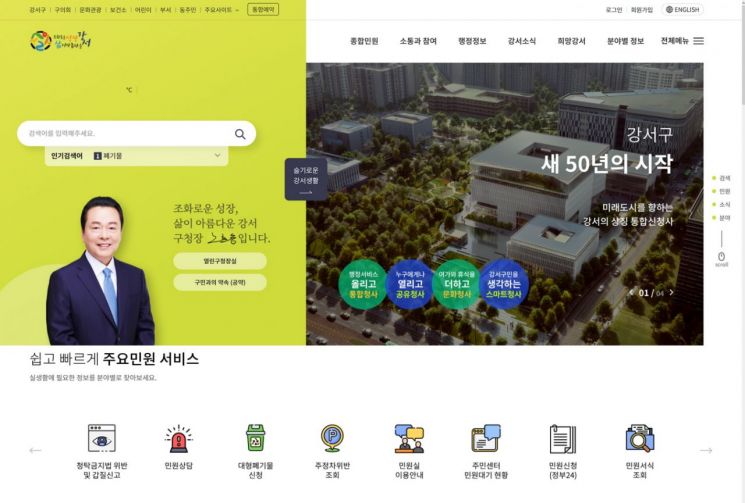
Gangseo-gu, Seoul (Mayor Noh Hyun-song) announced that it will hold a survey event titled ‘Back with a New Look~ Roar’ for three weeks from the 19th to February 9th in conjunction with the full revamp of the district office website.
With the website revamped, the district will conduct a survey targeting users to investigate satisfaction and inconveniences, aiming to improve areas that need enhancement and increase user convenience.
To participate, users can use the newly revamped Gangseo-gu Office website and click the satisfaction survey banner to take part in the survey.
The survey consists of seven questions covering overall satisfaction with the website’s design and menu structure, as well as congratulatory and supportive messages and suggestions for improvement.
Among participants, 100 people will be selected by lottery to receive a mobile bakery voucher worth 5,000 KRW. Winners will be announced on the district office website on February 14.
A district official said, “Through the satisfaction survey, we aim to reflect residents’ opinions and further improve the quality of website services,” adding, “We will continue to do our best to support online district administration services that anyone can conveniently use.”
Meanwhile, last December, the district fully revamped the website by introducing responsive web design and establishing an integrated reservation service to enhance user convenience.
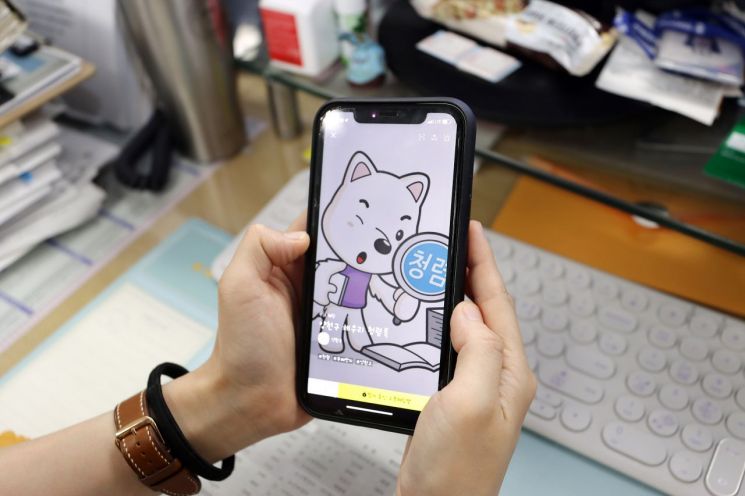
Yangcheon-gu (Mayor Kim Soo-young) announced that it was selected as an excellent institution (Grade 2) in the ‘2021 Public Institution Anti-Corruption Policy Evaluation’ conducted by the Anti-Corruption and Civil Rights Commission (ACRC). Notably, Yangcheon-gu achieved the highest grade among autonomous districts in Seoul in this evaluation.
The anti-corruption policy evaluation is a system implemented annually by the ACRC since 2002 to enhance public sector integrity by evaluating anti-corruption activities voluntarily undertaken by public institutions.
The ACRC evaluated anti-corruption activities based on seven sub-tasks and 19 indicators, including ▲establishment of anti-corruption plans ▲expansion of participation in integrity policies ▲establishment of anti-corruption systems ▲efforts to eliminate corruption risks ▲operation of anti-corruption systems ▲performance of anti-corruption policies ▲efforts to spread anti-corruption policies, assigning five grades (Grades 1-2 excellent, Grade 3 average, Grades 4-5 insufficient).
Yangcheon-gu had been excluded from the anti-corruption policy evaluation since 2016 due to achieving Grade 2 for six consecutive years in the public institution integrity evaluation but was newly included in the 2021 evaluation due to adjustments in the ACRC’s basic plan.
In this evaluation, Yangcheon-gu received perfect scores in two areas: operation of anti-corruption systems and efforts to spread anti-corruption policies, and high scores in two other areas: establishment of anti-corruption plans and performance of anti-corruption policies.
Thus, Yangcheon-gu demonstrated its strength as an excellent integrity institution by achieving Grade 2 in both the comprehensive integrity evaluation conducted among residents and employees and the anti-corruption policy evaluation by the ACRC.
Over the past year, the district actively promoted anti-corruption policies based on key strategies including ▲cultivating awareness of integrity practice, ▲strengthening anti-corruption systems and controls, ▲building a corruption-free integrity ecosystem infrastructure, and ▲spreading a communicative integrity culture.
Efforts included simulated integrity reporting training where participants report hypothetical corruption situations such as bribery and unfair solicitation directly to the reporting center, and operating ‘Haewoori Integrity Talk,’ a mobile anonymous reporting channel for corruption and power abuse, to strengthen capabilities for strict and prompt response to corruption issues.
Kim Soo-young, Mayor of Yangcheon-gu, said, “We will not be complacent with the excellent institution achievement but will continuously promote high-level integrity policy projects to realize ‘Corruption Zero! Integrity City Yangcheon’ that everyone can truly feel.”
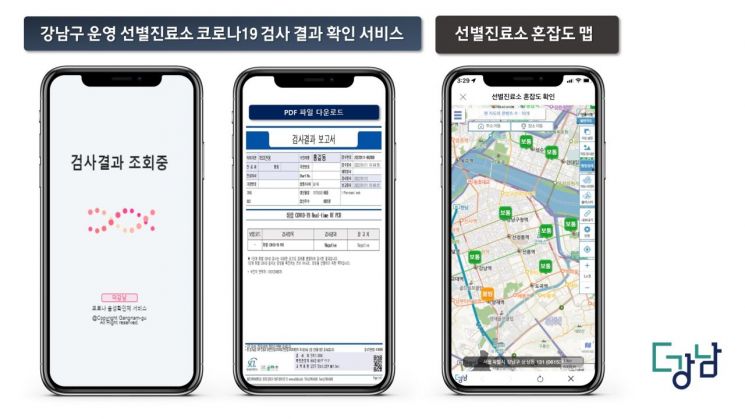
Gangnam-gu (Mayor Jung Soon-gyun) has added a service to check COVID-19 test results on the mobile app ‘The Gangnam.’ From the 17th, people tested at screening clinics operated by Gangnam-gu can check their test results in real time through the app.
Previously, test companies uploaded results to their websites, and district officials checked and notified testees via text messages. Now, people tested at three screening clinics?Gangnam-gu Public Health Center, Samsung Station Exit 6, and Se-gok-dong Bangjuk Park?can directly check their test progress via the app. Tests taken before noon can have results checked by 8 p.m. the same day; tests after noon can be checked after 5 a.m. the next day. Results from the past six months can be viewed, and a ‘Negative Result Certificate’ can be downloaded as a PDF. Notification texts will still be sent as before.
Gangnam-gu collaborated with three companies that developed COVID-19 kits to develop the test result checking service linked to ‘The Gangnam’ app, enabling testees to directly confirm results uploaded by companies, enhancing convenience for residents and work efficiency.
Other COVID-19 related services on ‘The Gangnam’ include ▲real-time congestion status of Seoul city screening clinics ▲non-face-to-face electronic questionnaire completion ▲information on Gangnam-gu screening clinics (operating hours, directions) ▲Gangnam-gu vaccination status ▲COVID-19 living expense applications.
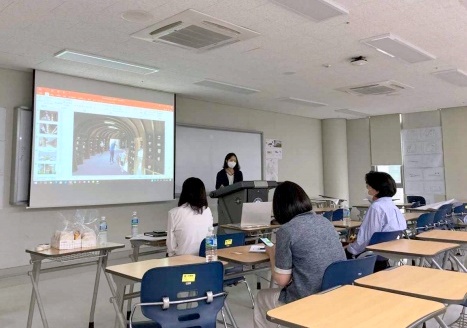
Seodaemun-gu (Mayor Moon Seok-jin) is calling for departments at universities (graduate schools) located in the district to participate in the ‘2022 First Half University-Community Linked Classes.’
Since 2015, the district has supported linked classes to gain research outcomes for regional revitalization through university expertise and fresh perspectives from youth.
Professors who will conduct credit-recognized regular courses on topics such as the local economy, culture, housing, welfare, and community can apply.
Applicants can download the application form and syllabus from the ‘Notices’ section on the Seodaemun-gu Office website and submit them via email by the 27th of this month.
The district suggested example lecture topics such as coexistence of culture and commercial districts, youth job creation, improvement of pedestrian and traffic environments, development of local brands, sharing and utilization of vacant spaces, enhancement of elderly welfare through local communities, and creation of a global city through connections with foreign international students.
The district will conduct document screening based on criteria such as public interest, connection with the region, and student participation, selecting two lectures and providing about 5 million KRW each as subsidies for research activities.
Students taking the courses will participate in local explorations, open classes outside the university, interviews with activists and residents, and performance presentations to seek ways to revitalize the region.
In July, a ‘Town Hall Meeting’ will be held to share the semester’s results and explore policy utilization with professors, further enhancing the course quality.
After the course ends, the results will be documented in reports and presentation materials and submitted to the district.
Mayor Moon Seok-jin said, “I hope the fruits of linked classes, achieved through new perspectives and ideas about the local community, will become materials for Seodaemun-gu’s development and that universities and the community will grow together through this opportunity.”
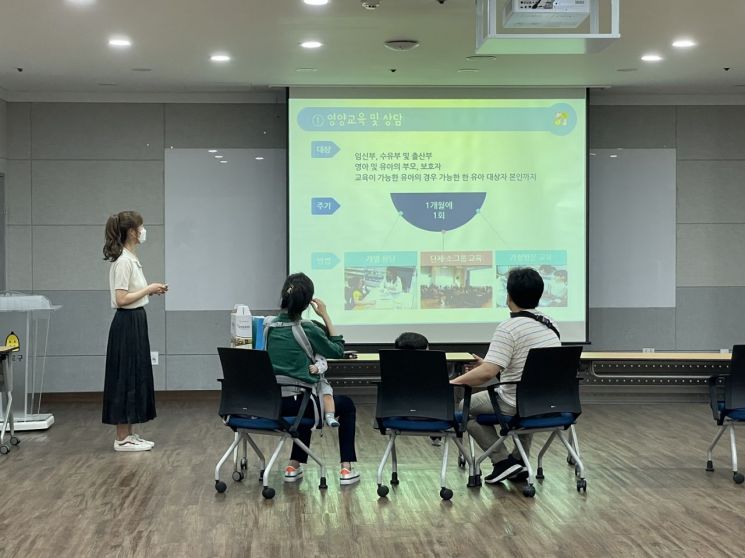
Jongno-gu is promoting the ‘Nutrition Plus Project,’ which carefully manages residents’ health from the fetal stage and guarantees the right to health throughout their lives.
The project focuses on providing customized nutrition management services consisting of food packages and nutrition education to pregnant women, postpartum women, nursing mothers, and infants under 66 months registered in the district.
Eligibility requires residency in the district, household income at or below 80% of the median income, and at least one risk factor such as anemia, underweight, growth retardation, or poor nutritional status. For multicultural families, one parent must be Korean.
Selected participants receive carefully selected food packages at least once a month, with contents varying by recipient, including formula milk, potatoes, eggs, carrots, rice, milk, black beans, seaweed, canned chicken breast, tangerine and orange juice, among others.
Participants also attend online nutrition education sessions to acquire related knowledge. Considering COVID-19, education is conducted non-face-to-face, covering topics such as diet and nutrition management for pregnant women and infants, anemia, underweight, obesity, picky eating, and constipation, along with nutrition counseling.
Applications for Nutrition Plus can be made by checking eligibility on the Jongno-gu Public Health Center website, making phone inquiries, and visiting the Wellness Center (89 Yulgok-ro). Required documents include resident registration, health insurance card, and insurance premium payment confirmation.
An official said, “After six months, participation will be continued or ended based on re-evaluation of nutritional issues,” adding, “The Nutrition Plus Project is a meaningful program that helps improve the health of pregnant women and infants by providing customized food packages and education. We hope more people take interest and participate to improve their own and their children’s diets and maintain healthy lives.”
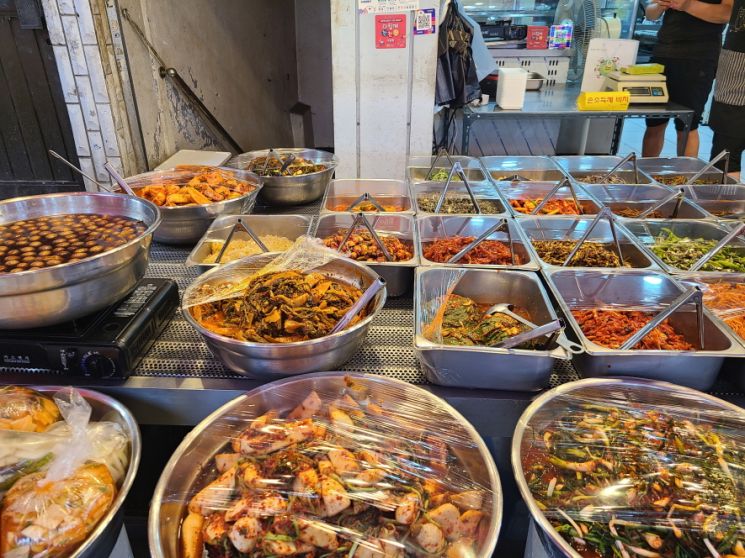
Geumcheon-gu (Mayor Yoo Sung-hoon) will continue the Geumcheon-style side dish support voucher program ‘Together Chan Chan Chan’ this year, following last year.
‘Together Chan Chan Chan’ supports low-income single-person households and small business owners struggling due to the prolonged COVID-19 pandemic. Beneficiaries can purchase side dishes up to 40,000 KRW per month using voucher cards at 25 affiliated local side dish stores.
To celebrate Lunar New Year, Geumcheon-gu provided an additional 20,000 KRW for holiday special meals to 600 single-person households eligible for support. The additional amount can be used until January 31.
Yoo Sung-hoon, Mayor of Geumcheon-gu, said, “The Together Chan Chan Chan program helps low-income single-person households settle confidently and actively in the community through healthy meals,” adding, “We hope the holiday special meal provision helps low-income single-person households enjoy the holidays.”
Workers in apartment cleaning, security, and other tasks in multi-family housing complexes often work in poor conditions but are mostly excluded from support, falling into a blind spot in labor welfare.
Recently, social issues have arisen regarding the poor working conditions of multi-family housing workers, such as unfair treatment by residents and lack of rest areas, increasing interest in protecting their human rights and labor rights.
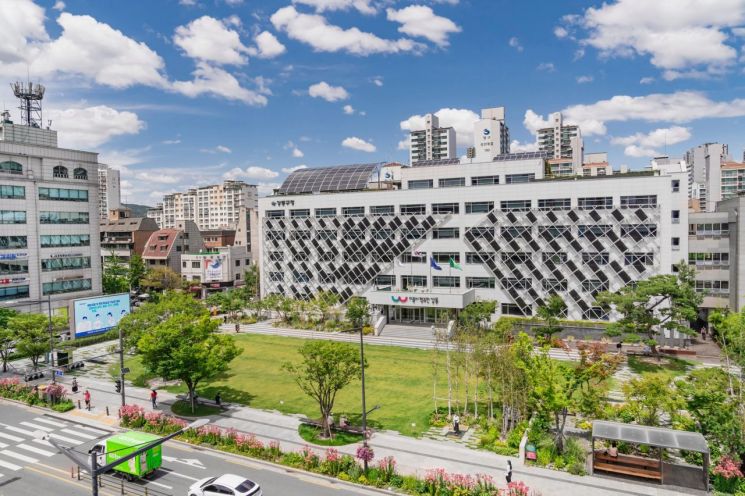
Gangdong-gu (Mayor Lee Jeong-hoon) signed a research service contract with the Korea Labor and Society Institute to understand the poor working conditions and employment status of multi-family housing workers and to prepare practical measures to improve their rights, holding a kickoff meeting on the 7th.
Through the research, the district will listen to workers’ voices on how various social issues related to multi-family housing workers are felt on-site and what changes are expected from legal amendments, deeply exploring necessary measures to protect workers’ rights.
Lee Jeong-hoon, Mayor of Gangdong-gu, said, “This research will re-establish the value of labor and lay the foundation for creating a community where we live together,” adding, “We will prepare support policies for multi-family housing workers in Gangdong-gu to create an environment where vulnerable workers are not marginalized and can live together.”
Meanwhile, last year, the district enacted the ‘Ordinance on Protection and Promotion of Human Rights of Multi-Family Housing Workers,’ conducted surveys on worker status and demand for quarantine supplies, and provided a total of about 116,000 KF94 health masks to approximately 2,600 multi-family housing workers.
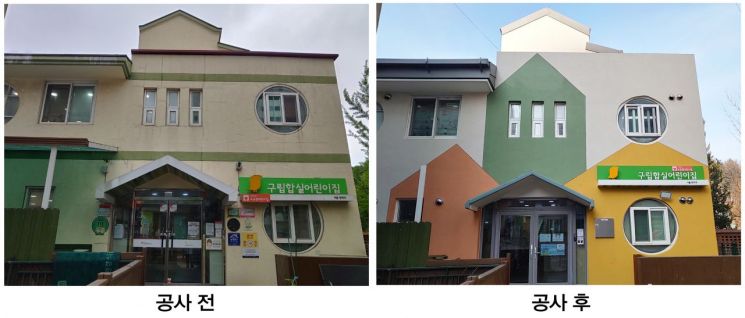
Gwanak-gu (Mayor Park Jun-hee) completed green remodeling construction on two public daycare centers, Gwanak Hapshil Daycare Center and Gwanak Wondang Daycare Center, selected for the Ministry of Land, Infrastructure and Transport’s Public Building Green Remodeling Project.
The ‘Public Building Green Remodeling’ project targets public buildings over 15 years old, such as daycare centers, health centers, and medical facilities, mainly used by children and the elderly, aiming to improve energy performance and efficiency.
Gwanak-gu was selected for the Ministry of Land’s public project in 2020, securing about 390 million KRW in national funds to improve poor indoor environments such as insulation deterioration and condensation in local daycare centers, thereby enhancing public childcare services.
The total construction budget was about 785 million KRW. Construction began in June last year and was completed in December, focusing on improving energy performance and residential environment by installing high-performance windows, insulating interior and exterior walls, and installing high-efficiency heating and cooling systems, as well as improving indoor air quality.
As a result, Gwanak Hapshil Daycare Center reduced building energy demand by 20% and energy consumption by 52.5%, while Gwanak Wondang Daycare Center reduced building energy demand by 12.3% and energy consumption by 30.4%, significantly improving energy performance.
Meanwhile, this year, the district secured 85 million KRW in national funds and 51 million KRW in city funds to promote green remodeling for Gwanak Geumgang Daycare Center and is currently conducting design services, accelerating efforts to improve energy performance and efficiency of aging public buildings.
A district official said, “Through continuous implementation of the green remodeling project for public daycare centers, we will strive to provide a more comfortable environment for infants and toddlers in Gwanak-gu’s public daycare centers.”
© The Asia Business Daily(www.asiae.co.kr). All rights reserved.
![User Who Sold Erroneously Deposited Bitcoins to Repay Debt and Fund Entertainment... What Did the Supreme Court Decide in 2021? [Legal Issue Check]](https://cwcontent.asiae.co.kr/asiaresize/183/2026020910431234020_1770601391.png)