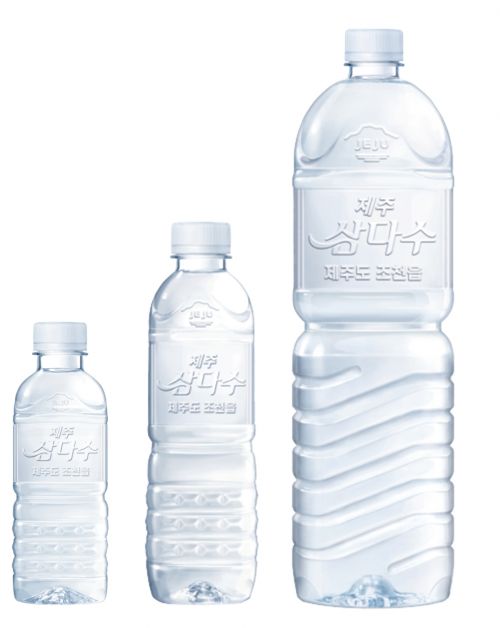
[Asia Economy Reporter Lee Seung-jin] Jeju Samdasoo announced on the 17th that it has obtained Indonesia's halal 'HAS (Halal Assurance System)' certification.
To export drinking water to Indonesia, halal certification is required. Jeju Special Self-Governing Province Development Corporation, which produces and sells Jeju Samdasoo, acquired halal certification in 2017 and recently renewed the related certification.
In particular, Jeju Samdasoo is the first in the domestic drinking water industry to receive the 'HAS' certification, which is awarded after receiving the highest halal grade 'A grade' three consecutive times by perfectly meeting the implementation requirements of 11 standards of halal certification policies and halal assurance systems since the initial certification in 2017.
Halal certification means that the product is permitted under Islamic law and is granted only to food produced under strict rules.
Indonesia's halal certification is issued by the Indonesian Ulema Council (MUI). To obtain halal certification related to drinking water, it must be proven that no animal-derived materials are used in production facilities, filtration filters, and UV lamp quartz tubes that come into direct contact with the water. From raw material intake to product shipment, strict requirements that do not violate Islamic law must be met to obtain certification.
Meanwhile, Jeju Samdasoo holds numerous global certifications in addition to halal certification, including ISO9001 for quality management standards, FSSC22000 for international food safety standards, and NSF from the American National Sanitation Foundation.
Kim Jeong-hak, president of Jeju Development Corporation, emphasized, “Through Jeju Samdasoo’s clean management and quality certification, we will maintain pride as the leader in the drinking water market and strengthen our position as the number one brand, thereby firmly establishing a foothold to enter the global bottled water market.”
© The Asia Business Daily(www.asiae.co.kr). All rights reserved.