Lifelong Education Facilities Excluded from Free Meal Program
Only 'Schools' under the Elementary and Secondary Education Act Receive Free Meals
Seoul Has Implemented Free Meals for All Elementary, Middle, and High Schools Since Last Year
Seoul Metropolitan Office of Education: "Legal Revision Needed, Seoul City and Districts Reluctant"
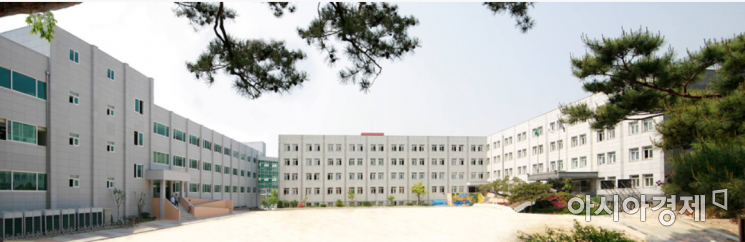
[Asia Economy Reporter Han Jinju] "Students at Hallim Arts High School pay 80,000 won per month for school meals. They feel envious watching friends attending general high schools or specialized high schools eat free meals. The tuition fees paid quarterly and the monthly meal fees are a burden."
Voices have emerged calling for an adjustment to the scope of free school meals, as lifelong education facilities recognized for academic credit, including Hallim Arts High School, are excluded from the free meal program.
On the 14th, a petition titled "Please help make free school meals possible" posted by a Hallim Arts High School student on the Seoul Metropolitan Office of Education's student petition board has currently received 447 endorsements.
The petitioner, who identified themselves as the student council president of Hallim Arts High School, pointed out, "Hallim Arts High School is excluded from the eco-friendly free meal program because it is not classified as an elementary, middle, or high school under the Elementary and Secondary Education Act. Although free high school meals are expanding nationwide, our school's free meal program is not being promoted due to legal grounds. A change in the scope of free meals designated by Seoul City is absolutely necessary."
Lifelong education facilities recognized for academic credit are subject to the Lifelong Education Act, unlike general elementary, middle, and high schools governed by the Elementary and Secondary Education Act, and if they meet certain criteria, academic credits up to high school graduation are recognized. The government provides financial support to these lifelong education facilities comparable to schools under the Elementary and Secondary Education Act.
According to the Ministry of Education, a total of 41 lifelong education facilities recognized for academic credit operate nationwide: 3 elementary schools, 5 middle schools, 22 high schools, and 17 integrated elementary, middle, and high schools. In Seoul, there are 10 such facilities, including Seohyeon Elementary, Automobile High School, Seongji Middle and High School, Sindongjin Middle and Information Industry High School, Ilseong Girls' Middle and High School, Jeongam Beauty High School, Jinheung Middle and High School, Cheongnyang Information High School, Cheongam Middle and High School, and Hallim Arts High School.
Since last year, free school meals have been implemented across all elementary, middle, and high schools in Seoul, but lifelong education facilities recognized for academic credit are not eligible for school meals. The Seoul Metropolitan Office of Education's "Basic Direction for School Meals" states that the application of school meals follows the provisions of Article 4 of the School Meals Act. Article 4 of the School Meals Act defines eligible institutions as kindergartens under the Early Childhood Education Act, schools and alternative schools under the Elementary and Secondary Education Act, and other schools recognized as necessary by the superintendent of education.
The Ministry of Education also pointed out in its "Improvement Plan for Lifelong Education Facilities Recognized for Academic Credit" report released last year that "although free school meals have been implemented, students enrolled in lifelong education facilities recognized for academic credit are excluded, causing feelings of alienation and placing a burden on families with financial difficulties."
The Seoul Metropolitan Office of Education stated that expanding free school meals requires legal amendments and that it is difficult to proceed due to opposition from Seoul City and autonomous districts. Currently, the funding for school meals is divided as 50% by the Seoul Metropolitan Office of Education, 30% by Seoul City, and 20% by autonomous districts, and agreement must be reached first.
A Seoul Metropolitan Office of Education official explained, "Free school meals are provided only to schools subject to the Elementary and Secondary Education Act, so legal amendments are necessary. Many lifelong education facilities, excluding Hallim Arts High School, are attended by adults and students from outside Seoul, such as Gyeonggi Province. When we discussed the 5:3:2 funding burden plan with Seoul City and autonomous districts in 2019, they expressed reluctance, and the discussions have stalled."
© The Asia Business Daily(www.asiae.co.kr). All rights reserved.
![User Who Sold Erroneously Deposited Bitcoins to Repay Debt and Fund Entertainment... What Did the Supreme Court Decide in 2021? [Legal Issue Check]](https://cwcontent.asiae.co.kr/asiaresize/183/2026020910431234020_1770601391.png)