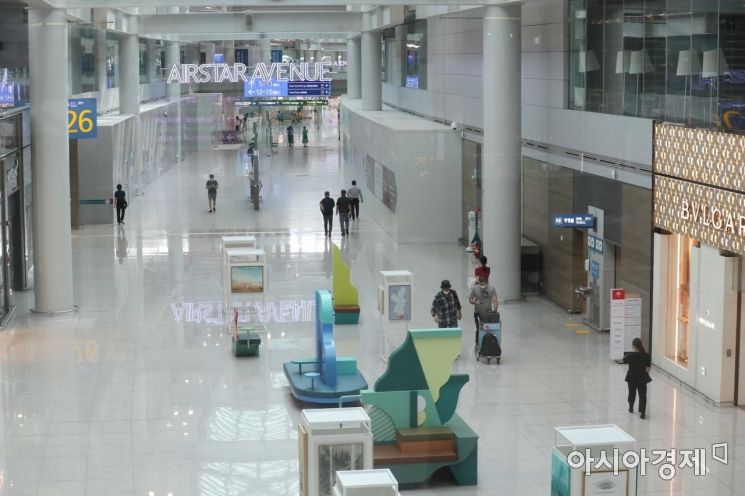
 On the 29th, the duty-free shop at Terminal 1 of Incheon International Airport is quiet due to the impact of COVID-19. Photo by Mun Ho-nam munonam@
[Asia Economy Reporter Kim Yuri] As we enter the third year of COVID-19, the duty-free industry is caught in the "Chinese Baggage Trader (Dai-gong) dilemma." With a dependence on dai-gong at around 90%, competition among companies over customer referral commissions is escalating into a chicken game, and overseas luxury brands are citing this dai-gong dependence as a problem and withdrawing from downtown duty-free shops. This could lead to weakened price negotiation power and decreased brand recognition for duty-free shops, plunging the industry into deep concern.
◇ Dai-gong Dependence Exceeds 90%
According to the duty-free industry on the 14th, the share of dai-gong in domestic duty-free sales, which was around 50% before COVID-19, surged to about 90% after the pandemic. The cause was the halt of air routes due to COVID-19, which stopped visits from general domestic and foreign travelers. According to the Korea Duty Free Association, foreign sales accounted for 95.45% of total domestic duty-free sales (approximately 16.4554 trillion KRW) from January to November last year (about 15.708 trillion KRW). The industry analyzed that over 90% of this was dai-gong sales.
In 2020, domestic duty-free sales were 15.5042 trillion KRW, a 37.63% decrease compared to 24.8586 trillion KRW in 2019, just before the outbreak. Last year is also expected to record around 18 trillion KRW. Referral commissions to attract dai-gong increased nearly 2.5 times. Last year, domestic duty-free shops paid 2.3 trillion KRW in referral commissions to them. This means 12.78% of last year's sales (about 18 trillion KRW) were spent on referral commissions. A duty-free industry official said, "With air routes blocked, we have no choice but to accept a worsening profit structure to maintain business by at least generating dai-gong sales."
◇ Louis Vuitton Packing Up, Domino Effect Feared
Louis Vuitton is proceeding with its withdrawal from Korean downtown duty-free shops as announced last year. On the 1st, Louis Vuitton at Lotte Duty Free Jeju branch ceased operations, and the withdrawal from other downtown duty-free shops is expected to accelerate this year. At the end of last year, Rolex also closed three domestic duty-free stores in Seoul, Jeju, and Incheon Airport.
The industry is concerned that this movement could extend to other brands in the LVMH group, such as Dior and Celine. Luxury brand stores play a role in showcasing the status of duty-free shops, influencing the attraction of other brands and price negotiations. The departure of major luxury brands will negatively affect the global competitiveness of the domestic duty-free market. A duty-free industry official said, "Even in the post-COVID situation, it is practically difficult to reduce the dai-gong share all at once, leaving us in a desperate situation," adding, "The government needs to encourage the duty-free industry to create a healthy sales structure by raising the duty-free allowance for domestic consumers."
© The Asia Business Daily(www.asiae.co.kr). All rights reserved.
![User Who Sold Erroneously Deposited Bitcoins to Repay Debt and Fund Entertainment... What Did the Supreme Court Decide in 2021? [Legal Issue Check]](https://cwcontent.asiae.co.kr/asiaresize/183/2026020910431234020_1770601391.png)















