China Tops 'Most Disliked Country' in Domestic Survey, Surpassing Japan
Conflicts from THAAD Dispute to Kimchi Controversy Persist
Online Communities Use Hate Speech Beyond "Chakjjangjukjjang"
Experts Warn "Anti-China Sentiment May Spread to Chinese Immigrants and Other Migrants"
"Awareness That Racism Is Always Wrong Must Be Established"
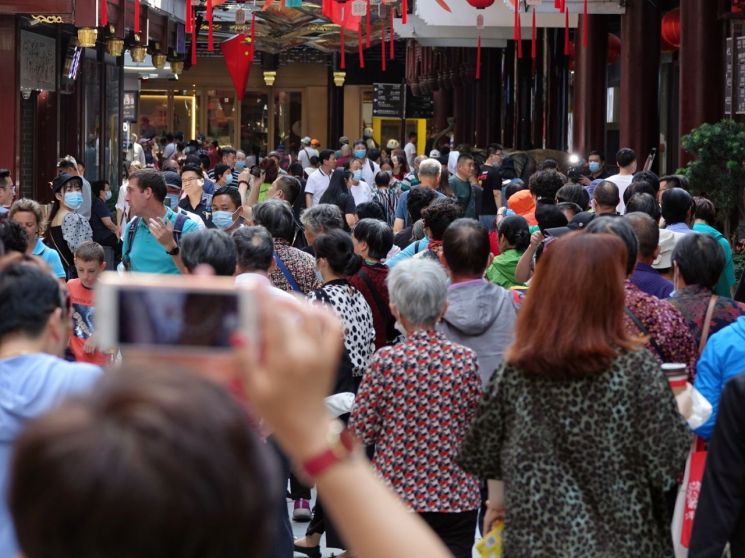
[Asia Economy Reporter Lim Juhyung] Anti-China sentiment among Koreans is growing stronger. This time, a survey revealed that China was selected as the most distrusted country by Koreans. Anti-China sentiment is especially pronounced online. The conflict between Korean and Chinese netizens has intensified over the authenticity of domestic culture, such as the so-called 'Kimchi Gongjeong' (Kimchi authenticity dispute). Extreme hate speech like "Chinese people should die" is also easily found.
◆China surpasses Japan as the 'Most Disliked Country' in Korea
The latest issue of 'Asia Brief' released by the Asia Institute of Seoul National University on the 12th included the '2021 Survey Analysis Report on Koreans' Perceptions of Asia.' The institute conducted a favorability survey on 20 major countries with 1,031 Korean adults last year in collaboration with the public opinion research firm 'Korea Research.'
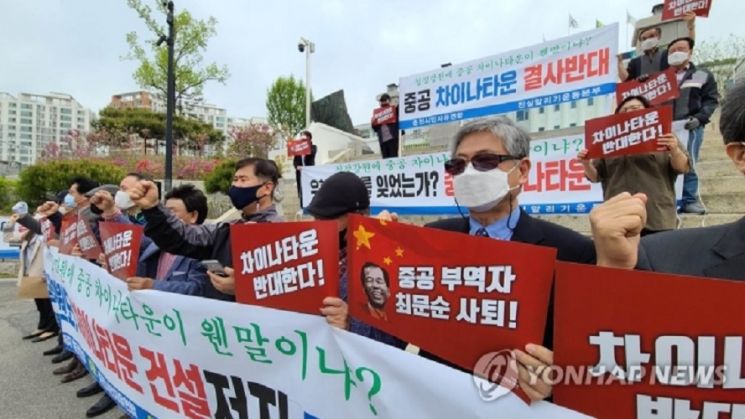 Residents opposing the construction of the Korea-China Cultural Town in Gangwon Province on April 27 last year / Photo by Yonhap News
The survey results showed that the most trusted country by Koreans was the United States (71.6% of total respondents). In contrast, Japan (13.3%) and China (6.8%) ranked 19th and 20th respectively, making them the most distrusted countries among Koreans. Notably, China surpassed Japan, which had even caused a trade dispute in 2018 over historical issues, to be ranked as the country with the lowest trust among Koreans.
Regarding these results, Kim Yongho, editor of Asia Brief, analyzed, "As conflicts with China have continued steadily due to issues like the Northeast Project and the THAAD deployment leading to the 'Hanhanryeong' (Korean Wave ban), public resentment has also grown. All indicators such as trust in China and cooperative relations showed negative results."
◆From 'Hanhanryeong' to 'Kimchi Gongjeong'... Ongoing Korea-China Conflicts
In fact, Korea and China have experienced several diplomatic frictions. The starting point was in July 2016 when Korea and the United States finalized the decision to deploy THAAD (Terminal High Altitude Area Defense).
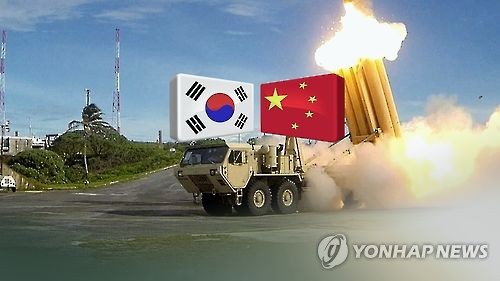 Since the decision to deploy THAAD in South Korea was finalized in 2016, relations between South Korea and China have cooled. / Photo by Yonhap News
Although the Chinese government never officially announced economic retaliation measures, it is known that an implicit ban on Korean Wave culture, called 'Hanhanryeong,' was imposed within China afterward.
Hanhanryeong appears to still partially remain even six years after the THAAD conflict. On the 29th of last month, Foreign Minister Chung Eui-yong stated at a press briefing at the Seoul Ministry of Foreign Affairs building, "President Moon Jae-in agreed to efforts to ease the strained Korea-China relations on a principled basis during his state visit to China in 2017. However, the Korean government is persistently raising issues with the Chinese side as the Korea-China relationship has not recovered as much as expected."
The so-called 'Kimchi Gongjeong,' a claim that Korean traditional culture originated in China, also contributed to worsening Koreans' views of Chinese people. The Kimchi Gongjeong controversy erupted early last year when some Chinese media introduced kimchi as a Chinese dish. The term is a neologism combining 'Dongbuk Gongjeong' (Northeast Project), a theory by some Chinese historians claiming all Northeast Asian cultures originated in China, with kimchi.
Other issues such as fine dust inflow from Chinese industrial zones and the passage of the 'National Security Law' tightening control over the Hong Kong Special Administrative Region, which had preserved democracy under the 'One Country, Two Systems' principle, have also intertwined environmental and political conflicts between Korea and China.
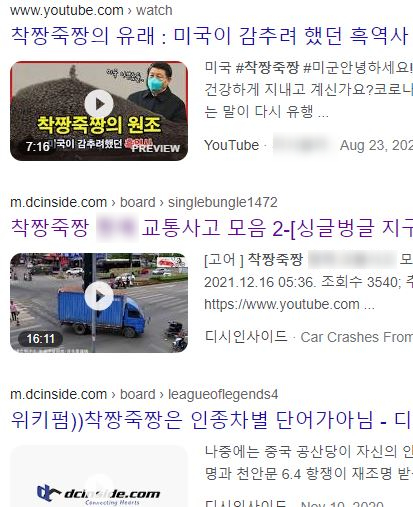 On the 13th, numerous posts using the term 'Chakjjangjukjjang' were found on domestic online communities and YouTube. / Photo by Internet homepage capture
Given this situation, hate speech against Chinese people is easily seen on online communities, YouTube, and social networking services (SNS). Recently, the neologism "Chakjjangjukjjang" became popular among domestic netizens. It is a four-character abbreviation of the phrase "Good Chinese are dead Chinese." In 2020, a professional gamer was severely disciplined after uttering "Chakjjangjukjjang" during a personal internet broadcast.
◆Anti-China Sentiment Also Affects Chinese Residents in Korea
Anti-China sentiment is not only directed at China itself but also spills over to Chinese residents and tourists living in Korea.
One example is the 'Korea-China Cultural Town' project in the Chuncheon and Hongcheon areas of Gangwon Province, which was halted due to strong opposition from some citizens. The project aimed to create a Chinese complex cultural town within a tourist area in Chuncheon, but some netizens criticized it as a "Chinatown."
In March last year, a petition was posted on the Blue House's public petition board urging the suspension of the project, stating, "Why should we create a small China in the Republic of Korea? Citizens are increasingly anxious about losing their own culture due to China's escalating Northeast Project. Stand against China, which tries to plunder our unique culture." This petition received over 610,000 signatures.
When reports emerged in early 2020 that the coronavirus was first detected at the so-called 'wet market' in Wuhan, China, prejudiced reactions also appeared toward markets operated by Chinese residents in Korea.
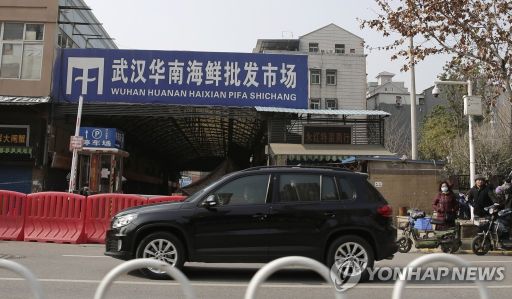 The Huanan Seafood Wholesale Market in Wuhan, China, known as the location where the first COVID-19 patient was identified / Photo by Yonhap News
In response, the National Human Rights Commission of Korea (NHRCK) issued a special statement urging an end to discrimination against specific groups.
Chairperson Choi Young-ae of the NHRCK stated in last year's announcement, "Refraining from hate speech against Chinese people and Chinese residents shows that our society is ready to respond to hate issues beyond silence. We must overcome this period together with humanity and solidarity, not discrimination and exclusion against specific groups."
Experts advised that a shift in public awareness is necessary to prevent racial discrimination.
Kim Jihak, director of the Korea Diversity Research Institute, said, "Currently, there are no specific systems or laws in Korea to protect minorities from racial discrimination. As a result, minorities exposed to hate, such as Chinese residents, are powerless. To prevent anti-China sentiment from escalating into violent racial discrimination, the social consensus that 'racial discrimination is wrong under any circumstances' must be established."
He added, "Various education programs are already being conducted to help immigrants and refugees adapt to Korea, but in addition to immigrant-targeted education, anti-racial discrimination education for the general public is also necessary. We should not try to make people from other cultures into Koreans but rather create a society where Korea can coexist with diverse cultures."
© The Asia Business Daily(www.asiae.co.kr). All rights reserved.
![User Who Sold Erroneously Deposited Bitcoins to Repay Debt and Fund Entertainment... What Did the Supreme Court Decide in 2021? [Legal Issue Check]](https://cwcontent.asiae.co.kr/asiaresize/183/2026020910431234020_1770601391.png)

















