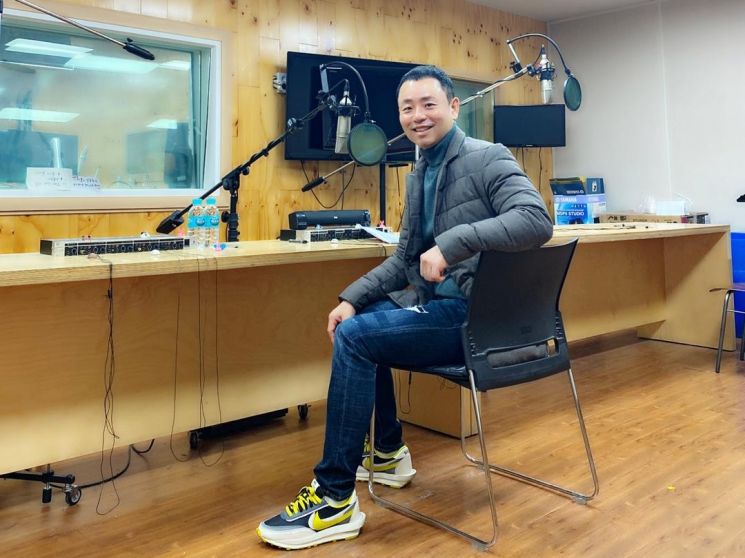
Seong-woo (聲優). It literally means ‘someone with an excellent voice’ and refers to ‘an actor who performs using their voice.’ During the era when foreign films were dubbed into Korean and broadcast on terrestrial TV, seong-woo was a familiar guest in living rooms. During the ‘Saturday Classic Movies’ time slot, foreign actors speaking dubbed Korean dominated the screen. However, as dubbed foreign films on terrestrial TV became rare, a gap grew between seong-woo and the public, but recently that gap has been narrowing again. This is due to the rising attention on audiobooks.
According to ‘Willa,’ which introduced the country’s first 100% fully narrated audiobooks by professional seong-woo, the cumulative number of app downloads has reached 2.7 million. This means that at least 2.7 million people have used audiobooks. Going beyond simple TTS (Text to Speech) systems that just read text aloud, the addition of emotionally rich ‘acting’ has gained great popularity. Consequently, seong-woo are also receiving attention, among them is Lee Kyung-jun, a seong-woo who runs the studio ‘Voice119.’
Seong-woo are broadly divided into two categories: those recruited through broadcasting station open competitions and those who are not. In the past, one had to pass the broadcasting station’s open competition exam and complete a two-year exclusive contract before joining the Seong-woo Association, which was necessary to work as a freelancer. But now, it is no longer necessary to go through broadcasting stations. The paths have become wider and more diverse. This seong-woo is also from the non-open competition background, but that does not mean a lack of skill. He has participated in more than 25 Willa audiobook projects so far, and works like Jeong Hye-won’s ‘Day of Abduction’ and Choi Hyuk-gon’s ‘Retired Detective Dong Cheol-soo’s Glory’ have received great responses.
Nevertheless, there are still restrictions. According to the internal regulations of the Seong-woo Association, collaboration on-site between association-affiliated seong-woo and non-association seong-woo is not allowed. According to this seong-woo, “Although things have improved a lot, such cartels still exist.” In some cases, elderly seong-woo react with “Who do you think you are?” when non-association seong-woo attempt collaboration. However, as audiobooks gain popularity and the market expands, the space for non-association seong-woo has clearly widened.
In fact, job stability for seong-woo is not very high. At one time, it was considered a ‘lifetime profession’ and ranked first in job preference, but its longevity is limited. Currently, only a few broadcasting stations such as KBS, EBS, Tooniverse, Daewon Broadcasting, and Daekyo conduct open recruitment, producing about 12 seong-woo annually, and with non-open competition seong-woo included, the supply has greatly increased. Regarding this oversupply situation, this seong-woo says, “It’s a tough market unless you create work yourself,” and adds, “Due to demand for new voices, the career span of seong-woo is not very long. It’s hard to do without a sense of mission.”
Especially in audiobook production, “it is still necessary for producers and seong-woo to work together to shape the market environment.” Since the market is just forming, the treatment of seong-woo in the industry is not very favorable, according to this seong-woo. Movie dubbing can pay up to 1.5 million KRW per hour, and advertisements can pay 500,000 KRW for 5 minutes of recording, but audiobooks fall well below those rates.
Audiobook recording times are also relatively long. For professional seong-woo, “usually 30,000 characters are recorded per hour.” Considering an average book length of 150,000 characters, it takes at least 5 hours. Adding breaks and separate work time, recording one book usually takes 12 hours.
Still, this seong-woo prefers audiobook recording because it is very rewarding. He says, “In video content, there are many constraints to fit existing formats, but audiobooks allow for a great deal of creativity,” and adds, “While recording, there are many times when I form my own unique character, which is very fulfilling.”
The emergence of AI seong-woo is not yet perceived as a threat. No matter how advanced the technology becomes, professional seong-woo’s direct recordings cannot be surpassed in audiobook narration, which requires detailed acting. Especially for children’s content, there are “sound waves” that kids like, which “AI seong-woo find difficult to reproduce.” The cost difference is also not significant. This seong-woo points out, “So far, the cost difference between AI seong-woo recordings and professional seong-woo recordings is minimal. Also, AI reads punctuation marks like commas, so there is the hassle of removing them one by one.”
He emphasized, “When working on Willa audiobooks, I try to perform readings imbued with human emotion to distinguish from TTS.” According to Willa, about 600 seong-woo are working together in this way. Lastly, this seong-woo conveyed a message to readers, saying, “I hope people understand that content made from politically biased or one-sided books does not reflect the creators’ tendencies. The narrator is separate. Recently, I recorded a book by a certain presidential candidate, and the reaction was...” and he trailed off.
© The Asia Business Daily(www.asiae.co.kr). All rights reserved.
![User Who Sold Erroneously Deposited Bitcoins to Repay Debt and Fund Entertainment... What Did the Supreme Court Decide in 2021? [Legal Issue Check]](https://cwcontent.asiae.co.kr/asiaresize/183/2026020910431234020_1770601391.png)