Lee proposes dismantling Ministry of Economy and Finance, budget planning function under Blue House direct control... New Ministry of Climate and Energy established
Yoon establishes new social ministries for children and families... Abolishes Civil Affairs Office to decentralize Blue House power
[Asia Economy Reporter Naju-seok] Major presidential candidates ahead of the election are competing to pledge ‘government organization reform,’ making a significant change in the way the government operates inevitable in some form once the new administration takes office. There are concerns that these organizational reforms are announced more as a ‘competition’ among candidates rather than through meticulous review of whether they will actually achieve the desired effects.
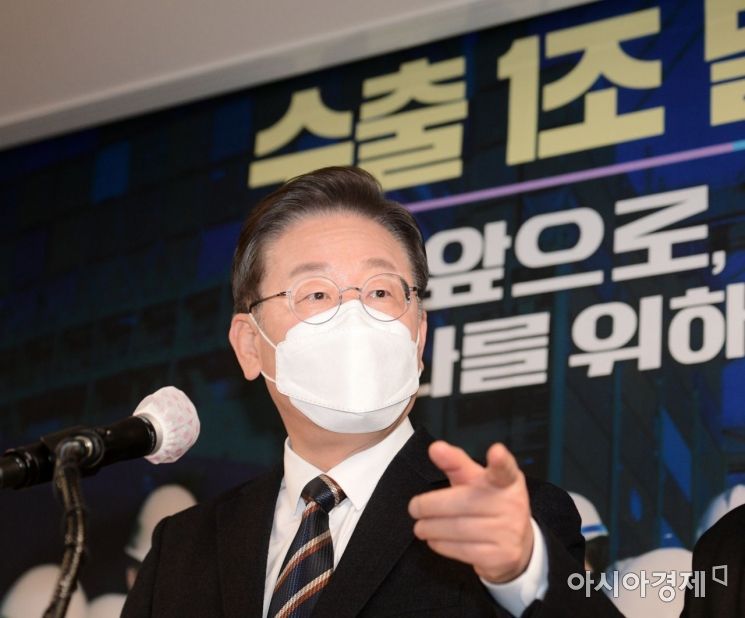 Lee Jae-myung, the Democratic Party presidential candidate, is announcing policy pledges in the industrial sector at the Korea Industrial Technology Promotion Association in Seocho-gu, Seoul, on the 12th. Photo by Yoon Dong-joo doso7@
The core of the government organization reform proposed by Lee Jae-myung, the Democratic Party presidential candidate, is the dismantling of the Ministry of Economy and Finance. He intends to place the budget formulation function, currently held by the Ministry of Economy and Finance, directly under the Blue House. The separation of the Ministry of Economy and Finance’s authority leads to the need for restructuring financial authorities. In fact, Lee’s campaign committee stated on the 11th that "(financial) supervisory functions and consumer protection functions should be separated," suggesting the possibility of reforming the financial supervisory system. Lee also pledged to establish a Ministry of Climate and Energy.
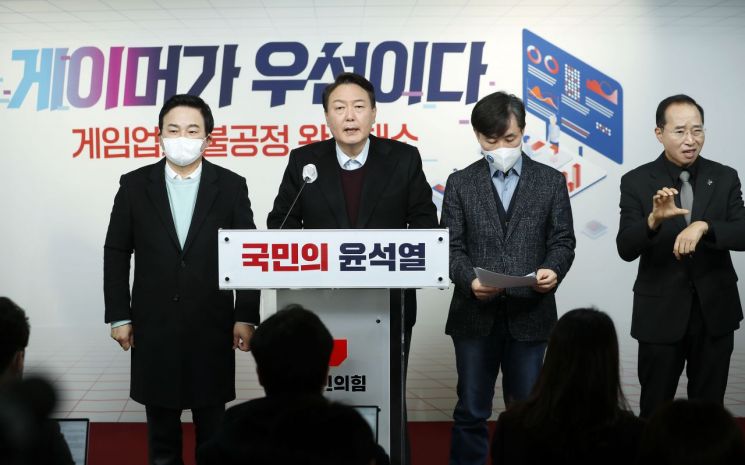
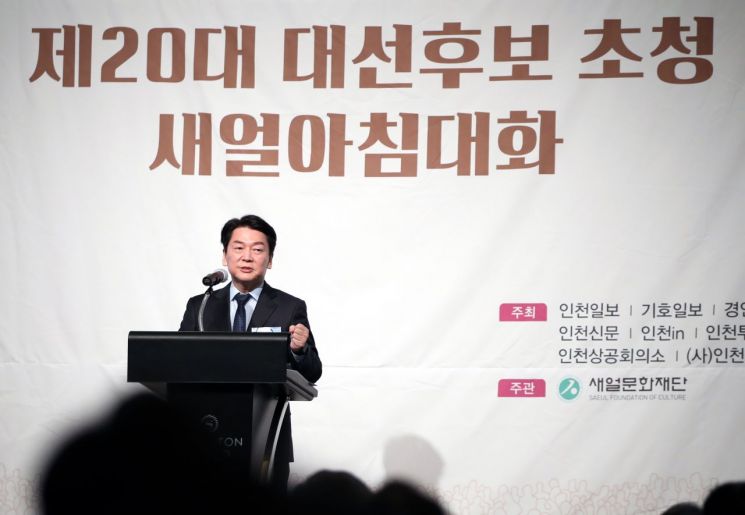
Yoon Seok-youl, the People Power Party presidential candidate, announced plans to abolish the Ministry of Gender Equality and Family and establish a new ministry to comprehensively handle social issues such as children, families, and population. Contrary to Lee, Yoon advocates dispersing Blue House power by abolishing the Office of the Senior Presidential Secretary for Civil Affairs. Abolishing the Corruption Investigation Office for High-ranking Officials is also one of his pledges. All of these are measures that significantly change the current power institutions. Ahn Cheol-soo, the People’s Party presidential candidate who brands himself as a science and technology president, promised to establish a Deputy Prime Minister for Science and Technology responsible for science and technology, future industries, digital information and communications, and the Fourth Industrial Revolution. Lee is also considering introducing a deputy prime minister system covering the science and technology sector, albeit under a slightly different name.
The Moon Jae-in administration, which took office without an inauguration committee, carried out limited reforms such as merging the Ministry of Public Safety and Security with the Ministry of the Interior and Safety and changing the names of some ministries. The most significant change was the elevation of the Small and Medium Business Administration to the Ministry of SMEs and Startups. In contrast, the current candidates running in the presidential election are signaling large-scale structural reforms to emphasize regime change or differentiation from the existing government. When organizations are reorganized, the way the government operates also changes significantly. Lee’s dismantling of the Ministry of Economy and Finance implies an increase in the Blue House’s control over state affairs. Yoon’s reform direction is cabinet-centered.
Large-scale organizational reforms repeated every time a new government takes office can immediately cause confusion in the public service and pose challenges to policy continuity. The Park Geun-hye administration, which took office in 2013, experienced a prolonged ‘shutdown’ period after its inauguration because the opposition-controlled National Assembly did not pass the Government Organization Act. Lee Sang-min, senior research fellow at the Nara Salrim Research Institute, said, "We need to clearly define the content that should be ultimately achieved through organizational reform and discuss reform plans accordingly," adding, "Changing only the form without following the content is meaningless."
© The Asia Business Daily(www.asiae.co.kr). All rights reserved.
![User Who Sold Erroneously Deposited Bitcoins to Repay Debt and Fund Entertainment... What Did the Supreme Court Decide in 2021? [Legal Issue Check]](https://cwcontent.asiae.co.kr/asiaresize/183/2026020910431234020_1770601391.png)