[Seoul District News] Explanation and Measures Urged for Project Change Reasons and Process Favoring Private Operators over Resident Convenience... Formation of ‘GTX-C Dobong Section Surface Construction Opposition Committee’ Composed of Residents, Launching Signature Campaign, Blue House Petition, Board of Audit National Audit Request... Jungnang-gu Appoints 11 District Resident Autonomy Committee Members
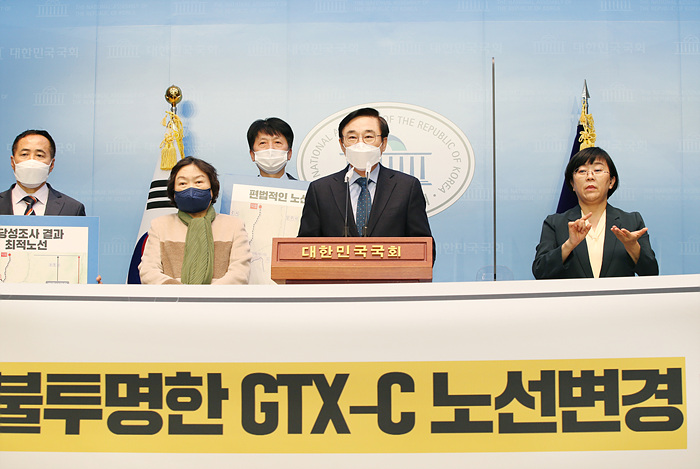 Dobong District Mayor Speaking at the Press Conference Opposing the Decision to Elevate the Dobong Section of the GTX-C Line (December 30, 2021, National Assembly Communication Office)
[Asia Economy Reporter Park Jong-il] On the 9th, the ‘GTX-C Dobong Section Aboveground Construction Opposition Committee,’ composed of resident representatives, was formed, and starting from the 10th, a resident signature campaign led by the committee and a petition to the Blue House are being conducted through the Dobong-gu website and street signatures.
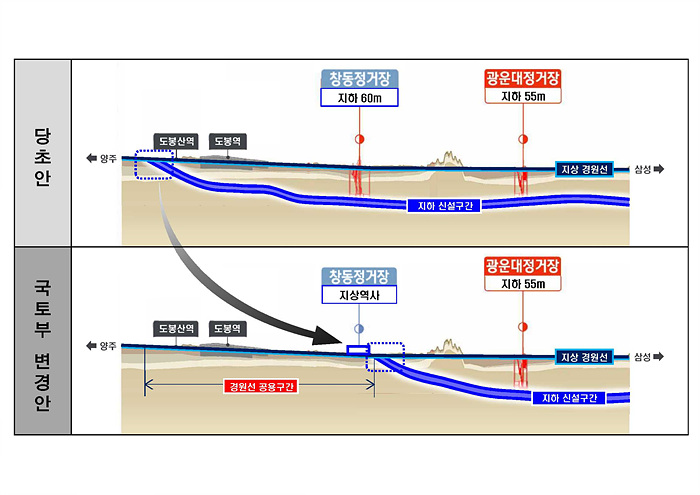
The GTX-C line is a project with secured economic feasibility, having undergone the ‘Preliminary Feasibility Study for the Metropolitan Area Express Railway Line C (December 2018)’ and the ‘Feasibility Study and Basic Plan for the Metropolitan Area Express Railway Line C (October 2020).’ Originally, the entire Dobong-gu section was planned to be constructed underground.
However, during the process of selecting the preferred bidder, the Hyundai Construction Consortium, through the project announcement and negotiating the implementation agreement, the aboveground construction section was expanded and changed (the section from Chang-dong Station to Dobongsan Station in Dobong-gu) to favor the private business operator.
The Ministry of Land, Infrastructure and Transport has not provided any response regarding the background of this project plan change or reasonable explanations despite demands.
In response, in December last year, local members of the National Assembly, the mayor of Dobong-gu, and Dobong-gu council members held a press conference strongly urging the Ministry of Land, Infrastructure and Transport to transparently disclose the route change process and prepare countermeasures.
A representative of the GTX-C Dobong Section Aboveground Construction Opposition Committee stated, “Residents who are still suffering from noise, dust, and vibration caused by the aboveground National Railroad Line 1 are angry about the Ministry of Land’s plan. Among the GTX-A, B, and C lines in Seoul, Dobong-gu is the only section being constructed aboveground, which is a disregard for local residents. We will mobilize all means, including a strong resident signature campaign and a request for an audit by the Board of Audit and Inspection, to block this with strong determination.”
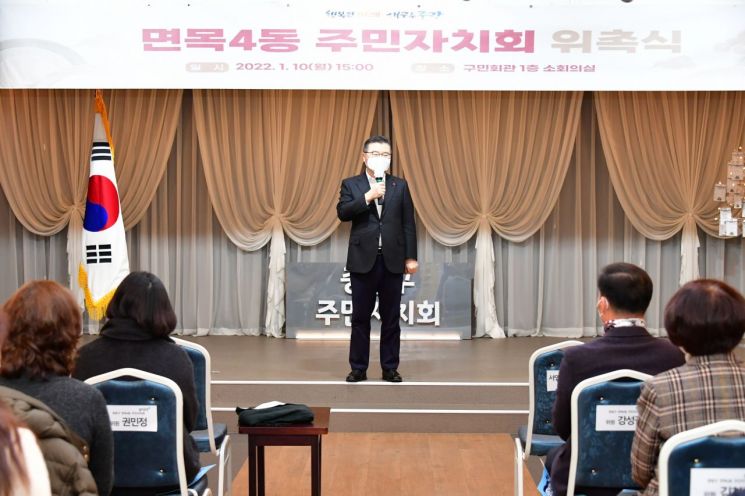
Jungnang-gu (Mayor Ryu Kyung-gi) will hold an appointment ceremony for resident autonomy committee members targeting 11 neighborhoods in the district by the 20th.
This appointment ceremony will be held separately in each neighborhood to prevent the spread of COVID-19 and will include a report on the progress of the resident autonomy committee, awarding of appointment certificates to committee members, and reading of the resident autonomy committee members’ declaration of practice.
The district revised the ordinance supporting resident autonomy committees in 2019 and selected five neighborhoods (Myeonmok 4-dong, Myeonmok 7-dong, Sangbong 1-dong, Muk 1-dong, and Sinnae 1-dong) as pilot neighborhoods in 2020 to promote the pilot project for resident autonomy committees. Last year, six additional neighborhoods (Myeonmok Bon-dong, Myeonmok 2-dong, Myeonmok 3·8-dong, Myeonmok 5-dong, Junghwa 1-dong, and Mangwoo Bon-dong) were selected to expand the resident autonomy committees. The goal is to implement them in all neighborhoods by 2023.
In September last year, a lottery management committee was formed, completing the selection of 525 resident autonomy committee members across 11 neighborhoods, and in November, a resident autonomy school was operated for the appointment of new members. The school provided education on resident participation policies and resident autonomy committee projects.
The newly selected members will serve a two-year term from January 1, 2022, to December 31, 2023. The resident autonomy committee is a resident representative organization with autonomous authority, responsible for establishing autonomous plans, entrusting and consulting administrative affairs, proposing resident participation budgets, and holding authority and roles for practical resident autonomy.
The district plans to strengthen autonomy by expanding the operation of resident autonomy committees, enabling residents to solve local problems on their own, and to lead the realization of grassroots democracy by spreading a resident-led participatory culture.
Ryu Kyung-gi, mayor of Jungnang-gu, said, “Resident autonomy committees are an important foundation for direct democracy where residents discuss neighborhood matters together and expect substantial participation expansion. We will work together to create a happy local community.”
© The Asia Business Daily(www.asiae.co.kr). All rights reserved.
![User Who Sold Erroneously Deposited Bitcoins to Repay Debt and Fund Entertainment... What Did the Supreme Court Decide in 2021? [Legal Issue Check]](https://cwcontent.asiae.co.kr/asiaresize/183/2026020910431234020_1770601391.png)

















