6.7 Million Sleep Disorder Patients in Korea Last Year
Koreans Struggling with Sleep... Average Sleep Duration Below Global Average
Causes Include Stress, Frequent Day-Night Changes, Excessive Caffeine Intake
Risk of Complications Such as Myocardial Infarction and Stroke
Experts Say "Causes and Symptoms of Sleep Disorders Vary by Patient"
"Avoid Immediately Seeking Sleeping Pills... Expert Diagnosis Is Crucial"
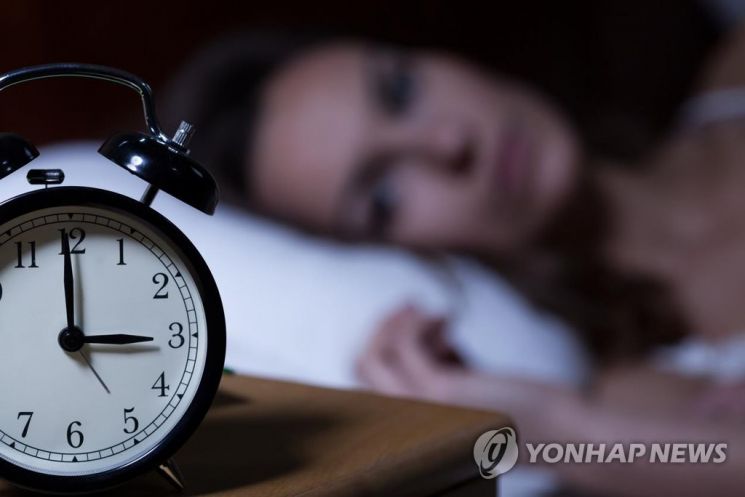 The number of office workers complaining of sleep disorders has been steadily increasing. The photo is unrelated to specific expressions in the article. Photo by Yonhap News
[Asia Economy Reporter Lim Juhyung] "I can't sleep the night before going to work.", "I kept waking up repeatedly and ended up staying up all night again. I'm really going crazy."
The number of office workers suffering from sleep disorders every night is increasing. According to health authorities' data, the number of people receiving treatment for sleep disorders in the near future is expected to exceed 700,000. Workplace stress, frequently changing day and night schedules, and excessive consumption of stimulants such as caffeine disrupt the biological rhythm. Experts say
Mr. Ahn, a worker in his 30s, finds it difficult to sleep every Sunday night. Even if he goes to bed early, he barely manages to fall asleep around 1 to 2 a.m. the next day. Mr. Ahn said, "Because I can't sleep every weekend, I suffer from sleep deprivation every time I go to work the next day," adding, "Starting the first day of the week in a tired state makes it feel even harder."
Another office worker, Mr. Kim (27), is also struggling with insomnia. Mr. Kim complained that he hardly remembers having a deep sleep in recent months. He said, "For some time now, I have become so sensitive when sleeping that I wake up every 1 to 2 hours," adding, "I often end up staying awake all night looking at my smartphone to force myself back to sleep. I'm really going crazy from lack of sleep."
The number of office workers complaining of sleep disorders is steadily increasing. According to the National Health Insurance Service, the number of patients who received hospital treatment for sleep disorders in 2020 was 671,307. This is about 220,000 more than in 2015 (about 450,000), five years earlier, increasing by about 44,000 people annually. If this trend continues, the number of sleep disorder patients in Korea is expected to have already exceeded 700,000.
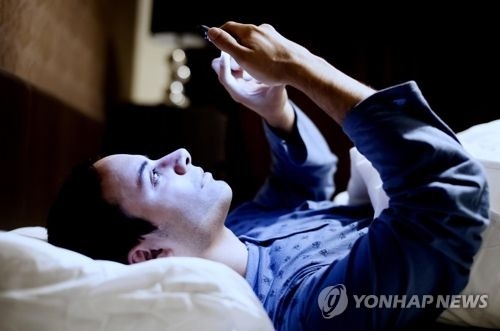 Sleep disorders include various types of symptoms such as insomnia, narcolepsy, and sleep apnea. / Photo by Yonhap News
Types of sleep disorders include ▲insomnia, which is difficulty falling asleep ▲narcolepsy, characterized by sudden sleep attacks ▲and sleep apnea, where breathing stops during sleep. In the past, most patients were those with insomnia or narcolepsy, but recently, the number of patients complaining of sleep apnea has also increased significantly. The number of sleep apnea patients, about 29,000 in 2015, rose to 83,700 in 2019, an increase of more than 50,000 in four years.
The life of Korean office workers who cannot sleep is clearly reflected in statistics. According to a survey conducted last year by the global healthcare company Philips, targeting 13,000 citizens from 13 countries including Korea, the average weekday sleep time for Koreans was 6.7 hours and 7.4 hours on weekends, which is below the global average of 6.9 hours on weekdays and 7.7 hours on weekends.
According to Seoul Asan Medical Center, modern people's sleep disorders are presumed to be caused mainly by increased stress, changes in sleep cycles, and substance abuse.
First, accumulated stress and anxiety from work and daily life activate the brain and excite the body. If this state does not stabilize by nighttime when sleep is needed, it can lead to insomnia symptoms.
Changes in day and night caused by the development of public transportation, nightlife, and night shifts are also major causes of sleep disorders. The human body regulates blood pressure, appetite, hormone secretion, etc., according to a fixed 'circadian rhythm.' However, if waking and sleeping times are irregular, disruption of the biological rhythm occurs, leading to sleep disorders.
Also, excessive intake of stimulants like caffeine to shake off fatigue caused by lack of sleep leads to a vicious cycle that worsens insomnia symptoms.
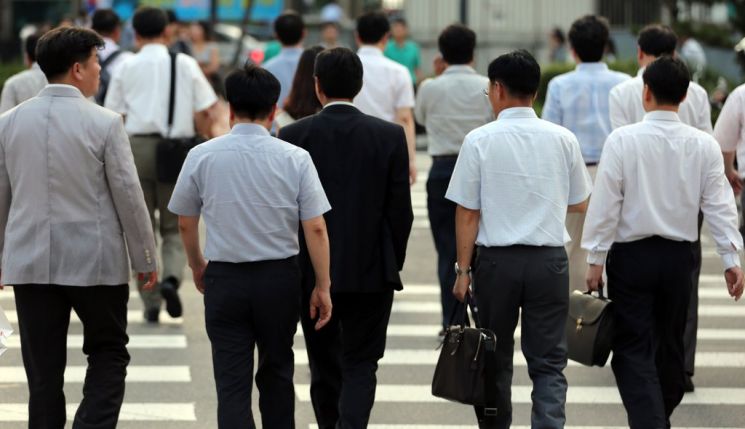 Stress experienced in the workplace, changes between day and night, and the abuse of stimulants have been identified as causes of sleep disorders. / Photo by Yonhap News
Sleep disorders can cause serious complications. The US National Sleep Foundation, a global sleep research organization, recommends 7 to 8 hours of sleep per day for adults aged 26 and older. If sleep time is significantly less than recommended, the risk of various diseases such as obesity, myocardial infarction, stroke, and diabetes greatly increases, and mental illnesses such as depression and anxiety may worsen.
Experts suggest that it is important to accurately identify the severity and causes of one's sleep disorder and receive treatment accordingly.
The Korean Sleep Society explained, "Sleep disorders like insomnia are common phenomena in daily life, with various cases ranging from difficulty falling asleep to waking up early," adding, "There are also temporary symptoms caused by increased stress and chronic insomnia that disrupts sleep over a long period."
They continued, "Identifying the cause of the sleep disorder one is experiencing is the most important. Causes and treatment methods vary depending on symptoms," and advised, "Most patients tend to look for sleeping pills first when they think they have insomnia symptoms, but this is a wrong habit. You should first consult an expert and then receive treatment suitable for yourself."
© The Asia Business Daily(www.asiae.co.kr). All rights reserved.
![User Who Sold Erroneously Deposited Bitcoins to Repay Debt and Fund Entertainment... What Did the Supreme Court Decide in 2021? [Legal Issue Check]](https://cwcontent.asiae.co.kr/asiaresize/183/2026020910431234020_1770601391.png)