[Seoul District News] Installation of 'Hwanggeum Geobugi' Sculpture, Winner of the Itaewon Alley Commercial Area Story Contest in Yongsan-gu... Eunpyeong-gu Mayor Kim Mi-kyung Sends New Year Greetings Online... Songpa-gu Creates 'Childlike Wall Paintings' on Seongnaecheon Oryun Elementary School Fence... Geumcheon-gu Signs Agreement with Daycare Association and Korea Battery Recycling Association to Promote Used Battery and Milk Carton Recycling... Guro-gu Publishes 'Guro Who Loved Poetry,' a Village Story Written by Residents... Seocho-gu Provides 60 Billion KRW Emergency Loans to Small Business Owners... Nowon
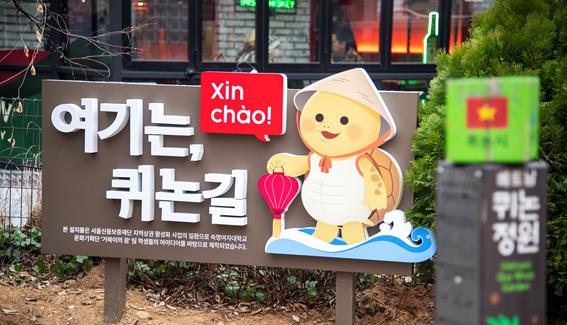
[Asia Economy Reporter Park Jong-il] Yongsan-gu (Mayor Seong Jang-hyun) installed a Golden Turtle sculpture on Itaewon Quinon-gil last December.
This is part of a project to revitalize the Itaewon alley commercial district, which has been struggling due to the prolonged COVID-19 pandemic.
The Golden Turtle is an idea from the Sookmyung Women's University Cultural Planning Group that won the grand prize in the local commercial district story discovery citizen contest hosted by the Seoul Credit Guarantee Foundation, using Quinon-gil as the theme. The sculpture was produced with support from the Credit Guarantee Foundation and installed in the 'Vietnam Quinon Garden.'
The aim is to brand Quinon-gil by using the Golden Turtle mascot, which incorporates Quinon's folklore, symbolizing Korea-Vietnam friendship exchange on the themed street, thereby attracting many visitors to Itaewon.
Prior to this, Yongsan-gu has been operating a local economic revitalization council since 2020 (comprising Yongsan-gu, Sookmyung Women's University, Seoul Credit Guarantee Foundation, Shinhan Bank, Yongsan Chamber of Commerce, and Seoul Business Association) to revive the local commercial district affected by COVID-19.
The Credit Guarantee Foundation and Sookmyung Women's University produced calendars, leaflets, and card news tailored to Quinon-gil promotion, distributing them to Yongsan-gu merchant associations, Sookmyung students, and related local organizations.
The district plans to strengthen collaboration among related organizations, not only promoting Itaewon but also supporting small business owners with management consultations and store interior improvements, aiming to restore Itaewon's heyday through multifaceted support.
Yongsan-gu Mayor Seong Jang-hyun said, “Promoting Quinon-gil with the exotic and street-appropriate motif of the Golden Turtle will attract people's attention,” adding, “As social distancing intensifies and small business owners face great difficulties, we will continue to discover unique motifs and spare no support to help Itaewon regain its former vitality.”
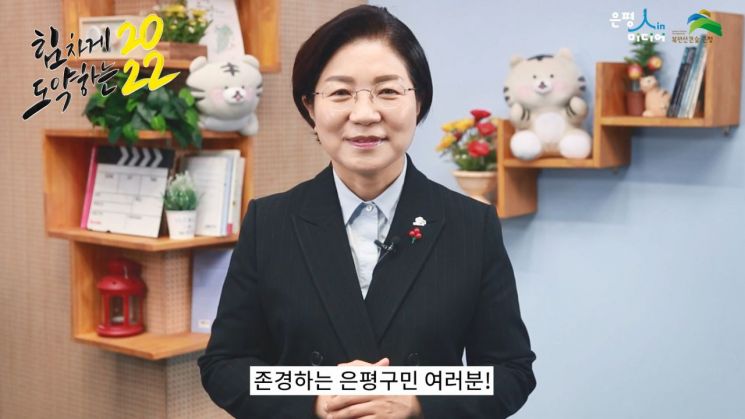
Eunpyeong-gu (Mayor Kim Mi-kyung) delivered New Year's greetings non-face-to-face through the Eunpyeong-gu Office YouTube channel this year.
Every year, the district held a New Year's greeting meeting inviting local residents to share greetings and well-wishes. This year, following social distancing guidelines again, the New Year's greeting video was delivered non-face-to-face to residents via the district's YouTube channel. The video included New Year's greetings and explanations of the 2022 district administration directions.
In the video, Eunpyeong-gu Mayor Kim Mi-kyung emphasized this year's administrative tasks: ▲creating quality jobs and recovering the local economy ▲building a pleasant and convenient eco-friendly urban infrastructure ▲creating a city where culture and education can be enjoyed ▲promoting residents' health and safety ▲realizing welfare without anyone being left behind.
Mayor Kim said, “This year, we will fully demonstrate the capabilities accumulated in response to crises and lead a leap forward into the future,” adding, “This year is the Year of the Black Tiger. I hope it will be a year to shake off the previously subdued image and soar vigorously and bravely like a tiger. I will run once more with the residents.”
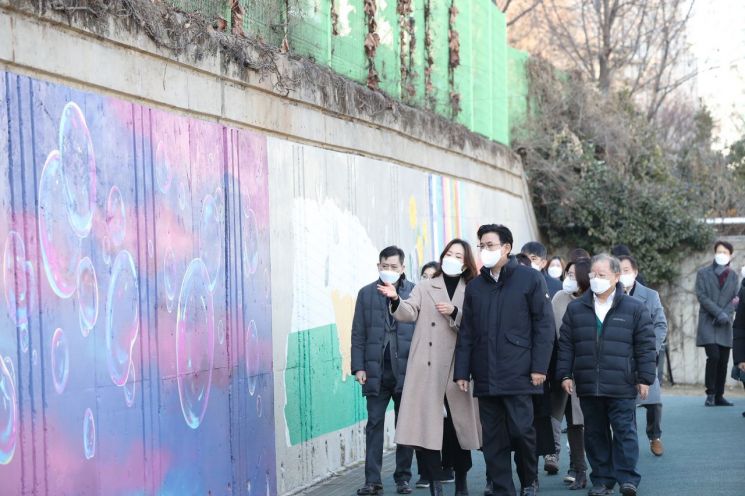
Songpa-gu (Mayor Park Sung-soo) created a 'Childlike Innocence (童心) Mural' themed on children along a 90-meter section of the fence at Oryun Elementary School as part of the 'Songpa Dullegil Season 2' project.
Mayor Park Sung-soo, as a key project of the 7th elected term, opened the Tancheon trail, which had been disconnected for 50 years, on July 1 last year, completing a circular trail. Since then, the 'Songpa Dullegil Season 2' project has been underway to connect local attractions and the trail, transforming various spots into specialized spaces.
In particular, the retaining wall of Oryun Elementary School along Seongnaecheon was a space needing improvement despite being a children's commuting route, as it was covered with black mold and damp walls. Accordingly, since October last year, the district held several discussions with the school and agreed to create a mural on the elementary school's retaining wall themed on 'children and play.'
Through the 'Songpa Dullegil Season 2' project, the district thoroughly cleaned the mold-covered, bleak retaining wall and installed bright and lively mural artworks. The mural depicts children playing traditional games such as ssa-bang-chigi (four corners), gonggi-nori (knucklebones), and ttakji-chigi (folded paper tile game) using collage techniques. It harmoniously expresses sophistication with black-and-white and various colors and modern design. Additionally, to vividly and three-dimensionally portray children's expressions, objects were attached instead of paint.
On the 6th, Mayor Park Sung-soo invited artist Kim Jin-oh and local residents near the mural to explain the artwork. Mayor Park said, “The 'Songpa Dullegil Season 2' project is changing Songpa-gu day by day,” adding, “We will accelerate the Season 2 project so that residents exhausted by COVID-19 can take care of their health and regain strength to recover their daily lives while walking the Dullegil.”
Furthermore, in January, the district plans to plant sukreng (a type of grass in the rice family) in two mini spaces near the mural at Ogeum 1 Bridge to provide visual interest and create a cozy atmosphere by making jangdokdae (traditional Korean earthenware stands) on gravel. Also, under five bridges including Seongnae Bridge, exhibition spaces will be set up to transform dark areas into diverse cultural and artistic spaces.
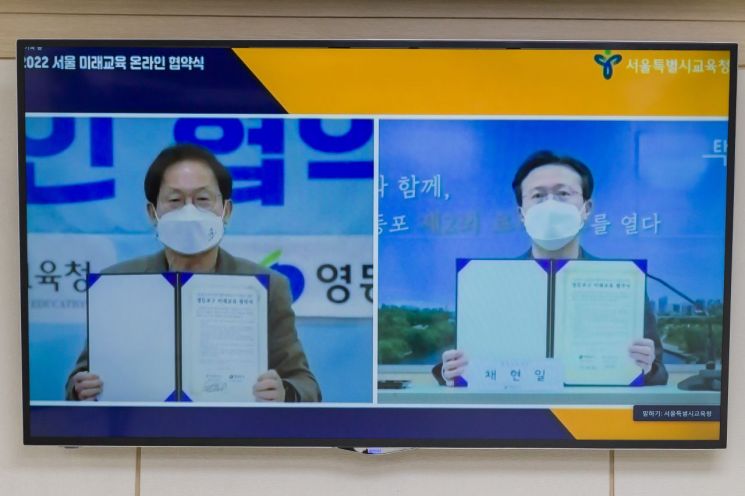
Yeongdeungpo-gu (Mayor Chae Hyun-il) announced that on January 7, it held a future education 1:1 online agreement ceremony with the Seoul Metropolitan Office of Education to support the happy growth of children and adolescents and realize high-quality and student-tailored public education.
This agreement reaffirms the commitment of the Seoul Metropolitan Office of Education and autonomous districts to solve educational issues and develop local education by jointly operating the Innovation Education District. It aims to strengthen the cooperation system between educational autonomy and general administration based on past experiences and present an educational cooperation vision that meets new era situations and demands.
The future education 1:1 agreement aims to realize 'high-quality public education and a happy education city,' selecting eight major educational agendas: six proposed by the education office and two by the district, and actively cooperating to promote these agendas.
The eight agreement agendas include ▲leap to Innovation Education District 2.0 for realizing village education communities ▲expansion of youth-only spaces ▲establishment of educational safety nets and integrated student support through the operation of education guardianship systems ▲expansion of in-depth reading activity support ▲activation of ecological transition education in schools and villages ▲promotion of debate culture ▲activation of out-of-school village education where 'the entire community is a teacher' ▲utilization of idle school spaces for innovation education projects.
This agreement will proceed in earnest from 2023 after a preparation phase in 2022.
The ceremony was conducted via Zoom online video conference and live-streamed on YouTube.
Attendees included Yeongdeungpo-gu Mayor Chae Hyun-il, Superintendent of Education Jo Hee-yeon, Seoul Metropolitan Office of Education officials, Nambu Education Support Office Director Park Rae-jun and staff, and private representatives of the Innovation Education District, who signed the agreement containing the eight agendas and exchanged views on future education.
Mayor Chae Hyun-il said, “Based on close exchanges with the Seoul Metropolitan Office of Education, we will diligently implement the eight agendas,” adding, “Through this agreement, the education office and Yeongdeungpo-gu will cooperate with one heart and mind to promote educational policies that make children happy and gain consensus from parents and local residents.”
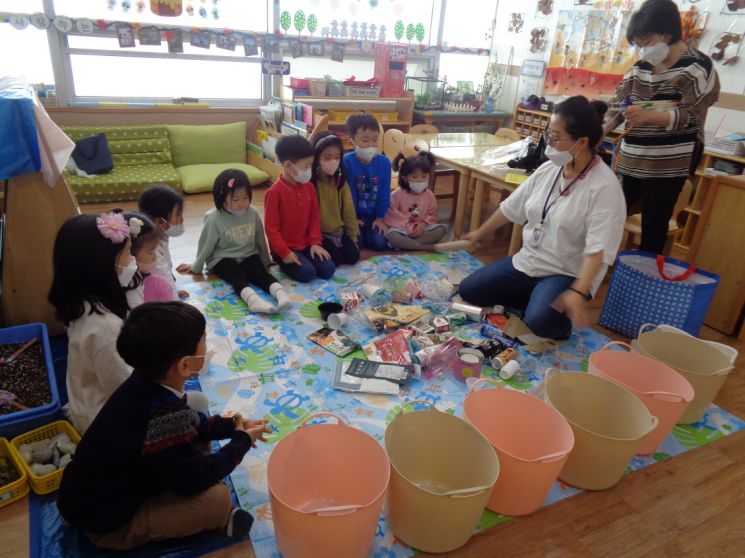
Children in Geumcheon-gu are leading efforts to reduce household waste by recycling used batteries and milk cartons.
Geumcheon-gu (Mayor Yoo Sung-hoon) signed agreements on December 17 last year with the Geumcheon-gu Daycare Center Association and the Korea Battery Recycling Association to collect used batteries and milk cartons. According to the agreement, 6,890 children attending 132 local daycare centers will participate in creating a resource-circulating society.
Children bring used batteries from toys or home appliances to daycare centers, and milk cartons consumed at daycare centers are washed, dried, and collected. The district office collects these and sends them to the Korea Battery Recycling Association and milk carton recycling companies, respectively.
Additionally, Geumcheon-gu plans to install used battery collection boxes at public institutions such as Geumcheon Police Station, affiliated organizations, and Geumcheon Facilities Management Corporation to reduce household waste by collecting used batteries.
Mayor Yoo Sung-hoon said, “We are working with the local community to reduce household waste,” adding, “We will continue to devise and implement various measures to create a 'resource-circulating city Geumcheon.'”
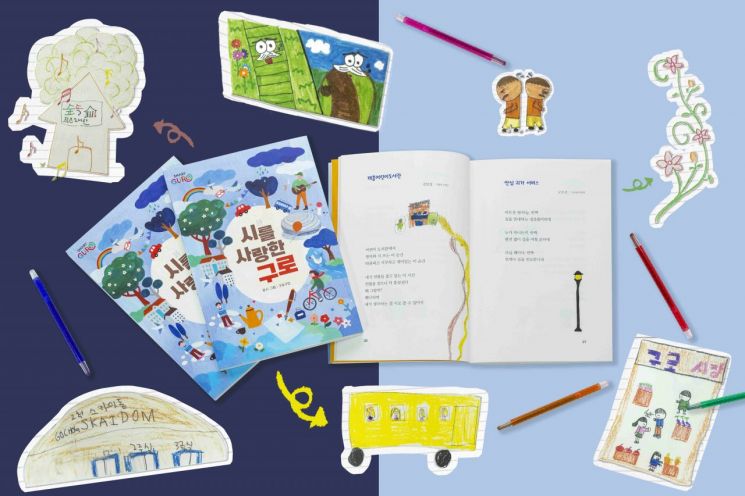
"Meet the face of Guro-gu through poetry and paintings."
Guro-gu (Mayor Lee Sung) published a poetry book collecting poems and paintings written and drawn directly by residents.
Last year, Guro-gu was selected for the excellent reading program contest hosted by the National Reading City Association, securing 10 million KRW to promote the 'Together Poetry Writing Program.'
The 'Together Poetry Writing Program' is a project where residents attend classes by children's poetry writers (Park Hye-sun, Kim Mi-hee, Lee Myo-shin) and produce their own poetry collections.
Poetry writing classes were held from late August to September last year at six locations: Bany Kindergarten, Gaebong Elementary School, Seoul 50+ Southern Campus, Gaebong Children's Library, Forest Small Library, and Guro Miracle Library, with 129 participants.
Participants wrote poems and drew pictures on themes representing Guro's characteristics such as nature, landmarks, and daily life.
'Guro Who Loved Poetry' contains a total of 110 works, organized into four parts by theme: neighborhood scenery, nature, people, and landmarks.
Guro-gu distributed 'Guro Who Loved Poetry' to local public libraries and provides it as an e-book through the Guro Integrated Library 'Lighthouse of Wisdom' for public access.
Also, on the Guro-gu Culture and Tourism Department's YouTube channel 'GUROBOOK,' videos of the publication ceremony and writing classes with participating poets are available.
A Guro-gu official said, “It was a meaningful time for residents who became poets to express Guro's face directly through poetry and paintings,” adding, “We will continue to prepare various reading programs that residents can participate in.”
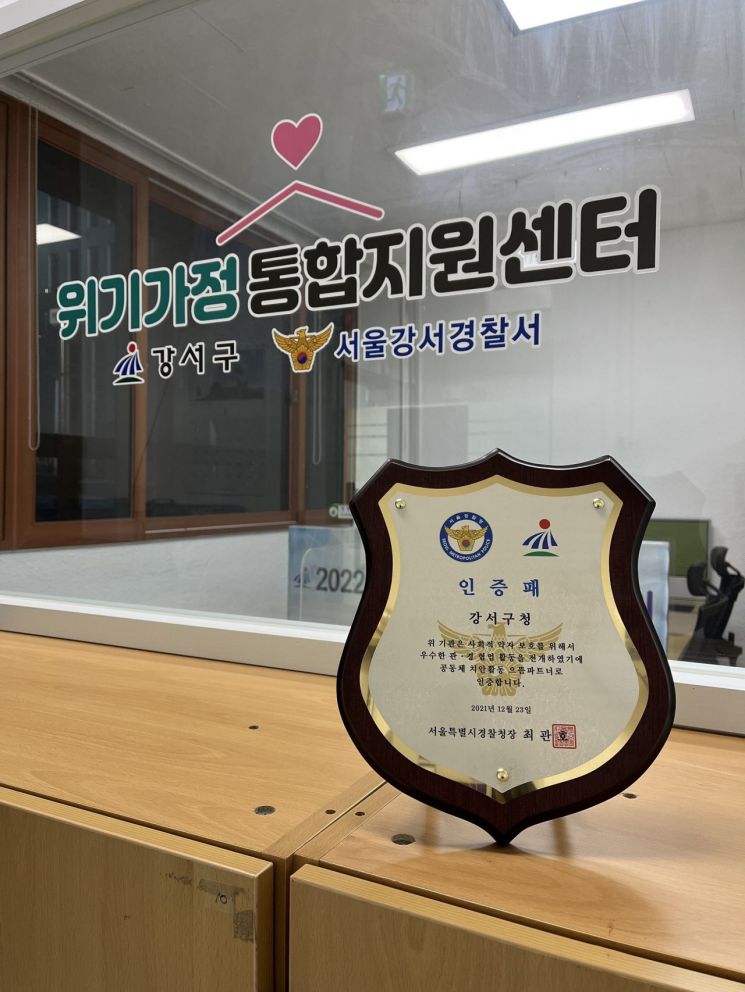
Gangseo-gu, Seoul (Mayor Noh Hyun-song) announced that it was selected as a 'Top Partner' in the second half of 2021 community policing by the Seoul Metropolitan Police Agency.
The Seoul Metropolitan Police Agency selects six organizations each half-year that contributed to protecting socially vulnerable groups, including social organizations, public institutions, and companies, as 'Top Partners' in community policing. Gangseo-gu was honored as the top partner in the public institution category.
Gangseo-gu established an integrated management system with the Gangseo Police Station through a business agreement to operate the 'Pine Tree (Crisis Family Integrated Support) Center,' where the district's integrated case managers and the police station's abuse prevention officers collaborate. This system was highly evaluated for its case management and various activities to prevent recurrence for families at risk of domestic violence.
The Gangseo Pine Tree Center opened in July 2020 to proactively respond to and prevent recurrence in families at risk of dissolution due to domestic violence and abuse. It plays a leading role as a family violence case management institution involving civil, government, and police sectors.
In June last year, the district signed a business agreement with Gangseo Police Station to discover and support welfare blind spots, conducting various activities such as identifying at-risk households, on-site visits, and intensified patrols in high-risk areas to resolve welfare blind spots.
Additionally, the district received good evaluations for installing and supporting security items such as CCTV and security windows in collaboration with Gangseo Police Station to protect women and socially vulnerable groups.
Mayor Noh Hyun-song said, “Together with the police, we were able to discover welfare blind spots that were difficult to find with existing systems and strengthen welfare services for domestic violence households,” adding, “We will further solidify cooperation with the police to create a safe and happy Gangseo without welfare blind spots.”
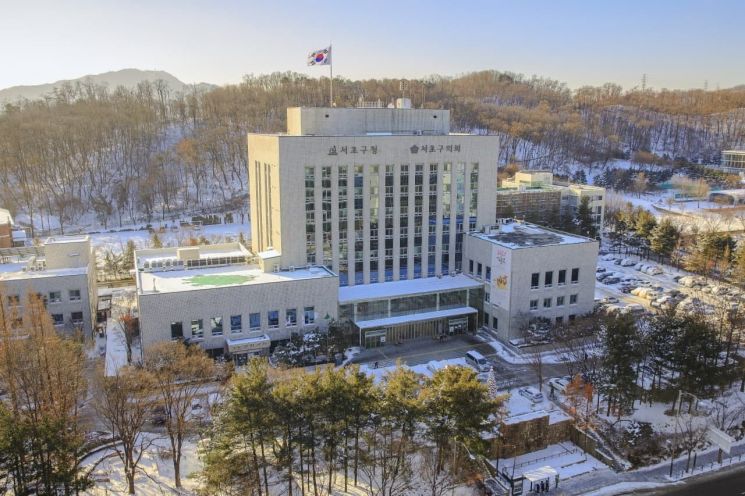
Seocho-gu has once again launched emergency financial support this year for small business owners struggling due to the prolonged COVID-19 pandemic.
The district announced that it started accepting applications from the 7th for the 'Small Business Emergency Blood Transfusion Ultra-Speed Loan' worth 60 billion KRW in cooperation with the Seoul Credit Guarantee Foundation and others.
The 60 billion KRW loan amount is 20 billion KRW more than last year's 40 billion KRW, making it the largest scale among Seoul's autonomous districts. The fund includes 4 billion KRW from the district and 1 billion KRW from banks (Shinhan 500 million KRW, Woori 300 million KRW, Hana 200 million KRW), totaling 5 billion KRW.
Most notably, this project not only increases the loan scale compared to last year but also allows loans to small business owners with low credit ratings. Additionally, the existing loan procedures have been greatly simplified so that applicants can complete the process from application to loan in one stop by visiting designated banks within Seocho-gu.
Specifically, the loan limit increased from a maximum of 20 million KRW per business last year to 50 million KRW this year, an increase of 30 million KRW. This allows support for at least 1,200 businesses. The eligibility threshold was lowered to support local small business owners with personal credit scores of 879 or below (former credit grade 3), helping stabilize management and overcome closure risks.
The interest burden was also reduced. The ultra-speed loan interest rate applies a 3-month variable CD rate plus 1.7%, with 1.3% subsidized, so applicants only pay interest after deducting 1.3%. Repayment is structured as a 1-year grace period followed by 4 years of equal installments, and applications are accepted until funds are exhausted.
Finally, the previously complex loan procedures requiring visits to multiple institutions have been greatly simplified. Applicants only need to visit the bank with required documents, undergo a brief screening checking for disqualifications, and receive rapid processing.
Applications can be made by visiting one of 18 branches of Shinhan, Woori, or Hana banks within the district with the required documents. For detailed information, applicants can contact the respective bank branches or the Seocho-gu Call Center.
Since its launch two years ago, the ultra-speed loan support project has helped 2,351 businesses with about 50 billion KRW: 403 businesses with 9 billion KRW in 2020, and 1,948 businesses with 41 billion KRW in 2021, providing significant aid to small business owners struggling with COVID-19.
A small business owner A, running a hangover soup restaurant in Banpo-dong, Seocho-gu, said, “Due to the spread of COVID-19, sales sharply declined, causing economic difficulties. Last year, I learned about Seocho-gu's ultra-speed loan and received support,” adding, “The loan was like rain in a drought, helping me shift to delivery-focused operations, and sales actually increased, giving me a chance to recover.”
The district will also continue efforts to support small business owners whose sales have sharply declined due to strengthened social distancing this year. In addition to issuing Seocho Love Gift Certificates, a local currency, the district will continue programs such as 'Visiting Alley Restaurant Taste Consulting' coaching menu development and facility improvements for small business owners, and 'Our Neighborhood Store Artterior Support Project' where local artists improve the interior and exterior of small business stores.
Seocho-gu Acting Mayor Cheon Jeong-wook said, “I hope this project will alleviate the economic difficulties of small business owners facing crises due to COVID-19,” adding, “We will continue to strive to stabilize small business management and revitalize the local economy.”
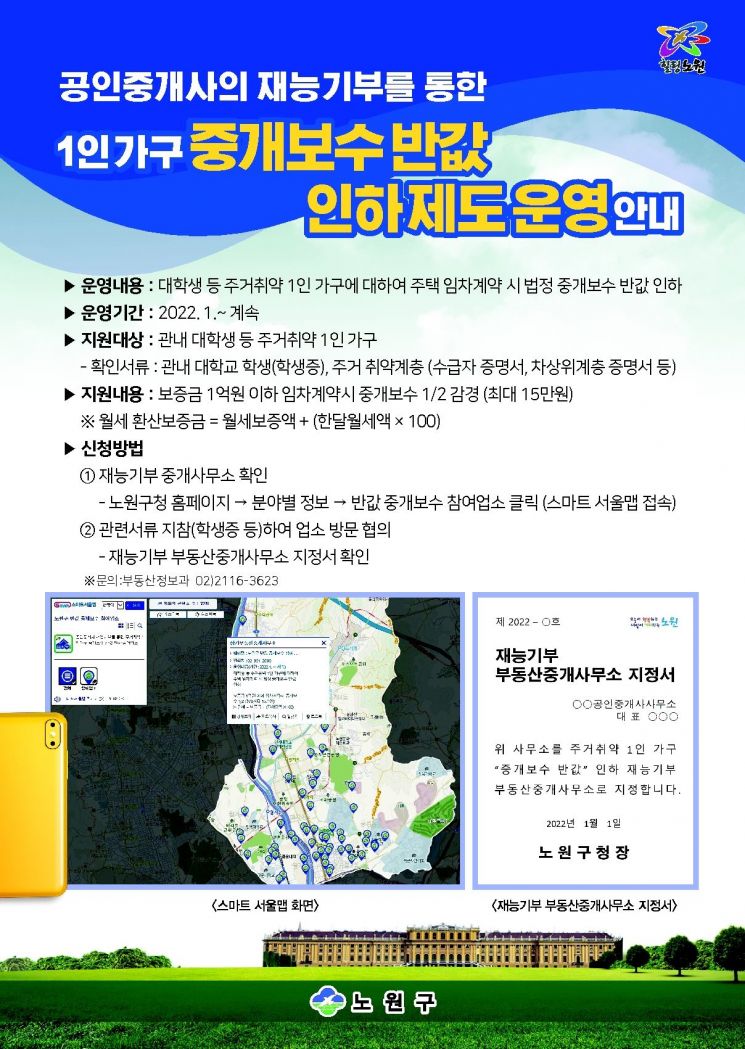
Nowon-gu (Mayor Oh Seung-rok) announced that starting January, it will implement the 'Half Brokerage Fee Support Project' to stabilize housing for university students and vulnerable single-person households.
This is part of measures for the increasing number of single-person households, aiming to reduce housing cost burdens for university students and vulnerable single-person households in the district who are facing economic difficulties due to COVID-19.
Eligible recipients are single-person households in the district who are university students (with student ID) or vulnerable groups (with certificates such as recipient of livelihood benefits or near-poverty class). Half of the brokerage fee for lease contracts under 100 million KRW will be reduced (up to 150,000 KRW).
The benefit is available through 77 licensed real estate offices in the district. Since October last year, the district has emphasized the necessity of the project and encouraged participation through meetings with the Nowon branch of the Korea Association of Realtors. Especially, active participation was encouraged from real estate offices near university areas in Wolgye and Gongneung-dong. As a result, 38 offices in Gongneung-dong, 25 in Wolgye-dong, 6 in Hagye-dong, 5 in Sanggye-dong, and 3 in Junggye-dong decided to participate this year.
Basic information such as locations and contact details of participating real estate offices can be found on the Nowon-gu website under 'Information by Field - Environment/City/Real Estate - Half Brokerage Fee Participating Offices.'
According to Statistics Korea's '2021 Single-Person Household Statistics,' the proportion of single-person households aged 20-30 in Seoul is 26.1%, 7% higher than the national average of 19.1%.
Moreover, Nowon has six universities besides the Korea Military Academy, including Kwangwoon University, Sahmyook University, Seoul National University of Science and Technology, Seoul Women's University, Induk University, and Korea Bible University, so this project is expected to have significant effects.
Since the project is conducted as a talent donation by real estate agents, the district plans to issue certificates designating participating offices as talent donation offices and provide incentives such as mayoral commendations and reduced administrative penalties for offices with excellent performance to continuously expand the project.
Additionally, the district plans active promotion through cooperation with local universities, newsletters, blogs, and the Nowon-gu YouTube channel 'Mi Hong-ssi.'
For more information, contact the Real Estate Information Division of Nowon-gu Office.
Mayor Oh Seung-rok said, “The increase in single-person households is a social trend requiring new policies aligned with social changes,” adding, “We will continue to discover and implement policies that meet diverse demands.”
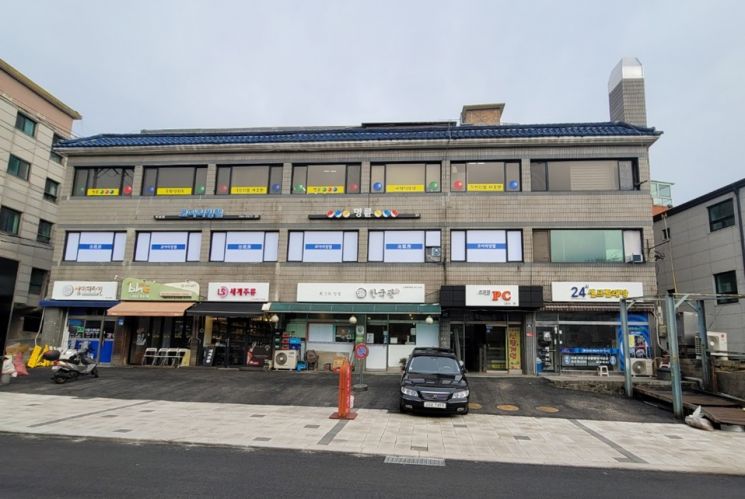
Jongno-gu completed the '2021 Beautiful Signboard Street Creation Project,' which began in March last year, in December, greatly improving the landscape in areas including Seonggyungwan-ro and receiving favorable reviews from residents.
The 'Beautiful Signboard Street' project, initiated in 2008, aims to enhance urban aesthetics by removing illegal signboards and refurbishing old and damaged signboards that may threaten pedestrian safety with Hangul-centered designs befitting Jongno, the first place of Korean culture.
In 2021, the project targeted 188 businesses located at Seonggyungwan-ro 1-59, Changsin 6-ga-gil 38-66-1, and Changsin Ssangyong 2 Complex.
These areas had many old large signboards and illegal signboards installed disorderly, urgently needing maintenance for pedestrian safety.
Jongno-gu sought advice from design planners and underwent outdoor advertising review committee deliberations to install unique signboards reflecting each store's characteristics while harmonizing with the area. Up to 3 million KRW per business was provided for signboard improvement costs.
Considering many old buildings in the target areas, the project also included wall repainting and wiring organization alongside signboard replacement to enhance completeness.
As a result, 218 illegal signboards were removed, and 145 eco-friendly LED signboards centered on Hangul were produced and installed.
An official said, “This project restored the appearance of buildings covered with old and poor signboards and positively changed the street atmosphere, receiving very good responses from residents,” adding, “We will continue to promote the Beautiful Signboard Street project to create a safe and pleasant community and spread proper outdoor advertising culture.”
In 2022, Jongno-gu plans to conduct the Beautiful Signboard Street project through resident participation. After establishing a comprehensive plan in February, it will invite applications for support targets at street or building levels.
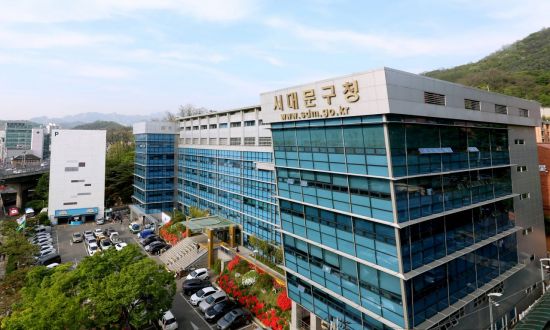
Seodaemun-gu (Mayor Moon Seok-jin) was selected as the first and only autonomous district in Seoul to be an 'Excellent Cooperation District' in the Ministry of Education's Future Education District (future-type educational autonomy cooperation district) and recently received an institutional commendation from the Deputy Prime Minister and Minister of Education on the 10th.
Earlier, the Ministry of Education conducted a contest among 190 innovation education districts nationwide and selected 22 future education districts early last year. Among them, Seodaemun-gu achieved the distinction of being selected as an excellent cooperation district in its first year of designation.
The Future Education District is selected by the Ministry of Education to establish sustainable educational cooperation systems between local governments and education offices and develop excellent models suited to regional characteristics, providing up to 150 million KRW per year for up to three years.
The district established educational governance in all 14 neighborhoods composed of resident autonomy committee members, teachers, parents, and public officials, establishing a regional education decision-making structure reflecting local characteristics, which was a key factor in being selected as an 'Excellent Cooperation District.'
Based on this, the district operated 'Saturday Neighborhood School' at community centers to support youth self-directed projects and discovered and promoted neighborhood-level educational agendas reflecting local characteristics through resident contests, which also received favorable evaluations.
Mayor Moon Seok-jin said, “We will continue to operate a sustainable village education community by stabilizing and growing neighborhood-level educational governance and discovering and realizing educational agendas reflecting local characteristics.”
© The Asia Business Daily(www.asiae.co.kr). All rights reserved.