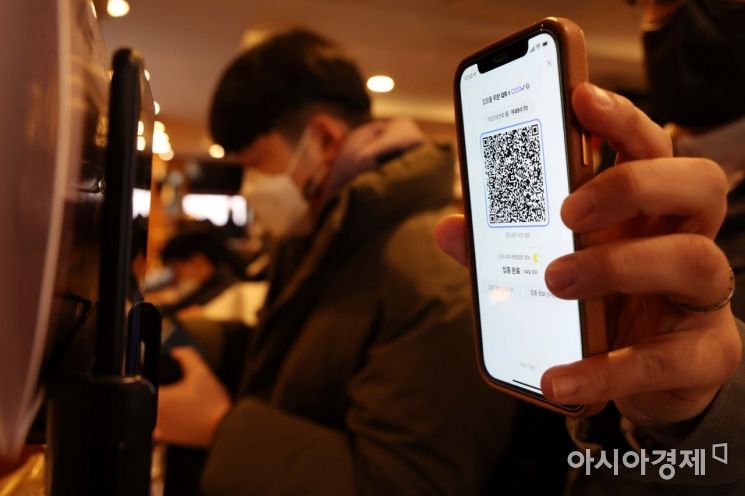
 On the first day the quarantine pass validity period applies, during lunchtime on the 3rd, citizens are checking the validity status of their quarantine passes at a restaurant in downtown Seoul. Photo by Mun Ho-nam munonam@
[Asia Economy Reporter Seongpil Cho] Yesterday (the 7th), a hearing was held at the court regarding the injunction request filed by some citizens to suspend the effectiveness of the quarantine pass applied to 17 types of facilities including large supermarkets, restaurants, and cafes. The arguments between both sides lasted nearly three hours. Let's take a look back at the time spent in the courtroom yesterday.
Both Sides Running on Parallel Lines... Questions from the Court
The hearing was conducted by the Administrative Division 4 of the Seoul Administrative Court (Presiding Judge Han Won-kyo) in the main courtroom of the court. As initially expected, the opinions of both sides ran on parallel lines.
Applicant side, including Professor Doohyung Cho of Yeungnam University Medical School and 1,023 others, argued, "The quarantine pass effectively forces the use of vaccines whose safety has not been verified," and stated, "While recommendation might be appropriate, coercion cannot be justified as it restricts fundamental rights."
On the other hand, the government, as the respondent, emphasized, "The quarantine pass is an inevitable measure to protect the unvaccinated and prevent the collapse of the medical system," and countered, "Countries such as Germany, France, and Italy are also expanding the use of quarantine passes."
Both sides prepared PowerPoint materials to support their logic and claims, spending considerable time presenting their positions. During this process, the court posed several questions. Here are some selected ones.
"What is the purpose of the quarantine pass?"
This was arguably the most fundamental question. It seemed the government side anticipated this question, as their answers came smoothly. They said, "To protect the unvaccinated and prevent the spread of COVID-19 infections." They also emphasized that "the main purpose is to protect the unvaccinated."
After hearing the answer, the court raised doubts. "How can that be considered a public interest (公益: the benefit of society as a whole)? From the perspective of the unvaccinated, they have considered vaccine side effects and COVID-19 infection risks and believe protecting their health by remaining unvaccinated is right. They have the right to choose, don't they?"
The government responded again, "It is not only about preventing severe illness and death among the unvaccinated but also about preserving the medical system allocated to them," adding, "If the medical system collapses, not only COVID-19 care but the entire general medical system will collapse." This meant that the quarantine pass is necessary from a public interest perspective because the collapse of the medical system could endanger general patients.
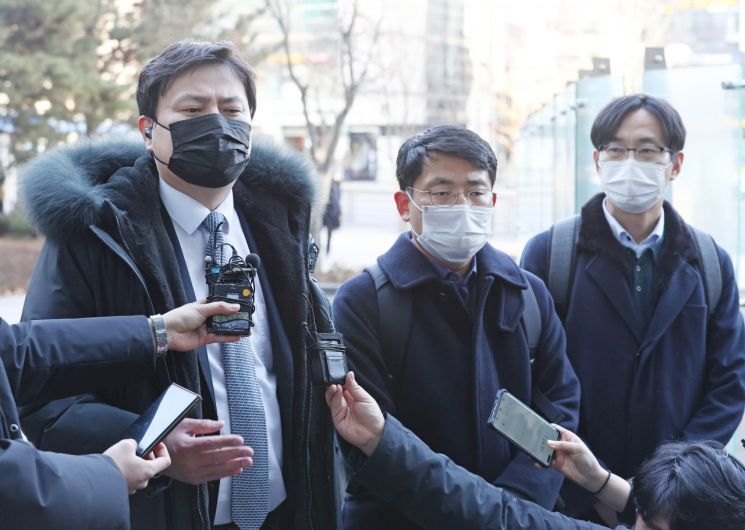 On the afternoon of the 7th, at the Seoul Administrative Court in Seocho-gu, Seoul, lawyer Park Juhyun from the plaintiff's side made a statement before appearing at the hearing for the injunction request against the quarantine pass (vaccine certificate and negative test confirmation) policy enforcement.
 [Photo by Yonhap News]
Questions Circling Back... Ending with a Deep Sigh
The court continued, "Are you saying the medical system could collapse because of the unvaccinated?" The government replied, "According to actual data, among adults aged 18 and over, 6% are unvaccinated but account for 52% of ICU patients."
The court further asked, "Then, if the vaccination completion rate reaches 99%, will the medical system not collapse?"
The government's answer was clear and concise: "No. Vaccination alone cannot prevent the collapse of the medical system."
The court, seemingly puzzled, asked again, "Didn't you say the purpose of the quarantine pass is to prevent the collapse of the medical system? I don't understand. Are you saying that even if the entire population is vaccinated, the medical system could collapse if a COVID-19 surge occurs?"
The government answered without hesitation, "Yes, that is correct." After that, the Q&A between the court and the government returned to the starting point. Below is part of the exchange.
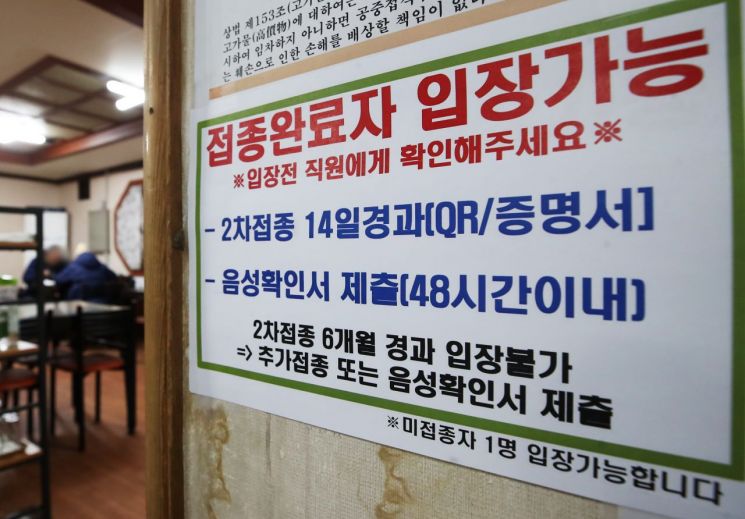 On the afternoon of the 3rd, a quarantine pass notice is posted at a restaurant in Suwon-si, Gyeonggi-do. [Image source=Yonhap News]
Issue of Defendant Qualification... Quarantine Pass Effective Only with Local Government Notice
Before the arguments between both sides, the court spent over 30 minutes questioning the issue of defendant qualification. Defendant qualification refers to the eligibility to be the opposing party in a lawsuit. Professor Cho and others filed the lawsuit against the Minister of Health and Welfare, the Director of the Korea Disease Control and Prevention Agency, and the Mayor of Seoul.
The issue of defendant qualification arose partly due to the position of the Ministry of Health and Welfare. "Without a local government notice, the quarantine pass is not enforced." The government's guideline is not a disposition, and by itself does not trigger the effectiveness of the quarantine pass. In other words, the Ministry of Health and Welfare argued that it lacks defendant qualification.
If the Ministry of Health and Welfare's claim is accepted, all lawsuits including injunction requests related to the quarantine pass must be filed against local governments. Otherwise, they will be dismissed. Dismissal means the case is concluded without substantive judgment because procedural requirements are not met.
Then, what about the decision by the same court's Administrative Division 8 (Presiding Judge Lee Jong-hwan) on the 4th? At that time, Administrative Division 8 granted the injunction request filed by parent groups against the Minister of Health and Welfare. The court also focused on this point.
"The injunction granted then was related to part of the follow-up measures of the COVID-19 special quarantine plan dated December 3, 2021, by the respondent Minister of Health and Welfare. Is this also not a disposition? If it is not a disposition, did you submit a written statement to the presiding court about this? This is important."
The applicants also admitted, "We have thought a lot about who the proper defendant is." The court said, "What is certain is the local government's notice," and added, "We understand the applicants' position as well."
Quarantine Pass for 17 Types of Facilities Including Restaurants and Cafes... Decision Possibly Next Week
The court concluded the hearing on the first day and requested both sides to submit any additional claims or materials in writing by 6 p.m. on the 10th.
Once the hearing for the injunction request is concluded, the procedure is completed by the court notifying both sides of the decision without the need to reconvene the court.
A decision can be made anytime after the submission deadline set by the court on the 10th. If the court accepts the injunction request, the effectiveness of the quarantine pass will be suspended in most facilities until the main lawsuit's judgment is issued.
Specifically, this will affect restaurants, cafes, movie theaters, PC rooms, performance halls, multi-rooms, sports stadiums, museums, art galleries, science centers, party rooms, libraries, massage parlors, bathhouses, shops, marts, and department stores. The injunction request granted on the 4th was limited to academies, study rooms, and cafes.
© The Asia Business Daily(www.asiae.co.kr). All rights reserved.
![User Who Sold Erroneously Deposited Bitcoins to Repay Debt and Fund Entertainment... What Did the Supreme Court Decide in 2021? [Legal Issue Check]](https://cwcontent.asiae.co.kr/asiaresize/183/2026020910431234020_1770601391.png)