Tapering and Interest Rate Hikes Followed by Quantitative Tightening Announcement
Balance Sheet Reduction Expected to Proceed Faster Than Before
Market Volatility Amid Potential $8.8 Trillion Asset Shrinkage
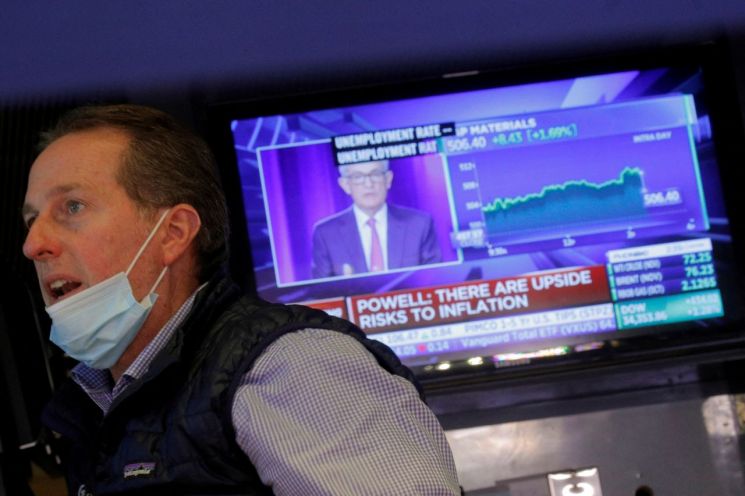
[Asia Economy New York=Correspondent Baek Jong-min] The U.S. Federal Reserve (Fed) has announced plans to reduce its balance sheet by as much as $8.8 trillion within this year. Following asset purchase tapering, interest rate hikes and quantitative tightening are expected to be implemented in succession, which is anticipated to deliver a significant shock to capital markets. After news of the Fed's quantitative tightening discussions emerged, U.S. Treasury yields surged sharply while stock markets reversed into a decline.
On the 5th (local time), the minutes from the December Federal Open Market Committee (FOMC) meeting released by the Fed provided hints regarding the timing of the much-anticipated start of quantitative tightening. The minutes indicated that the majority of members discussed quantitative tightening and mentioned that it would begin after the start of interest rate hikes.
The market widely expects that interest rate hikes will begin at the March FOMC meeting. CNBC forecasted that the Fed would start quantitative tightening in the second half of the year.
The minutes also suggested that once quantitative tightening begins, the balance sheet reduction could proceed faster than the quantitative tightening in 2017.
The Fed’s acceleration of tightening is driven by concerns over soaring inflation. As of November last year, the Consumer Price Index rose by 6.8%. The Wall Street Journal interpreted this as an indication that inflation is likely to continue rising this year, which could prompt the Fed to take a more aggressive stance.
Quantitative tightening is an issue that could trigger aftershocks not only in the U.S. but also in global capital markets. If the Fed reduces the U.S. Treasury securities it increased during the COVID-19 response, market interest rates are inevitably expected to rise. On the day of the minutes’ release, the 10-year U.S. Treasury yield surged above 1.7% immediately after the announcement.
The rise in Treasury yields acted as a factor causing stock market declines. The Nasdaq Composite, sensitive to interest rates, fell more than 2%. The Dow Jones Industrial Average, which had been rising, also turned downward.
Cryptocurrencies are also weak. Bitcoin prices fell 1.1%, trading at $45,779.
© The Asia Business Daily(www.asiae.co.kr). All rights reserved.

















