[Seoul District News] Local Infant Play Spaces and Healing Spots for Parents: Popular Gwanak-style Mother Center 'Irang'... Eunpyeong-gu Supports Enrollment Preparation Funds for New Elementary to High School Students... Seongbuk-style Care SOS Center Expanded to All Neighborhoods... Mapo-gu Provides 2 Million Won Birth Celebration Allowance per Newborn Starting This Year... Gwangjin-gu Installs Windbreak Tents and Heaters at Screening Clinics... Yeongdeungpo-gu Recruits Participants for Community and Quarantine Job Projects
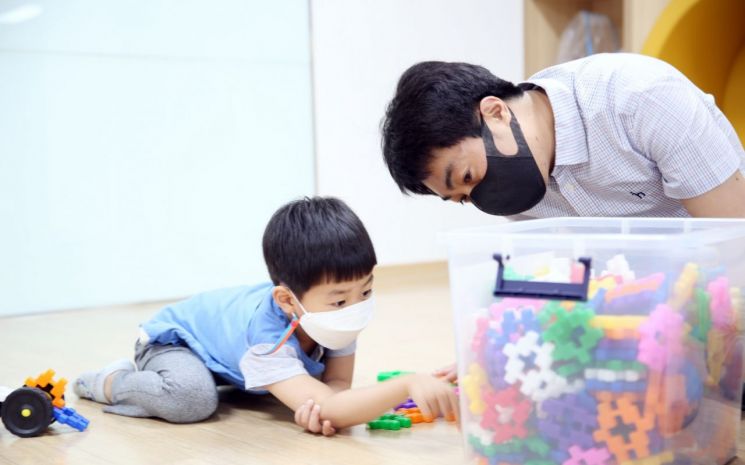
[Asia Economy Reporter Park Jong-il] Gwanak-gu (Mayor Park Jun-hee) is drawing attention with its 'Gwanak-type Mother Center I-rang,' which is operated with the goal of creating a child-friendly childcare environment.
The district is promoting the establishment of the Gwanak-type Mother Center I-rang to provide a space where parents raising children in the era of low birth rates can gather to share childcare-related knowledge and concerns and comfortably visit with their children.
Starting with the first branch in Nanhyang in 2019, the center has expanded to include branches in Daehak-dong, Nakseongdae, Boramae, and last year, the Sinsa branch opened on the 2nd floor of the Gwanak Family Happiness Center. Currently, a total of five Gwanak-type Mother Centers 'I-rang' are in operation, and the district plans to operate a total of six branches in a hub format, including the upcoming Euncheon branch scheduled to open in the second half of this year.
Especially last year, amid the prolonged COVID-19 pandemic, various non-face-to-face (online) programs were activated for parents and children tired of staying at home. The I-rang free play space was opened on a reservation basis allowing only one family per session to use it, providing a safe indoor play space and receiving great responses from users.
As the operation of the Gwanak-type Mother Center 'I-rang' enters its fourth year, the district has increased the budget by 15 million KRW compared to the previous year, securing a total budget of 54 million KRW to develop programs accessible to more residents and improve the environment by diversifying play equipment.
Additionally, to provide specialized programs tailored to the characteristics of the neighborhoods where the five branches are located, the district plans to operate each branch with a focus on specific user groups: ▲Sinsa branch for multicultural families ▲Nanhyang branch for prospective parents ▲Daehak-dong branch for parents of infants and toddlers ▲Nakseongdae branch for dual-income families. The upcoming Euncheon branch will be specialized for lower-grade elementary school students.
For more detailed information on the diverse programs that children and parents can fully enjoy together, visit the Gwanak-gu Office website (Participation/Reservation → I-rang) and check the 'I-rang' bulletin board before participating.
A district official said, “We will complete the installation of a total of six Gwanak-type Mother Centers I-rang in the second half of this year to provide hub-type play spaces for infants and toddlers and communication spaces for childcare parents that are easily accessible to residents, striving to make Gwanak-gu a happy place for children and families.”
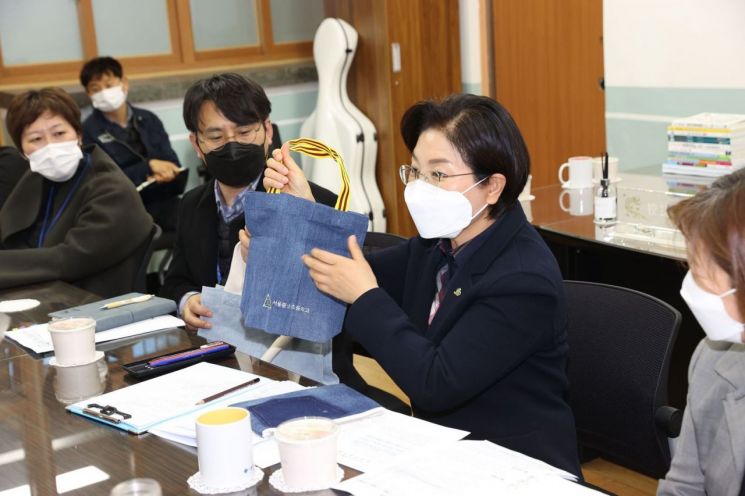
Eunpyeong-gu (Mayor Kim Mi-kyung) announced that starting this year, the support for new students' school preparation funds will be expanded from middle and high school students to include elementary school freshmen.
The school preparation fund support is a collaborative project among Seoul City, autonomous districts, and the Seoul Metropolitan Office of Education. Eunpyeong-gu began supporting middle and high school freshmen last year.
This year, the total number of beneficiaries for the preparation fund in Eunpyeong-gu is about 10,900, including approximately 3,479 elementary students and about 7,484 middle and high school students. The estimated support scale this year is about 2.9 billion KRW.
Applications for the preparation fund can be made at the school the student is entering. The support amount is 300,000 KRW per middle and high school freshman and 200,000 KRW per elementary school freshman, provided as Zero Pay mobile gift certificates. The funds can be used to purchase clothing including school uniforms and recommended school books.
The school preparation fund system had been implemented only in some autonomous districts, leading to opinions about welfare inequality between regions. To resolve this, the Seoul Metropolitan Council of District Mayors recently discussed with Seoul City and the Education Office and agreed that all autonomous districts will provide the same school preparation fund support.
Mayor Kim Mi-kyung said, “Through the expanded support of the school preparation fund, we hope to help reduce the economic burden on families of elementary, middle, and high school students who are going through difficult times due to COVID-19. We will continue to take the lead in preparing various support measures.”
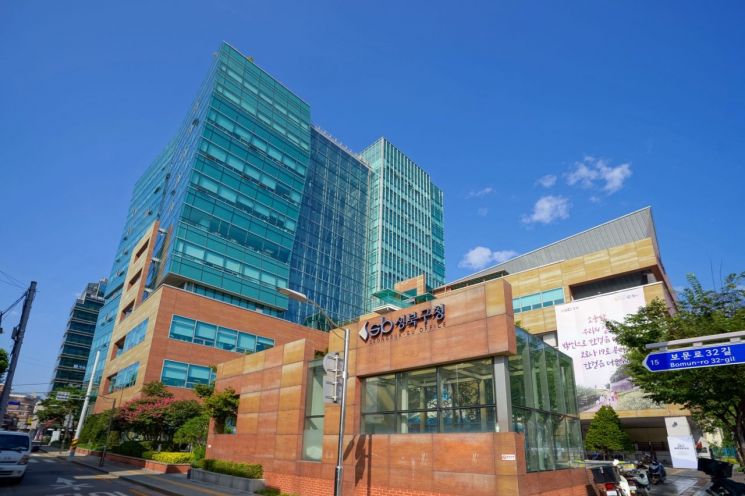
Seongbuk-gu (Mayor Lee Seung-ro) will hold a plaque ceremony for the Care SOS Centers at all community service centers in Seongbuk-gu on the 7th.
The Care SOS Center, which started as an integrated support operation system in August 2020, has been expanded to all 20 neighborhoods in two years. A Seongbuk-gu official explained, “This is an achievement that not only provides more detailed, customized care services for residents but also improves access to welfare services for those in need.”
The Care SOS Center is an integrated response system established by Seongbuk-gu to overcome the limitations of the existing provider-centered segmented services. It prepares service types that can respond to residents' care needs and, under the leadership of the public sector, utilizes private resources to immediately provide the services residents require.
For residents in urgent need of care, including the elderly, middle-aged, and disabled, the center provides temporary home care visiting the recipient's home to assist with daily life, short-term facilities to cover care gaps through facility admission, accompaniment support for essential outings, meal support to maintain basic nutrition, and residential convenience services such as simple repairs, cleaning, and laundry to improve the living environment.
After the service is completed, the center also connects recipients to public care services such as long-term care, disability activity support, and customized elderly care services for continuous care. Those in urgent need of care can apply by visiting their local community service center, and costs are fully covered for recipients of basic livelihood security, near-poverty, and households with income below 85% of the median.
Seongbuk-gu Mayor Lee Seung-ro said, “Rapid aging and changes in family structure have weakened family care functions, and COVID-19 has acted as a catalyst. There is a high demand for immediate and detailed customized care services to fill care gaps, and the Care SOS Center, which embodies Seongbuk-gu's welfare capabilities, will fully fulfill that role.”
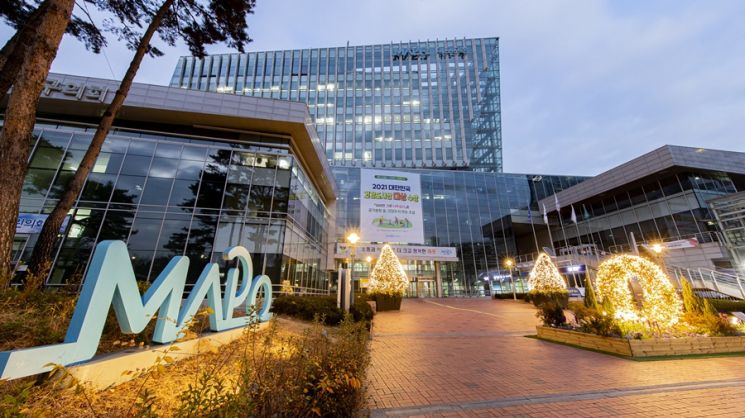
Mapo-gu (Mayor Yoo Dong-gyun) announced 21 new policies and systems that will change in 2022 on the 4th.
The changes this year are published as an e-book and divided into 8 new projects and 13 existing projects across five fields: ▲Welfare (8) ▲Education (4) ▲Culture (3) ▲Administration (3) ▲Urban (3).
◇Welfare systems keeping pace with changing times
Based on the 'Seoul Special City Mapo-gu Ordinance on Support for Infant and Toddler Development,' enacted nationwide for the first time by a local government last year, from March 2022, families raising 3-year-old children can receive developmental tests with support from the district.
To reduce childcare burdens, the 'childcare allowance' for children under 1 year old not using childcare facilities has increased to 300,000 KRW per month, and the 'birth congratulatory money' to encourage childbirth is paid 2 million KRW per newborn regardless of birth order. From April 2022, the 'child allowance,' previously paid up to age 7, will be extended to children up to age 8, with 100,000 KRW per month.
Additionally, to provide asset accumulation opportunities for working youth, the eligibility for opening a 'Youth Tomorrow Savings Account,' where the government matches the individual's savings, will be expanded to youth with median income 100% or below. The amounts paid for 'disability pension,' 'basic living allowance,' and 'housing benefit' for vulnerable groups will also increase reflecting inflation.
◇Education systems focused on welfare
Since 2019, the district has supported school uniform purchase costs for middle school students, changed to school preparation funds in 2021, and expanded support to high school students. This year, the scope will be further expanded to include elementary school entrants. Free eco-friendly school meals for elementary, middle, and high school students will also be extended to public and private kindergartens in the district.
Mapo Central Library, the hub for after-school education, has expanded its 'Children's Room' through remodeling, and the discount eligibility for special skill and aptitude programs has been expanded to provide cultural and artistic education to more local children.
◇Culture systems encouraging creative motivation
Since January this year, the newly opened Yeomri Salt Dock Library (opened in November last year) offers 'Sangsang Naru,' a media creation space equipped with personal studios and video editing rooms.
Also, Mapo Central Library has changed the usage fee for five 'writing rooms' on the 5th floor to a monthly flat rate to allow more writers to use them and relaxed eligibility requirements. The digital creation space 'Mamaple' in the lobby has increased IT equipment.
◇Rational administrative systems
Volunteers who worked more than 100 hours last year receive discounts on fees for six public facilities including Mapo-gu Office parking lot. According to the revised individual official land price schedule, opinions and objections will be accepted from April 29 to May 30, one month earlier than last year.
Also, the 'Housing Lease Reporting System' will be mandatory from June 2022. May is a grace period, and failure to report or false reporting by the deadline will result in fines up to 1 million KRW.
◇Building livable urban infrastructure
To foster a mature pet culture, a dog playground will open in March in the area of 36-4 Mapo-dong. To promote environmentally friendly vehicles, mandatory installation of electric vehicle chargers and strengthened parking enforcement standards will be implemented.
Furthermore, to revitalize traditional markets and shopping districts affected by the prolonged COVID-19 pandemic, an online delivery service will be launched from March this year.
Detailed information can be found in e-book format on the Mapo-gu Office website under 'Open Administration ? Changing Systems,' and inquiries can be made to the policy and system department.
Mayor Yoo Dong-gyun said, “Please check the newly changing systems to ensure you do not miss any benefits. We will do our best to carefully manage not only new systems but also existing ones to prevent any inconvenience to residents.”
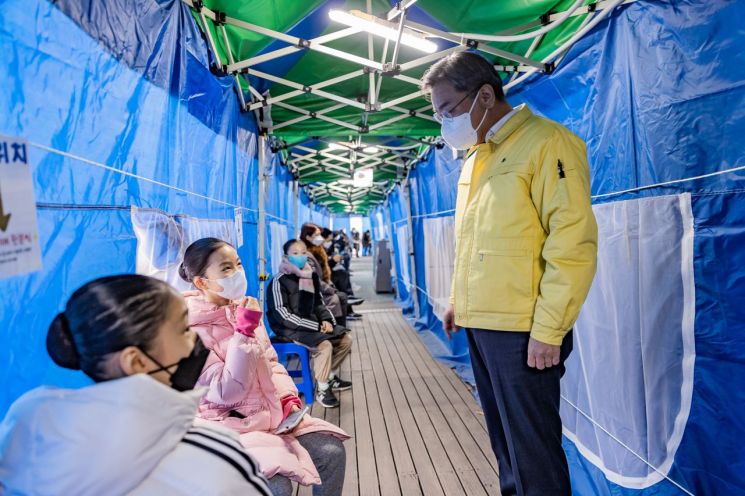
Gwangjin-gu (Mayor Kim Seon-gap) has prepared cold wave measures to minimize the inconvenience of residents who have to wait for a long time to get COVID-19 tests in cold weather.
Accordingly, the district installed windbreak tents and heating devices at the Gwangjin-gu Public Health Center's screening clinic.
Especially, as the number of tests increased, the windbreak tent was expanded from the screening clinic to the park in front of the district office, securing a waiting area of 260 meters that can accommodate up to 185 people.
The district installed 18 far-infrared tube heaters and 34 wall-mounted heaters inside the tent to keep residents warm and created passageways at intervals to allow ventilation for safety.
Additionally, considering pregnant women and elderly residents who find it difficult to wait for long periods, a separate waiting area was created.
Jung Yun-mi (34, Jayang-dong), who visited the Gwangjin-gu Public Health Center for specimen collection, said, “I was worried about having to wait a long time in subzero temperatures, but it was good that windbreak tents and heating devices were installed so I could wait warmly.”
Previously, the district provided cold-weather supplies such as ▲heated vests ▲neck warmers ▲thermal gloves ▲earmuffs to staff at screening and temporary screening clinics in preparation for the cold wave.
Gwangjin-gu Mayor Kim Seon-gap said, “We improved the environment by expanding the windbreak tents and installing heating equipment so residents can wait warmly and safely. Please wear masks properly to prevent the spread of COVID-19 and get tested immediately if you have symptoms.”
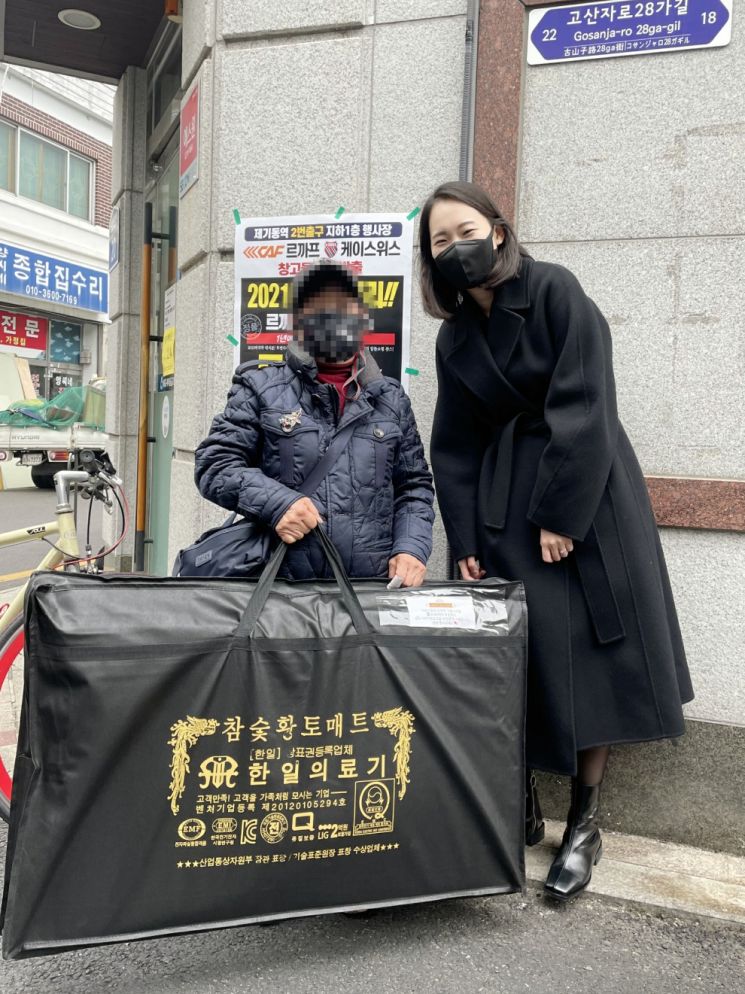
Dongdaemun-gu (Mayor Yoo Deok-yeol), with sponsorship from the Social Cooperative Hyeminseo and the Dalm Welfare Foundation, held a special warmth-sharing event delivering 646 single-person electric mats (worth 35 million KRW in cash) to low-income households vulnerable to cold waves.
The district completed the delivery of electric mats on the 20th of last month, before the cold wave warning was issued. Among the 646 mats delivered, 33 were personally delivered by Dongdaemun-gu Office employees to elderly residents in vulnerable households who live in drafty houses or use old heating devices, adding greater significance to the event.
The elderly recipients expressed gratitude, saying they were worried about fire risks due to old mats but could spend a warm winter thanks to the staff personally delivering and helping replace the bulky mats.
The employees who delivered the mats also shared their feelings, saying, “Due to COVID-19, it has become difficult for the elderly to go out, increasing their heating costs, so as sponsors, we were worried. We feel somewhat relieved to be able to deliver electric mats like this.”
Dongdaemun-gu Mayor Yoo Deok-yeol said, “We are very grateful to the Social Cooperative Hyeminseo and the Dalm Welfare Foundation for sponsoring electric mats for neighbors. We hope these warm electric mats will melt the cold wave with love, and we ask for continued interest in vulnerable groups.”
Residents of Gangseo-gu, Seoul (Mayor Noh Hyun-song) can now exchange paper cartons for milk.
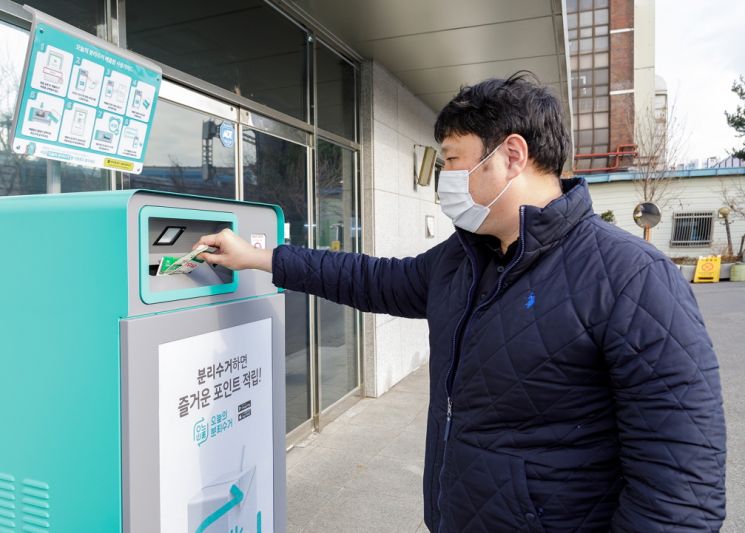
The district announced that it installed 'IoT Smart Paper Carton Collection Boxes' using Internet of Things (IoT) technology at 20 community service centers to prevent environmental pollution and increase resource recycling rates.
Paper cartons can be recycled into high-quality daily necessities and should be separated from general waste paper. However, most residents are unaware and dispose of them together with general waste paper.
To raise residents' awareness of resource circulation and increase paper carton collection rates, the district installed 'IoT Smart Paper Carton Collection Boxes' at all 20 community service centers and began full-scale operation.
The 'IoT Smart Paper Carton Collection Box' can be used by downloading the 'Today's Recycling' app on a smartphone. After user authentication, a QR code is generated. Users scan their QR code and the barcode of the paper carton to be disposed of in sequence and then insert the carton.
Users earn 10 points per paper carton, and when 100 points are accumulated, they can exchange them for one milk (200ml) or one bottle of water (500ml). However, the reward items and exchange locations may vary depending on stock. Accumulated points can also be donated via the app.
The collection boxes operate from 9 a.m. to 6 p.m. on weekdays.
A district official said, “We expect the paper carton separation bins to protect the environment and raise awareness of recycling. We will continue to prepare measures to establish a proper separation culture.”
The district is also conducting projects such as installing unmanned collection machines (Nephron) for cans and transparent PET bottles and exchanging used batteries to promote recycling in daily life.
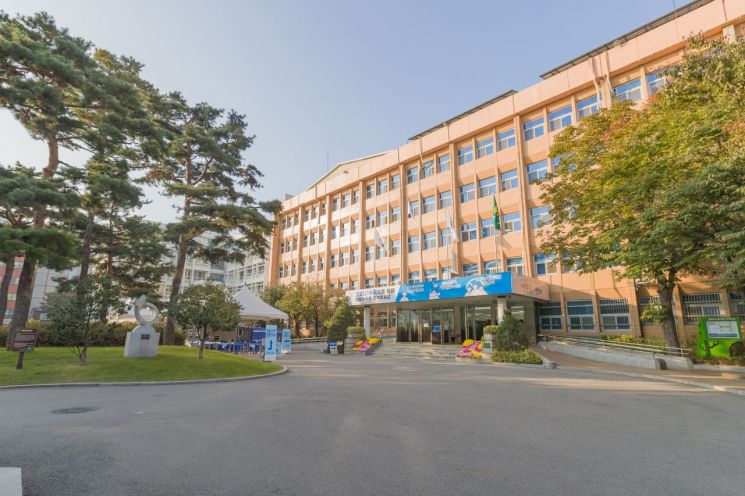
Yeongdeungpo-gu (Mayor Chae Hyun-il) announced that it is recruiting participants for the '2022 First Half Regional Community Job Project' and 'Regional Quarantine Job Project' to stabilize the livelihoods of vulnerable employment groups and strengthen life quarantine.
This job project aims not only to support livelihoods by providing direct jobs to vulnerable groups but also to strengthen connections to private employment through productive and sustainable job projects reflecting regional characteristics.
First, the Regional Community Job Project is recruiting a total of 13 people for seven projects by the 12th. Target projects include ▲resource recycling ▲home repair for vulnerable groups ▲multicultural family supporters ▲abandoned bicycle collection and repair ▲village beautification projects, with a work period from February 7 to June 30 (5 months).
Working hours are up to 30 hours per week for those under 65 and up to 15 hours per week for those 65 and older. The hourly wage is 9,160 KRW, with weekly holiday allowance and snack fees paid separately, and participants are enrolled in the four major social insurances.
Eligibility requires applicants to be residents of Yeongdeungpo-gu as of the project start date, aged 18 or older with work ability, household income below 70% of the median income, and assets under 400 million KRW.
The Regional Quarantine Job Project is recruiting 67 participants for 24 projects by the 7th. After selection, participants will mainly provide life quarantine services and quarantine inspections at community service centers, welfare facilities, daycare centers, sports facilities, and other public facilities frequently used by residents from February 7 to June 6 (4 months).
Working conditions are 4-6 hours per day (3 hours per day for those 65 and older), 5 days a week, with some adjustments possible depending on the department's circumstances. Salary conditions are the same as the Regional Community Job Project.
Eligibility requires applicants to be 18 or older with work ability as of the project start date, registered residents of Yeongdeungpo-gu as of the announcement date, and include vulnerable employment groups, those who experienced job loss or business closure due to COVID-19, and residents needing livelihood support due to regional economic downturn.
Participation in two or more direct job projects simultaneously during the same period is not allowed for both projects. Those participating in full-time government-supported job projects or who have dropped out after the start date are excluded from selection.
Selection results will be posted on the district website on the 28th, and selected candidates will be individually notified by the project department.
Residents wishing to participate can apply by visiting their local community service center. For more details, refer to the announcements on the Yeongdeungpo-gu Office website or contact the Yeongdeungpo-gu Job Economy Division.
Mayor Chae Hyun-il said, “This public job project is expected to minimize blind spots in quarantine management, stabilize households of residents struggling due to COVID-19, and revitalize the local economy through employment recovery. We will continue to actively discover regionally tailored job projects and provide quality jobs to vulnerable employment groups.”
© The Asia Business Daily(www.asiae.co.kr). All rights reserved.



















