[Global Focus] 'Pierce' vs 'Block' Africa Investment War
[Asia Economy Reporter Yoojin Cho] The infrastructure investment war countering China’s ‘Belt and Road Initiative (BRI, the overland and maritime Silk Road)’ is expanding from the United States to the European Union (EU). Western countries, including the Group of Seven (G7) and the EU, are rushing to present similar infrastructure investment plans to counter China’s massive economic bloc vision connecting the Eurasian continent through the BRI. Especially, as the African region targeted by China rapidly emerges as a key battleground, the investment war between Western countries and China in Africa is expected to intensify this year following last year.
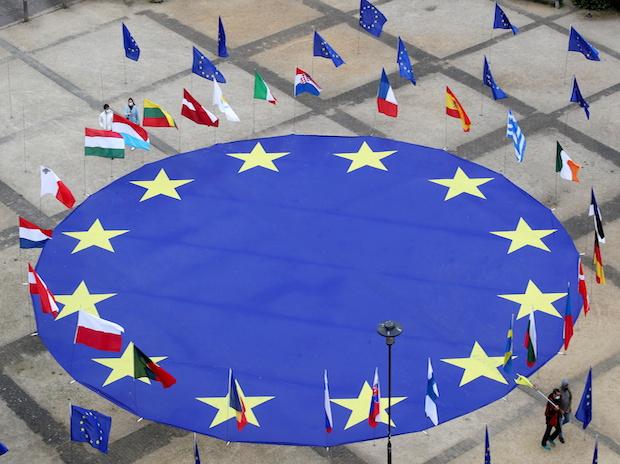
In early last month, the EU Commission announced plans to invest up to 300 billion euros (approximately 406 trillion won) in infrastructure projects in developing countries by 2027. This detailed implementation plan, including the total investment amount, was revealed three months after the initial announcement of the concept in September last year. As China extends its vast financial reach not only to Africa and the Middle East but also within the EU region, Europe’s efforts to counter this have become full-fledged.
◇Western countries increasing investment in Africa= This project, declared as the ‘true alternative’ to China’s BRI, is named the ‘Global Gateway.’ The Global Gateway, meaning the world’s gateway, is essentially the EU’s version of the BRI, established to stabilize supply chains connected between the EU and countries worldwide and to promote trade.
The Global Gateway supports investment and development not only in ‘infrastructure hardware’ such as energy and transportation in developing countries but also in ‘institutional software’ including digitalization, education and research, healthcare, and climate change, based on EU rules and standards. The EU plans to begin serious discussions on the Global Gateway with countries influenced by China’s BRI starting with the upcoming EU-Africa summit next month.
Ursula von der Leyen, President of the EU Commission, clearly expressed the intention to counter China’s BRI, stating that “each country needs a better alternative, a true alternative” to China’s proposal. She explained that the purpose of the Global Gateway is to build a sustainable and strong ‘connection’ link, not a one-sided ‘dependency,’ between Europe and the world to create a new future.
Earlier, the G7 also began promoting infrastructure investment plans starting with Africa to counter the BRI. In this year’s joint declaration, the G7 emphasized overcoming pandemics, economic revitalization, achieving carbon neutrality, and global partnerships as key agendas, proclaiming the ‘Build Back Better World’ initiative to establish infrastructure in regions including Africa where China is expanding its influence.
The Build Back Better World initiative is led by U.S. President Joe Biden. It represents an intention to expand the ‘Build Back Better’ policy, which Biden has been promoting since taking office last year to increase domestic infrastructure investment and establish new supply chains, to a global scale. President Biden directly targeted the BRI, stating, “The G7’s Build Back Better World project will be fairer than the BRI.”
The Build Back Better World aims to invest $40 trillion (approximately 47 quadrillion won) in developing countries including Africa by 2035. The U.S. is already conducting 10 investment projects in African countries such as Ghana and Senegal. To this end, a U.S. delegation led by Daleep Singh, Deputy National Security Advisor at the White House, reportedly visited these countries in November last year.
Jude Moore, senior policy researcher at the Center for Global Development and former Minister of Public Works of Liberia, said, “The U.S. is exploring investments in energy and health projects in Ghana and Senegal,” adding, “I understand that establishing a vaccine production base in Senegal is also under consideration.”
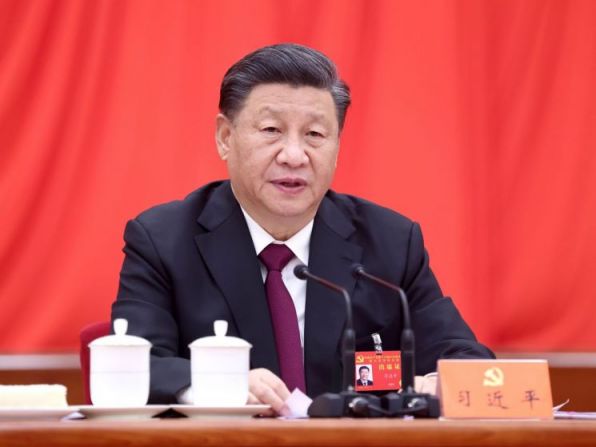
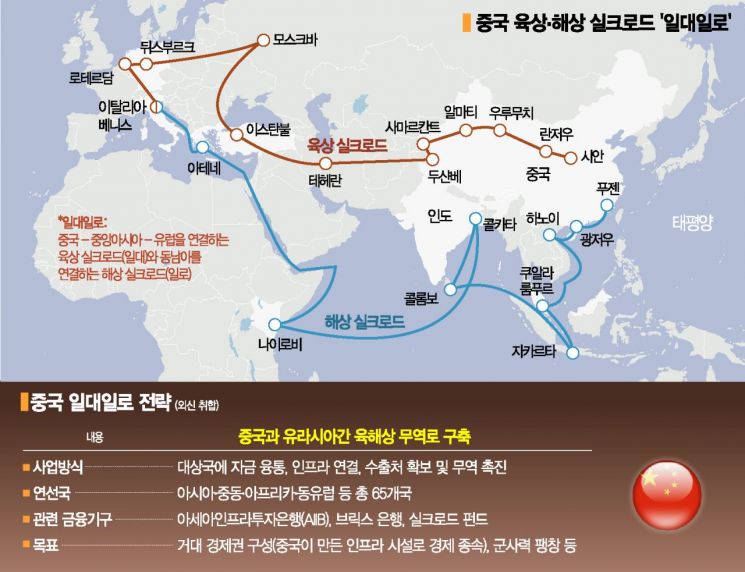
◇China’s Wang Yi begins first overseas trip of the year to Africa= The BRI is an economic belt encompassing infrastructure construction, investment, and trade connecting Southeast Asia, Central Asia, North Africa, and Europe via roads, railways, and sea routes. Initiated with the rise of Chinese President Xi Jinping, this project covers 65 countries and international organizations, with the total population and economic scale of these countries and regions accounting for over 60% and 40% of the world, respectively.
China is strengthening its business push in Africa by turning the COVID-19 crisis into an opportunity. According to the South China Morning Post (SCMP), Deng Li, Deputy Minister of Foreign Affairs of China, announced that China has formed partnerships with African countries in digital economy, smart cities, and 5G sectors. While pledging vaccine support, China secured investment partnerships in the digital sector. Africa, including Tanzania, Sri Lanka, Pakistan, Kenya, and Ethiopia, is a core target country for China’s BRI efforts.
This trend is expected to continue this year. Wang Yi, Chinese State Councilor and Foreign Minister, will visit three East African countries from January 4 to 7 as his first overseas trip of the new year. Chinese Foreign Ministry spokesperson Zhao Lijian emphasized, “China has maintained an excellent tradition of visiting Africa at the beginning of the year for 32 years,” adding, “This reflects China’s friendship with Africa and the importance placed on China-Africa relations.”
The reason China is focusing on Africa is that by controlling this region, it can encircle Europe. Through the BRI, China is constructing not only massive infrastructure projects such as ports and railways in Africa but also military bases.
◇“Means of hegemony” causes discomfort among European countries= European countries are far from pleased with China’s moves. Western countries including the EU and the U.S. criticize China’s BRI for trapping participating countries in debt traps, leaving them with surplus facilities and high-interest debts. They point out that the BRI contains an intention to use it as a means of hegemony to make China a dominant power controlling global rules, norms, and institutions on the world stage.
As China’s hegemonization became overt last year, relations with Western countries such as the EU and the U.S. have deteriorated, and this is expected to deepen further into an infrastructure investment war. Euronews cited the worsening relations with China, on which the EU heavily depends for manufacturing, as one of the four major issues the EU faced this year, identifying the EU’s infrastructure investment plan as a major cause of tension.
© The Asia Business Daily(www.asiae.co.kr). All rights reserved.
![User Who Sold Erroneously Deposited Bitcoins to Repay Debt and Fund Entertainment... What Did the Supreme Court Decide in 2021? [Legal Issue Check]](https://cwcontent.asiae.co.kr/asiaresize/183/2026020910431234020_1770601391.png)

















