Korea Food Industry Association, Samyang Foods, CJ CheilJedang, etc.
Joint Response Launched... Unauthorized Trademark Infringement IP Lawsuit Filed
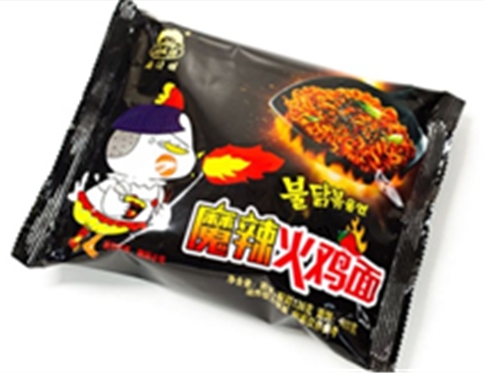
[Asia Economy Reporter Seungjin Lee] Chinese food companies' copying of K-Food is becoming increasingly serious. Samyang Foods' Buldak Bokkeum Myun copied not only the character ‘Hochi’ but also the Korean product name ‘Buldak Bokkeum Myun’ exactly. CJ CheilJedang's Dasida and Ottogi's Dangmyeon also copied the product packaging design and used the Korean product names as they are, deceiving consumers into thinking they are Korean products, prompting the food industry to take joint action.
Domestic Food Companies' Joint Response
On the 3rd, the Korea Food Industry Association announced that it has formed a joint consultative body with Samyang Foods, CJ CheilJedang, Daesang, and Ottogi to file intellectual property (IP) lawsuits against Qingdao Taiyangcho Food and Jeongdo Food, the largest producers and distributors of counterfeit K-Food in China. This lawsuit is being carried out with the cooperation of the Korean Intellectual Property Office and the Korea Intellectual Property Protection Agency for efficient progress.
Qingdao Taiyangcho Food and Jeongdo Food in China produce similar Korean-style food products with packaging that plagiarizes popular K-Food trademarks and designs, attaching the Korean brand name ‘Sanai’.
Representative examples include Samyang Foods' Buldak Bokkeum Myun, CJ CheilJedang's Dasida, sugar, salt, Daesang's Miwon, anchovy fish sauce, seaweed, and Ottogi's Dangmyeon products. The counterfeit products copied the domestic product packaging design exactly and wrote Korean words such as ‘Buldak Bokkeum Myun’ and ‘Dangmyeon’ to deceive consumers into thinking they are Korean products. All the affected companies operate local subsidiaries in China, so consumer damage caused by counterfeit distribution could potentially harm the companies' image and credibility.
Trademark Infringement Doubled Since COVID-19
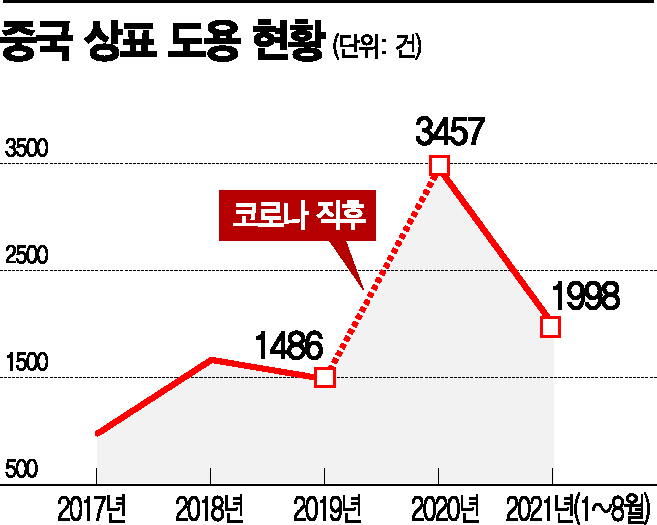
According to the Korean Intellectual Property Office, cases of domestic companies' trademarks being copied in China surged from 977 in 2017 to 3,457 in 2020, a 3.5-fold increase. Last year, 1,998 cases of trademark infringement were detected by August. The trademark infringement has worsened recently due to the halt in travel caused by COVID-19 and the global popularity of the Netflix drama ‘Squid Game,’ fueling the Korean Wave.
Recently, the sandwich brand 'Egg Drop' also suffered unauthorized use. A Chinese company was caught trying to recruit franchisees using menus and signboards similar to Egg Drop. Another company even registered a trademark adding a dot to the existing Egg Drop trademark (EGG·DROP). Egg Drop filed a lawsuit against local companies in China that unauthorizedly used its trademark and recruited franchisees with forged documents claiming trademark use permission, winning the case.
Lee Hyoyul, chairman of the Korea Food Industry Association, said, "This lawsuit is significant because major food companies competing fairly in domestic and international markets voluntarily united to take joint action," adding, "We will do our best to win the lawsuit so that this can become a successful case of IP infringement response."
© The Asia Business Daily(www.asiae.co.kr). All rights reserved.


















