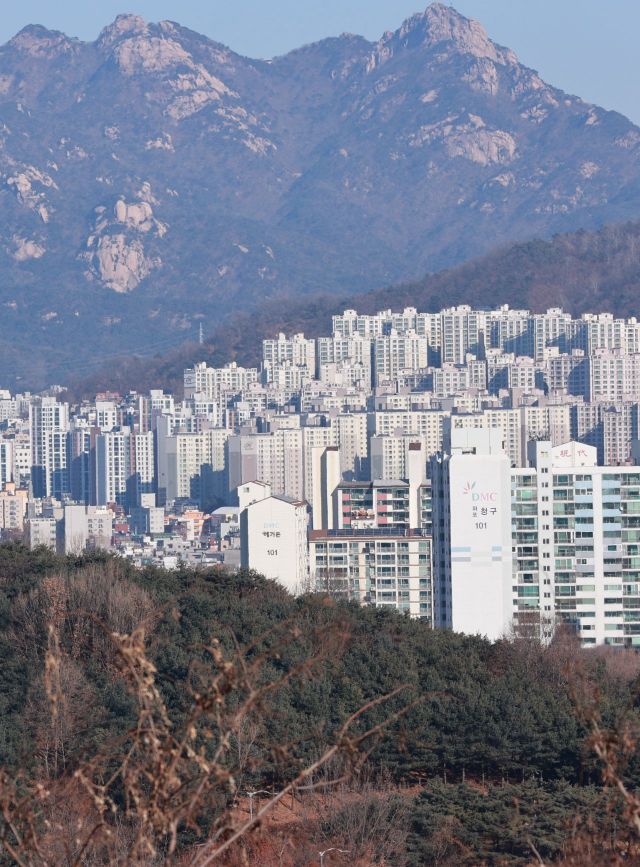
[Asia Economy Reporter Ryu Tae-min] This year’s subscription market was hotter than ever. Due to the impact of the price ceiling system, the gap between the sale price and market price widened sharply, spreading the perception that winning the subscription is like a ‘lottery.’ As the threshold for ‘owning a home’ rose, many complexes saw competition rates surpass 100 to 1. In this situation, many people indiscriminately applied for subscriptions, only to unexpectedly win but fail to purchase, losing their subscription savings account in the process, so caution is required.
On the 2nd, real estate research firm Realtoday analyzed data from the Korea Real Estate Board’s Subscription Home and found that 2,926,313 people applied for 146,579 apartment units nationwide this year, recording an average competition rate of 19.96 to 1. Sejong City had the fiercest subscription competition nationwide with an average competition rate of 195.3 to 1. In Seoul, 282,896 people applied for 1,721 units, showing an average competition rate of 164.3 to 1. This is the highest figure since statistics began in 2002. Compared to last year (88.8 to 1), the competition rate roughly doubled.
By individual complexes, ‘Dongtan Station Dietre Prestige’ in Dongtan New Town, Hwaseong, Gyeonggi-do, recorded the highest competition rate this year, soaring to an average of 809.08 to 1 with 244,343 applicants for 302 general supply units. Following that, ‘Gwacheon Knowledge Information Town Lin Familier’ in Gwacheon City recorded an average of 718.31 to 1, and ‘Wirye Xi The City’ in Wirye New Town recorded an average of 617.57 to 1.
The number of subscription savings account holders also surged. According to the Korea Real Estate Board’s Subscription Home, as of October, the number of first-priority subscription savings accounts was 14,429,288, an increase of 6.91% compared to the same period last year. This is the highest since the comprehensive housing subscription savings was implemented in 2009.
Subscription savings accounts lose their validity immediately upon winning, so in principle, they cannot be reused. Especially if the winner cancels due to dissatisfaction with the assigned building or unit number after winning or for other personal reasons, re-winning is restricted and the subscription savings account cannot be reused. Similarly, if a standby winner is assigned a building or unit number after submitting documents, the subscription savings account is considered used, and re-winning is restricted.
However, exceptions apply in cases of disqualification after winning. If, due to simple mistakes such as miscalculating the period of no home ownership or the number of dependents during the data entry stage of the subscription application, the winner is disqualified and the winning is canceled, this is treated as a disqualification after winning. A revival application must be made within one year from the date of cancellation.
In such disqualification cancellations, the use of the subscription savings account is prohibited for a certain period. The re-winning restriction period varies depending on the district or region. In the metropolitan area or speculative overheated districts and subscription overheated districts, the subscription savings account use is prohibited for one year from the winning date; in non-regulated areas, for six months; and in subscription depressed areas, for three months.
© The Asia Business Daily(www.asiae.co.kr). All rights reserved.

















