Solar Power SME Partially Wins Damages Lawsuit Against Hanwha
Court Applies Double Punitive Damages
Hanwha "Appeals to Supreme Court Disputing Second Trial Verdict"
[Asia Economy Reporter Lee Junhyung] A case has emerged where a small and medium-sized enterprise (SME) won a civil lawsuit concerning a technology misappropriation dispute with Hanwha and its subcontractors. Hanwha plans to appeal to the Supreme Court, dissatisfied with the ruling.
According to the Kyungcheong Foundation on the 28th, SJ Innotech, a solar power and semiconductor equipment company, partially won an appeal for damages against Hanwha. On the 23rd of this month, the 4th Civil Division of the Seoul High Court ruled partially in favor of SJ Innotech, a former subcontractor of Hanwha, in the damages appeal case filed against Hanwha and Hanwha Solutions. The court recognized 500 million KRW in damages for technology misappropriation and applied punitive damages at twice the amount for the first time domestically, ordering a total of 1 billion KRW in damages.
This is the first time in South Korea that an SME has won even partially against a large corporation in a civil lawsuit over technology theft. It is also the first time that a court, which had been reluctant to apply punitive damages, applied double punitive damages on top of technology misappropriation damages. Given that in the past, punitive damages were recognized at 1.64 times for unfair subcontract payment decisions, this ruling is considered significant. The Kyungcheong Foundation, which provided free legal services, as well as technical experts involved in the lawsuit, appear to have influenced the outcome.
Jung Hyungchan, CEO of SJ Innotech, said, "Although partial, it is meaningful that the court sided with an SME for the first time in a civil lawsuit over technology disputes between large and small companies," adding, "I hope this ruling serves as a wake-up call against the widespread technology theft by large corporations." He also noted, "While the court acknowledged the technology misappropriation, it is problematic that the damages were calculated at an amount far below the 4 billion KRW development cost."
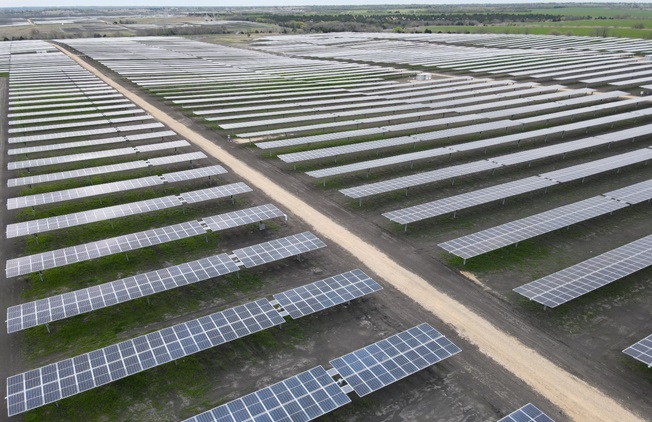 A 168-megawatt (MW) solar power plant built by Hanwha Q CELLS in Texas, USA. The photo is unrelated to specific expressions in the article.
 [Photo by Asia Economy DB]
Previously, SJ Innotech had a subcontract manufacturing contract for solar power equipment with Hanwha from 2011 to 2015. Hanwha is accused of misappropriating SJ Innotech’s solar cell manufacturing line equipment technology to produce solar products and supply them to Hanwha affiliates. The technology dispute began with a complaint to the Fair Trade Commission in 2016, followed by SJ Innotech’s damages lawsuit in 2018.
In 2019, the Fair Trade Commission ordered corrective measures, imposed fines, and referred the case to the prosecution, stating that Hanwha had misappropriated SJ Innotech’s technical data. However, the prosecution decided not to indict last year. Subsequent appeals and requests for reconsideration were also dismissed, and the case is currently pending before the Supreme Court.
The court also ruled against SJ Innotech in the first instance of the damages civil lawsuit. The first trial court judged that the approved drawings, manuals, and layout drawings provided by SJ Innotech to Hanwha were not technical data protected under the Subcontracting Act.
SJ Innotech immediately appealed the first trial ruling. The appellate court overturned the first trial decision, finding that Hanwha had used technical information such as manual-attached drawings without permission. Furthermore, considering that Hanwha misappropriated technical information during the contract period while in a competitor’s position and did not make efforts to remedy the damage, the court imposed punitive damages twice the amount. However, the court ruled that responsibility for technical data other than the manual-attached drawings was not recognized.
Hanwha expressed its intention to appeal the second trial ruling to the Supreme Court. A Hanwha representative stated, "We have continuously won in previous trials including the first trial and administrative lawsuits," adding, "In the first trial and others, it was recognized that Hanwha used already disclosed information and developed the technology in-house by hiring six experienced employees."
© The Asia Business Daily(www.asiae.co.kr). All rights reserved.


















