[Seoul District News] Three Additional South-End Ramps Connecting Anyangcheon-ro and Gonghang-daero to World Cup Bridge Main Line to Greatly Improve Traffic Infrastructure... Targeted Opening in December 2022, Detour and Pedestrian-Only Temporary Stairs to Minimize Safety Accidents and Resident Inconvenience During Construction... Hongjecheon Artificial Waterfall Transforms into a 25m High Giant Ice Wall with Natural Beauty Amid This Winter's Severe Cold Wave... Gangdong-gu Installs Speed Cameras at 47 School Zones to Create Safe Routes for Children... Guro-gu Expands Roads 'Here and There'
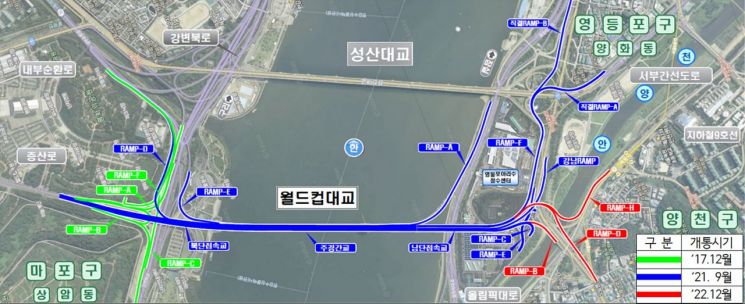
[Asia Economy Reporter Park Jong-il] Yangcheon-gu (Mayor Kim Soo-young) announced that it is promoting the installation of three additional southern ramps allowing entry and exit to the main line of World Cup Bridge from Anyangcheon-ro and Gonghang-daero in the district, aiming for completion in December 2022.
The main line and major ramps of the World Cup Bridge, implemented by Seoul City, were connected and opened in September last year in conjunction with the Western Arterial Underground Road. However, the district judged that the transportation infrastructure benefits for Yangcheon-gu residents were insufficient and thus decided to promote the additional installation of southern ramps.
The three southern ramps (Ramp-B, D, H) crossing Anyangcheon to be additionally installed will not only distribute traffic volume on Anyangcheon-ro and Gonghang-daero but are also expected to greatly improve residents' transportation convenience by alleviating chronic traffic congestion bottlenecks. Furthermore, it is anticipated to contribute to the overall regional development of Yangcheon-gu by significantly enhancing accessibility to the Internal Circulation Road and Western Arterial Road.
For the additional construction of the World Cup Bridge southern ramps, part of the Anyangcheon embankment near Sinmok-dong Station on Line 9 will be used as an access road for construction vehicles. The district plans to create detours for existing bicycle and pedestrian paths to minimize inconvenience to residents using Anyangcheon and prevent safety accidents caused by construction.
Additionally, to completely separate the routes of construction vehicles and residents using Anyangcheon, temporary pedestrian-only access stairs will be installed on the embankment.
Kim Soo-young, Mayor of Yangcheon-gu, said, “We expect the transportation infrastructure of Yangcheon-gu to be greatly improved through the three additional southern ramps of World Cup-daero scheduled to open in December 2022,” adding, “We will meticulously manage and supervise the entire construction process to minimize residents' inconvenience and prevent safety accidents.”
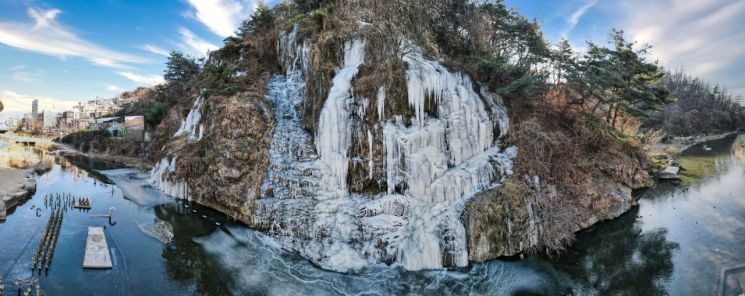
The Hongjecheon artificial waterfall, which attracts citizens with its cool water flow in summer, has transformed into a magnificent 25-meter-high natural ice wall this winter amid the strongest cold wave.
Seodaemun-gu does not operate the Hongjecheon artificial waterfall during winter but created the ice wall to provide a beautiful spectacle.
By gradually flowing river water to allow natural freezing, the ice wall is expected to be maintained until February even if temperatures rise.
The Hongjecheon waterfall in Seodaemun-gu is 25 meters high and 60 meters wide, completed in 2011, and operates annually from April to October.
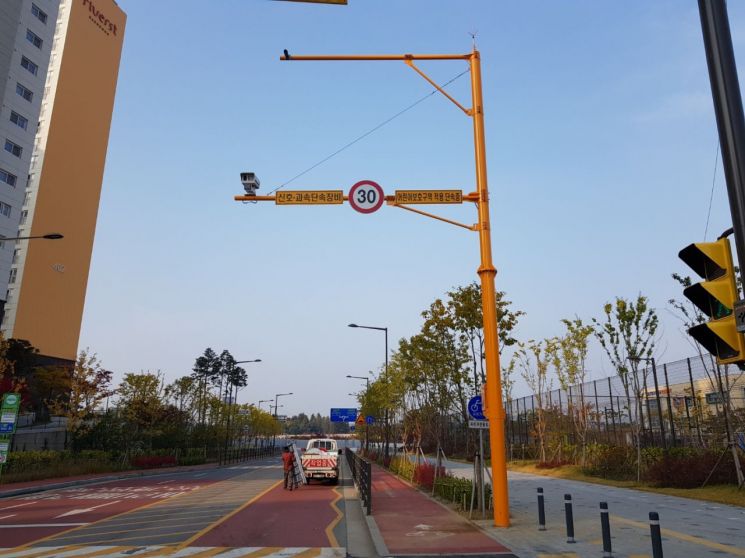
Now, extra caution must be exercised to avoid speeding in school zones within Gangdong-gu.
Gangdong-gu (Mayor Lee Jung-hoon), which has been making multifaceted efforts to prevent child traffic accidents, has installed speed enforcement cameras in 47 school zones within the district.
If caught speeding over 30 km/h in a school zone, one may face a fine of up to 160,000 KRW or penalty points.
Until last year, speed cameras were installed in 32 school zones in Gangdong-gu, and this year, 15 additional cameras were installed, including at Gangbit Elementary School, completing installation in a total of 47 locations.
The newly installed speed cameras were selected through demand surveys and on-site inspections for locations requiring cameras in school zones, followed by coordination with Seoul City, Gangdong Police Station, and Seoul Metropolitan Police Agency.
After completing necessary procedures such as acceptance inspections by the Road Traffic Authority, a guidance period will be provided, and full operation is scheduled to begin in the first half of next year.
Lee Jung-hoon, Mayor of Gangdong-gu, said, “Gangdong-gu prioritizes creating safe routes for children, the future leaders, and plans to continuously expand the installation of speed enforcement cameras,” adding, “In the coming new year, we will actively listen to field voices and do our best to ensure no vulnerable areas remain in children's pedestrian environments.”
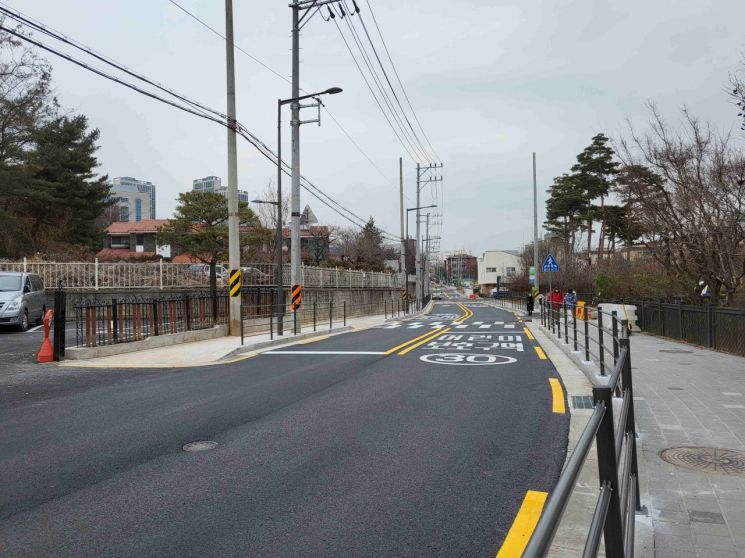
Guro-gu (Mayor Lee Sung) has expanded narrow roads to be wider and more comfortable.
Guro-gu announced on the 28th that after expanding and opening Yeondong-ro and the road in front of Miseong Villa in Gung-dong, which were habitual congestion sections, the main road in Garibong-dong will be expanded to 8 meters wide within this month.
First, Guro-gu completed the expansion work on Yeondong-ro. This area, from Yeondong-ro 271 (Hang-dong) to Gyeongin-ro 18 (Oryu-dong), had inconveniences in resident traffic due to increased traffic volume from the occupancy of Hang-dong public housing district.
To resolve this, Guro-gu invested 8 billion KRW from city funds and special adjustment grants, starting the project in 2017 and recently completing it. The existing 625-meter road section was widened from 8 meters to 12 meters, lanes were repainted, and sidewalks and road surfaces were repaved.
The access road around Miseong Villa in Gung-dong residential area (entrance to Wongaksa) was also widened. A 178-meter section from Gung-dong 42 to 252-6 now has a 6-meter-wide road. The project started in 2019 with a budget of about 1.4 billion KRW and was completed last month.
The main road in Garibong-dong is under construction aiming for completion this month. It is a section from Samhwa Printing to Umagil, where narrow roads have continuously caused vehicle traffic and resident inconvenience. Upon completion, an 8-meter-wide road will be opened over a 377-meter section.
On the 20th of last month, road expansion work was completed on a 1.1 km section from Gwangbokgyo to Saseonggyo (former Anyanggyo) on Nambusunhwan-ro, widening from 4-5 lanes to 6 lanes.
Along with this, sidewalks were newly installed on both sides, greatly improving the pedestrian environment for residents using Anyangcheon and Mokgamcheon.
A Guro-gu official said, “The road expansion projects we have promoted to resolve residents' inconvenience are bearing fruit,” adding, “We will continue to improve so that residents can use roads comfortably and safely.”
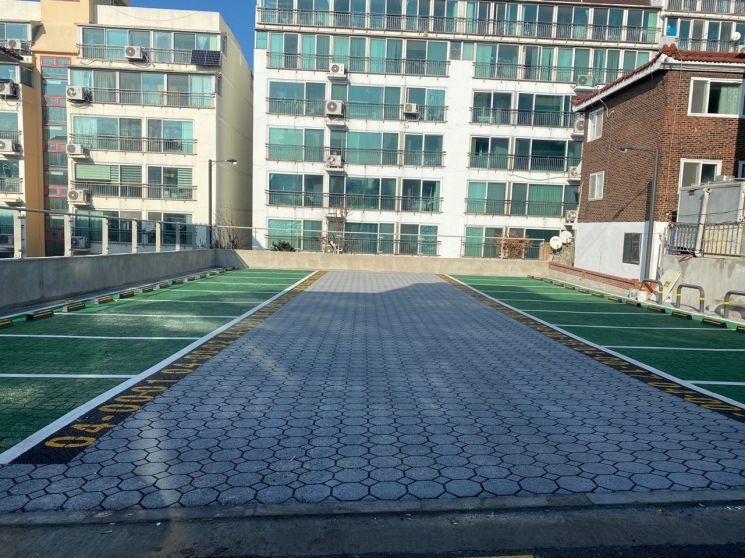
Geumcheon-gu (Mayor Yoo Sung-hoon) has created small-scale public parking lots in two densely populated residential areas, Siheung 1-dong and Doksan 3-dong, suffering from illegal parking.
The parking lots are located in Siheung 1-dong 865-9 area and Doksan 3-dong 992-41 area, both densely packed with old houses without parking lots, urgently needing parking environment improvement. Especially, in case of fire, illegal parked vehicles in alleys make it difficult for emergency vehicles to enter, raising concerns about major accidents.
To improve this poor parking environment, Geumcheon-gu promoted a small-scale public parking lot construction project and completed it on the 28th.
The Siheung 1-dong small-scale public parking lot has a site area of 306㎡ with 10 spaces, and the Doksan 3-dong lot has 430㎡ with 18 spaces. Both will be operated by the Geumcheon-gu Facilities Management Corporation from January 2022 as resident-priority parking.
Geumcheon-gu is focusing on expanding parking lots to improve residents' living environments in residential areas. In the first half of 2022, it plans to start construction of a public parking lot with 105 spaces on two underground floors using a village park site in Doksan 2-dong. For areas where securing large sites is difficult, small-scale public parking lots will be supplied annually.
Yoo Sung-hoon, Mayor of Geumcheon-gu, said, “Along with constructing public parking lots, we will promote opening and sharing of existing public and private parking lots to minimize residents' inconvenience caused by parking space shortages.”
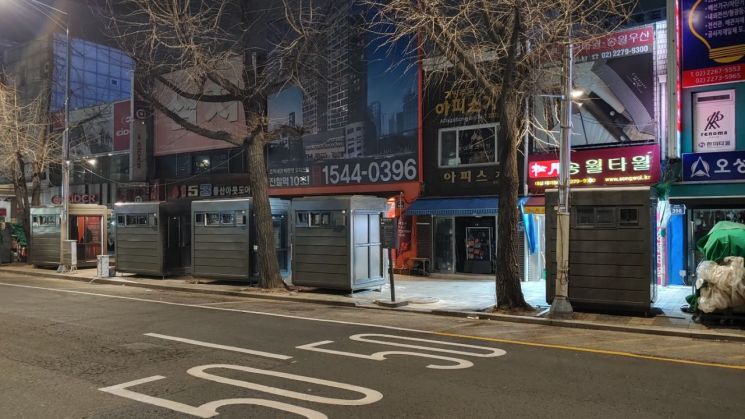
Jongno-gu has completed the “Jongno 5-ga Cheonggyecheon Street Vendor Special Maintenance” project, which started in August this year, greatly improving the pedestrian environment and urban aesthetics in the area.
The target area is about 100 meters from Exit 6 of Jongno 5-ga Station across from the East Gate of Gwangjang Market to Cheonggye 5-ga. Numerous unregulated street vendors had long crowded the area, causing inconvenience to pedestrian traffic.
The district undertook this project after careful consideration to provide a safe pedestrian environment for citizens and find ways to coexist with small street vendors.
Twelve unregulated street vendor stalls that impaired urban aesthetics were removed, and new standardized stalls (7 fixed, 5 temporary) with uniform tents and signs were produced using Seoul City funds.
The design focused on harmony with the area while giving a bright and sophisticated feel, and careful placement was made to secure effective sidewalk width by keeping maximum distance from subway entrances, crosswalks, and bus stops.
Each completed sales space will be operated by leasing under the “Street Vendor Real-Name System” introduced in 2022.
By renewing road occupancy permits and stall lease contracts annually, this management policy incorporates street vendors into the system, preventing issues like resale and subleasing, and is expected to secure future tax revenue and naturally reduce the number of street vendors.
Jongno-gu previously completed the “Changsin-dong Main Road Street Vendor Maintenance” project last year, covering a 1.2 km north-south section from Heunginjimun to Dongmyo Station intersection.
Street vendors blocking pedestrian paths at underpasses and alley entrances were relocated, and the number of vendors was reduced from 133 to 107. New stalls were replaced after expert review and redesign. Jongno-gu plans to improve street vendors in Jongno 4-ga in 2022.
An official said, “We have been steadily maintaining street vendors that no longer operate due to reasons like owner death and are currently implementing the real-name system for all street vendors in the area,” adding, “We will bring pleasant changes throughout the region through maintenance based on communication and coexistence rather than enforcement-focused management.”
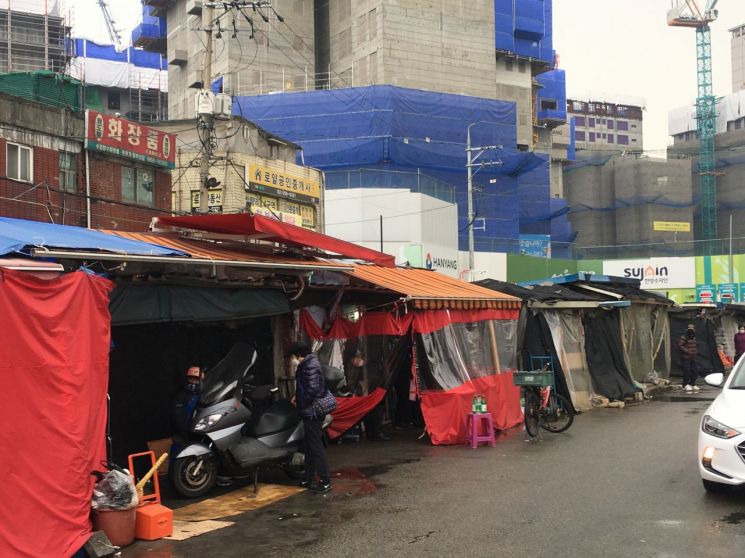
Dongdaemun-gu (Mayor Yoo Deok-yeol) has removed all illegal facilities occupying the area around Yongdu-dong 7.
Illegal facilities began to appear in the Yongdu-dong 7 area, a public parking lot site owned by Seoul City, since the 1980s. The number of street vendors increased to 26, causing odor and garbage problems, leading to continuous complaints from local residents demanding environmental cleanup.
In response, the district conducted an illegal facility survey in February and sent notices for voluntary cleanup and relocation to occupants in July. After dozens of site patrols and meetings with the street vendor countermeasure committee, all 26 illegal vendors recently decided to voluntarily vacate and completed cleanup by December 21. The district plans to install fences after removal.
To prevent re-occupation of the restored site, the district will install barriers and strengthen site patrols.
Yoo Deok-yeol, Mayor of Dongdaemun-gu, said, “Through communication, we have removed 26 illegal facilities in Yongdu-dong 7, which had long been in need of maintenance, creating a much cleaner urban environment,” adding, “We will strengthen continuous patrols to prevent re-occupation and work with the city owning the site to find ways to use the space efficiently.”
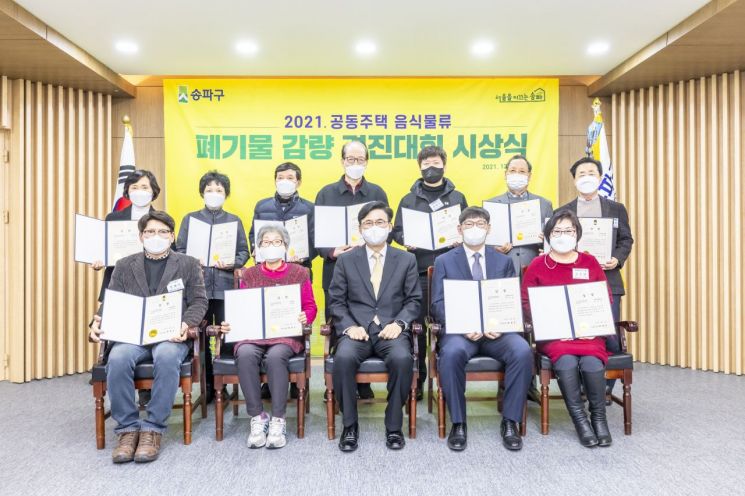
Songpa-gu (Mayor Park Sung-soo) held the “2021 Apartment Food Waste Reduction Contest Award Ceremony” on the 24th after conducting the contest targeting apartment complexes in the district from May to October this year.
The district has been holding the food waste reduction contest for apartment complexes, which account for 40% of food waste generation, since 2015 to encourage residents' proactive participation in reducing food waste.
This year, with increased home meals due to the rise in delivery food amid COVID-19, food waste per household increased. The contest aimed to raise awareness of the importance of reducing food waste and encourage residents' participation.
The awards were given to 32 apartment complexes with RFID food waste meters installed and over 100 households that applied for participation. From May to October, total food waste generation was measured, and judging was based on reduction rate compared to the previous year and average waste per household.
Fifteen apartment complexes with excellent food waste reduction practices were awarded certificates in three categories based on the number of households: 100-399, 400-999, and 1000 or more, with 1 grand prize, 2 excellence, and 2 encouragement awards per category.
Park Sung-soo, Mayor of Songpa-gu, said, “The contest has fostered voluntary reduction awareness among residents and healthy competition among apartment complexes, leading to expected food waste reduction,” adding, “We will continue to develop and promote various projects to create a ‘Carbon Neutral City Songpa.’”
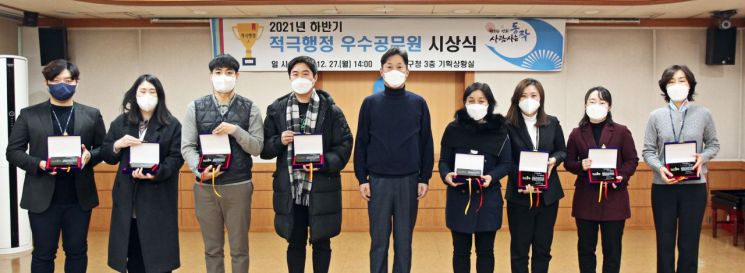
Dongjak-gu (Mayor Lee Chang-woo) selected and awarded nine public officials as “2021 Second Half Excellent Public Officials for Proactive Administration” on the 28th for achieving valuable results through a challenging and creative approach.
The selection of excellent proactive public officials is a system to discover officials who actively respond to changing environments and provide incentives, held twice a year since last year.
The second half proactive administration officials were selected after comprehensive evaluation of 15 cases received through resident and department recommendations, based on five criteria: resident impact, task importance and difficulty, proactiveness, creativity and expertise, and potential for dissemination.
Key proactive administration cases include contributions to COVID-19 prevention and economic revitalization, budget savings through innovative ideas, overcoming opposition complaints through active communication with residents, and overcoming difficulties in project implementation to achieve results.
The district plans to provide the nine selected officials with top-grade performance bonuses and special leave as incentives.
Meanwhile, the district has encouraged proactive work by establishing the “Proactive Administration Operation Ordinance” last year and launching a “Proactive Administration Committee” composed of experts such as university professors and lawyers this year.
Additionally, Dongjak-gu achieved the highest grade among all autonomous districts nationwide for three consecutive years in the “2021 Public Institution Integrity Evaluation” conducted by the Anti-Corruption and Civil Rights Commission, considering proactive administration as clean administration and imposing disadvantages on passive administration, focusing efforts on spreading a proper public service culture.
Mayor Lee Chang-woo said, “One of the proudest achievements during my term is the complete establishment of a working organizational culture among district employees,” adding, “We will do our best to establish a virtuous cycle where proactive work by public officials leads to residents' happiness.”
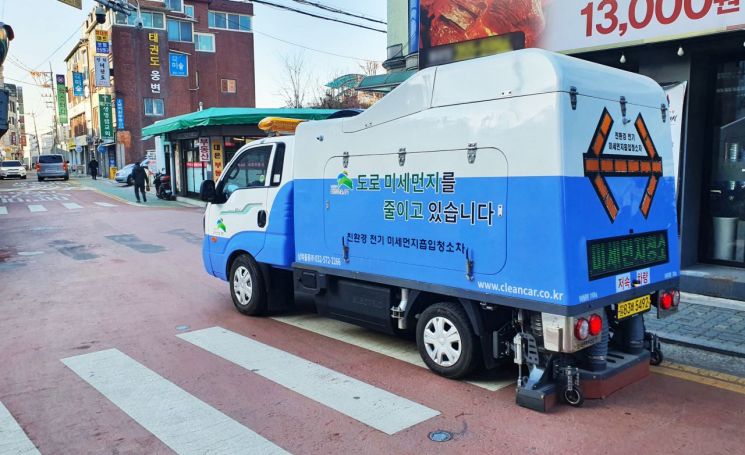
Eunpyeong-gu (Mayor Kim Mi-kyung) will be the first in the nation to remove fine dust using an eco-friendly electric small dust suction vehicle.
The district will focus on removing fine dust from back roads in Daejo-dong, a fine dust intensive management area, until June next year. The vehicle will operate intensively during the winter and early spring seasonal management period when high concentrations of fine dust frequently occur. It will run more than three times daily over 14 back road sections totaling 6.83 km, cleaning fine dust in every corner of alleys.
The electric small dust suction vehicle is eco-friendly as it operates with a battery and motor without an engine, emitting no exhaust. Its small size and low noise make it specialized for cleaning back roads where large dust suction vehicles cannot enter.
An official said, “Eunpyeong-gu has received great response from residents by implementing various fine dust reduction projects in intensive management areas this year. Through this nationwide first electric small dust suction vehicle lease operation, we will create a fine dust safe zone that residents can feel.”
© The Asia Business Daily(www.asiae.co.kr). All rights reserved.
![Clutching a Stolen Dior Bag, Saying "I Hate Being Poor but Real"... The Grotesque Con of a "Human Knockoff" [Slate]](https://cwcontent.asiae.co.kr/asiaresize/183/2026021902243444107_1771435474.jpg)


















