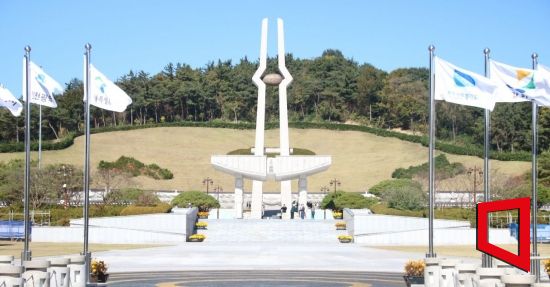
[Asia Economy Honam Reporting Headquarters, Reporter Yoon Jamin] It has been suggested that a corpse disposal team operated during the May 18 Gwangju Democratization Movement in 1980.
The May 18 Democratization Movement Truth Investigation Committee announced on the 27th that it has secured numerous testimonies indicating that a corpse disposal team was active in Gwangju, and is meticulously tracking the composition, activities, command and reporting system, and disposal results of the team.
They confirmed the number of missing bodies from the civilian mass massacre incident that occurred during the Gwangju outskirts lockdown operation, and around June 10, 1980, shortly after May 18, the 11th Airborne Brigade and the 3rd Airborne Brigade came down to Gwangju for corpse recovery or disposal. It is also revealed that the Security Command was deeply involved in this process.
They secured testimonies regarding an incident where a 25-seat minibus was shot by the 11th Airborne Brigade blocking the road between Gwangju and Hwasun on May 23, 1980, resulting in civilian deaths.
According to the testimony of Private A at the time, who climbed onto the bus under the orders of the platoon leader commanding the scene, the number of deceased confirmed was 17, supported by multiple testimonies from martial law troops.
Since only 11 bodies were recovered at the scene, at least 6 bodies went missing. After the 11th Airborne Brigade returned to Seoul, around June 10, two enlisted soldiers came down and were confirmed to have been involved in the disposal of the bodies.
Regarding this, by compiling various testimonies from martial law troops, it was found that there were four airborne unit teams that came back to Gwangju to recover bodies. Besides the already known “temporary burial corpse disposal team” of four members who came to check the temporary burial sites, the identities of two other enlisted soldiers forming another corpse disposal team were confirmed.
The investigation committee is conducting follow-up investigations on related personnel, including a major from the former education corps who testified that they confirmed the temporary burial locations and numbers and were responsible for recovery or reprocessing.
Testimonies also emerged regarding deaths that occurred during the transfer of civilians to Gwangju Prison. It was testified that 12 civilians detained in the Science Department of Chonnam National University’s College of Liberal Arts and Sciences suffocated inside a truck during transfer to Gwangju Prison.
This has been cross-verified through the testimony of the person who directly removed these bodies from the truck and multiple testimonies from martial law troops present at the scene.
Only eight bodies were recovered inside the prison, and during the martial law troops’ comprehensive inspection, testimonies from 54 troops who ordered, executed, and witnessed temporary or secret burials within the prison area were secured, indicating that up to about 50 bodies were temporarily or secretly buried.
The figure of “about 50 bodies” was derived after analyzing testimonies to eliminate duplicates. It is being investigated whether a corpse disposal team operated for the bodies temporarily or secretly buried in the Gwangju Prison area, and the investigation is also tracking the substantial truth that the Security Command led this process at the time.
© The Asia Business Daily(www.asiae.co.kr). All rights reserved.
![Clutching a Stolen Dior Bag, Saying "I Hate Being Poor but Real"... The Grotesque Con of a "Human Knockoff" [Slate]](https://cwcontent.asiae.co.kr/asiaresize/183/2026021902243444107_1771435474.jpg)
















