2022 Monetary and Credit Policy Operational Direction
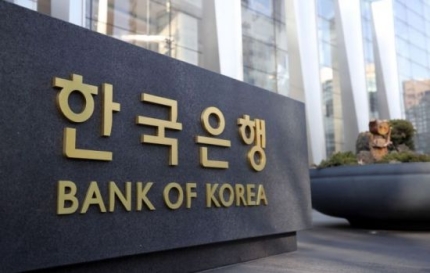
[Asia Economy Reporter Jang Sehee] The Bank of Korea announced on the 24th that "it will appropriately adjust the degree of monetary policy easing to stabilize the inflation rate at the target level and mitigate the risks of financial imbalances."
In the '2022 Monetary and Credit Policy Operation Direction' released on the same day, the Bank of Korea stated, "The timing of adjusting the degree of easing will be judged by considering the development of domestic and external risk factors, growth and inflation trends, financial imbalance situations, and the impact of changes in major countries' monetary policies." Given the continued high inflation and the fact that household and corporate debt in South Korea amounts to 2.2 times the total economic scale, additional base rate hikes seem inevitable.
The Bank of Korea also announced that it will continue the loan system to minimize damage to vulnerable borrowers during the interest rate hike period. It added, "Selective support for companies affected by COVID-19 will continue," and "we will review medium- to long-term improvement directions."
While expecting the domestic gross domestic product (GDP) growth rate next year to be around 3%, it forecasted that "the intensification of domestic and international infectious disease spread, prolonged global supply disruptions, and the slowdown of China's economic growth could act as downside factors." Regarding employment, it analyzed that improvements will continue mainly in the service sector due to increased demand.
Next Year’s Consumer Price Inflation Rate to Remain in the 2% Range... Higher Inflation Likely
Next year’s consumer price inflation rate is expected to remain in the 2% range. As the influence of supply-side factors such as oil prices gradually decreases, it will be somewhat lower than this year but still remain in the 2% range. Core inflation (excluding food and energy) is projected to rise to a level close to 2% due to expanding demand-side pressures and the impact of global supply bottlenecks.
The Bank of Korea assessed that upward risks outweigh downward risks in the future inflation path. This means that prices could rise further. The Bank emphasized, "The continued high rise in international raw material prices, prolonged global supply bottlenecks, and rising inflation expectations are expected to act as upward risks."
The Bank also diagnosed that the current external environment is unstable. The future growth trajectory could change depending on the development of COVID-19. Additionally, global supply bottlenecks and changes in China’s economic trends are also seen as risks.
Regarding global inflation, it stated, "The impact of supply-side factors will gradually diminish, but demand-side pressures will increase with economic recovery, maintaining a high level." It added, "Considering growth and inflation trends, the pace of monetary policy normalization in major countries is also expected to accelerate."
Meanwhile, the financial and foreign exchange markets may experience frequent volatility in key price variables such as interest rates, stock prices, and exchange rates due to changes in expectations about domestic and international economic and inflation developments and monetary policy. The Bank of Korea added, "Foreign currency liquidity conditions are expected to remain stable based on current account surpluses and sound external soundness."
© The Asia Business Daily(www.asiae.co.kr). All rights reserved.
![Clutching a Stolen Dior Bag, Saying "I Hate Being Poor but Real"... The Grotesque Con of a "Human Knockoff" [Slate]](https://cwcontent.asiae.co.kr/asiaresize/183/2026021902243444107_1771435474.jpg)
















