New Expansion of Cultural Centers and Village Parking Lots by 2025
Up to 2 Billion KRW Support per Project from City and Province... Enhancing Residents' Quality of Life with Customized Local Facilities, Promoting Balanced Development
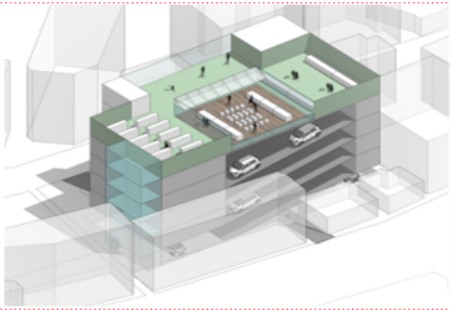
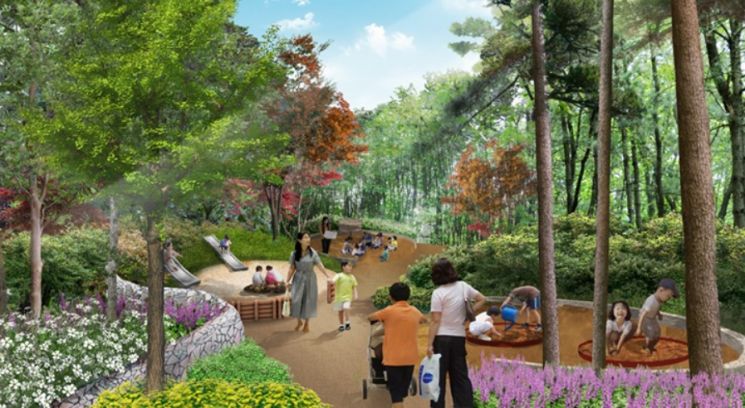
[Asia Economy Reporter Lim Cheol-young] A public living infrastructure complex featuring a 60-space parking lot, a community cultural center, a shared kitchen, and rest areas will be established in Namgajwa-dong, Seodaemun-gu, Seoul, spanning from basement level 1 to the 5th floor. In Okindong, Jongno-gu, within Inwangsan Neighborhood Park, a resident complex cultural space equipped with a small library and a healing cultural center will be created, while in Daerim-dong, Yeongdeungpo-gu, a village library and book caf? where residents can relax with books will be developed.
On the 23rd, the Seoul Metropolitan Government announced that through the autonomous district contest for the 'Low-rise Residential Area Living SOC Supply Project' held last November, 11 areas including Namgajwa-dong in Seodaemun-gu were selected, and the living SOC will be completed by 2025. Ten sites aim to open in 2023, and one site in 2025.
The 'Low-rise Residential Area Living SOC Supply Project' is a project to create region-customized, community-oriented social infrastructure so that residents of aging low-rise residential areas can enjoy small libraries, small parking lots, senior rest areas, and parks within a 10-minute walk. It started in 2019 as part of a regional balanced development initiative to densely supply various necessary community facilities in neighborhoods.
This year’s 11 newly selected sites were chosen mainly from aging low-rise residential areas with poor social infrastructure, especially those lacking resident convenience facilities or those that can create synergy effects through linkage with 'street housing maintenance projects' that renovate small-scale old houses. For the final selected sites, up to 2 billion KRW of city funds per project will be supported over the next 2 to 3 years.
In Jongno-gu, where libraries are scarce, a two-story (1,000㎡) 'Inwangsan Neighborhood Park Resident Complex Cultural Space' will be created, including a small library, healing center, and ecological programs, improving the residential environment in Okindong in connection with nearby residential environment improvement projects. In Naebalsan-dong, Gangseo-gu, where multiple street housing maintenance projects are underway, a small and aging senior center will be transformed into the 'Naebalsan Complex Welfare Center,' combining senior education and play spaces.
In Seodaemun, where parking is insufficient, the 'Namgajwa-dong Public Parking Lot Vertical Expansion Project' will expand parking spaces (60 spots) over approximately 2,000㎡ of total floor area, and cultural centers and shared kitchens will be created to provide various services for merchants and residents using the nearby Moraenae Market. Additionally, in Namhyeon-dong, Gwanak-gu, where rest areas for residents were lacking, Baekje Historic Site Neighborhood Park will be established. In Gongneung-dong, Nowon-gu, a youth and cultural complex facility will be built, and in Ui-dong, Gangbuk-gu, the Ui Art Center, a multipurpose cultural facility, will be constructed.
Seoul started a pilot project in 2019 targeting 13 sites and has completed two so far. The remaining pilot sites are planned to be sequentially completed by 2024. With the addition of the 11 newly selected sites this year, a total of 24 locations across Seoul will see an expansion of the previously insufficient living SOC.
Jang Yang-gyu, Director of the Housing Regeneration Division at Seoul City, said, “At a time when the results of the low-rise residential area living social infrastructure supply project, which began as a pilot in 2019, are becoming visible, we have selected new projects this year with active participation from autonomous districts. We will continue to supply various convenience facilities for residents so that those living in aging low-rise residential areas can enjoy a comfortable and convenient life.”
© The Asia Business Daily(www.asiae.co.kr). All rights reserved.


















