Government Announces 2022 Economic Policy Directions
Measures to Stabilize Jeonse and Wolse Including Dual Pricing Relief
Temporary Increase in Monthly Rent Tax Credit to Reduce Tenant Burden
January Local Low-Priced Housing Speculation Investigation Results Announced
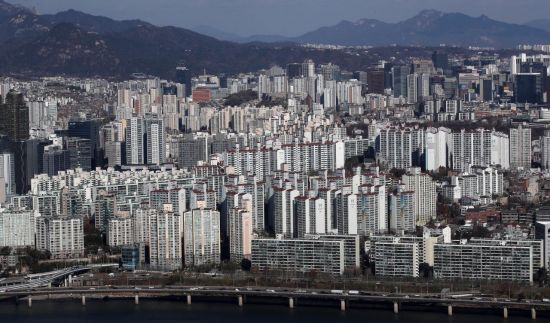
The government has decided to recognize landlords who raise rent by up to 5% as having fulfilled one year of the two-year actual residence requirement for capital gains tax exemption. Additionally, the monthly rent tax credit rate will be increased to a maximum of 15%, and efforts to boost housing supply will be intensified. As the two-year anniversary of the Lease Renewal Request Right and the Rent Ceiling System under the Lease Protection Act approaches next year, concerns about increased instability in the rental market have grown, prompting the government to take concrete measures.
On the 20th, the government announced the '2022 Economic Policy Directions' containing these measures.
Benefits Granted to Landlords Raising Rent Within 5%
First, landlords who increase rent by up to 5% at the time of new or renewed lease contracts and maintain it for two years, termed 'win-win landlords,' will be recognized as having fulfilled one year of the two-year actual residence requirement for capital gains tax exemption. This aims to prevent landlords from evicting tenants just to meet the residence requirement. To qualify for this benefit, one must be a single homeowner with a publicly announced property price of 900 million KRW or less. Also, this applies only to contracts made from today until December 31 of next year.
Considering the increase in monthly rent conversions due to the strengthened property holding tax burden, the government will temporarily raise the monthly rent tax credit rate from a maximum of 12% to 15% until next year. Currently, a 12% tax credit rate applies to those with total annual income of 55 million KRW (comprehensive income of 45 million KRW) or less, and 10% for those exceeding 55 million KRW. Next year, these rates will be increased to 15% and 12%, respectively. Based on the 12% credit rate, this is expected to provide support of up to 900,000 KRW annually.
Measures have also been prepared for 'empty-can jeonse' cases, where the jeonse deposit exceeds the market price due to rapid jeonse price increases. The government will extend the support project for jeonse return guarantee insurance premiums, which ends this year, until the first half of next year. However, the support level will be reduced from 80% of the insurance premium for jeonse deposits of 200 million KRW or less this year to 40% next year to reduce the burden on the Housing and Urban Guarantee Corporation (HUG).
Additionally, HUG will separately manage and publicly disclose a list of malicious landlords. Real estate agents will guide tenants to verify this list during lease contract mediation to prevent tenants from suffering damages by contracting with malicious landlords. The Ministry of Land, Infrastructure and Transport will publish a casebook on lease disputes arising from exercising the lease renewal request right to help tenants secure their rightful claims.
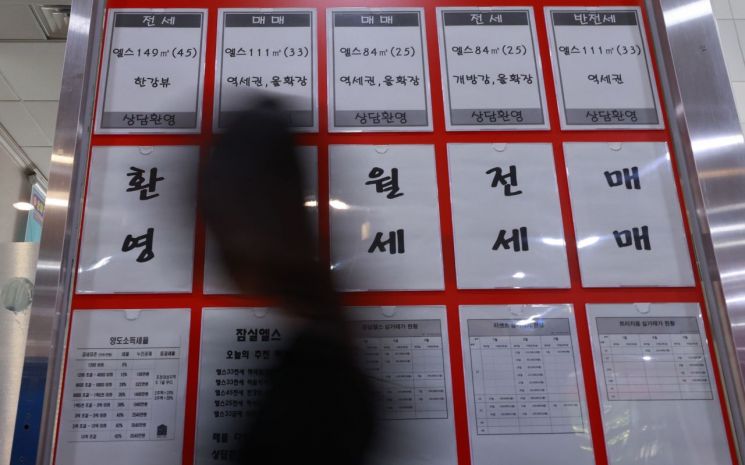
Expansion of Short-Term Jeonse Supply... Diversifying Lease Demand
The government will also expand jeonse supply next year. First, including jeonse-type housing utilizing vacant rentals, the supply announced in the November 19, 2021 measures will be increased by at least 5,000 units from the existing 39,000 units. To expedite vacancy resolution, income and asset criteria will be eliminated.
Furthermore, newly built jeonse supply such as public jeonse housing (9,000 units), new purchase agreements (23,000 units), and non-residential remodeling (7,000 units) will be supplied at a faster pace compared to this year. Applications for purchase will be accepted year-round, and purchase reviews will be conducted continuously to greatly simplify procedures.
To expand short-term housing construction volume, regulatory relaxations on building coverage ratio and floor area ratio for modular housing, which allows rapid construction, will be pursued. To commercialize high-rise modular housing of 13 floors or more, moving away from low-rise centered supply, a demonstration complex will begin construction within this year in Yongin City, Gyeonggi Province.
To prevent lease demand from concentrating in specific periods or regions and worsening the jeonse shortage, the government will coordinate with local governments to stagger the timing of redevelopment projects. Some of the supply from the 3rd New Town and the 2·4 measures will be allocated to public owner-occupied housing to reduce tenants' burdens, and accurate and timely move-in volume information linked between public and private sectors will be provided to prevent concentration of jeonse demand during moving seasons.
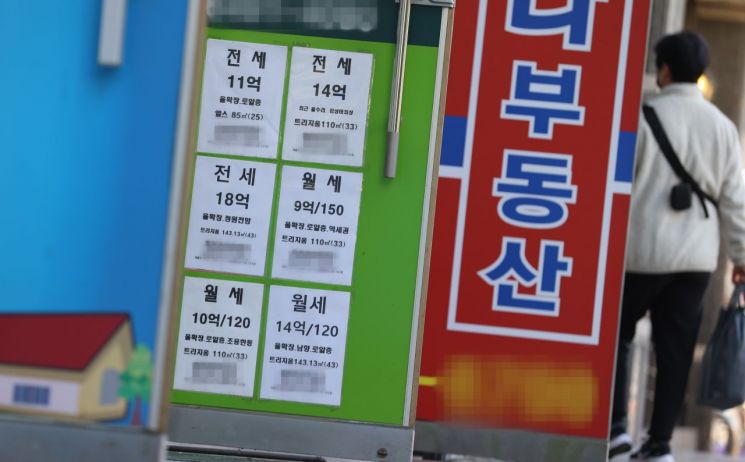
Speeding Up Existing Supply Measures... Strengthening Crackdown on Market Disruptions
The government plans to carry out existing housing supply measures without delay. The overall pace of urban housing supply projects under the 2·4 measures will be increased, and additional candidate sites for public redevelopment projects, urban public complex projects, and small-scale housing redevelopment will be solicited continuously. Areas where more than two-thirds of residents have agreed will be designated as main districts for urban public complex projects within next year.
Procedures for supplying 291,000 new public housing units announced under the 2·4 and August 4, 2021 measures will also proceed swiftly. Approval processes for sites such as Taereung CC, Gwacheon site, unsold Magok site, and Public Procurement Service site, presented in the August 4 measures, will be expedited, and new public housing sites in Gwangmyeong and Siheung (70,000 units) under the 2·4 measures will be designated next year. From 2023, district planning and pre-sale will begin.
The government will also strengthen crackdowns on illegal resale, price manipulation, unfair subscription and resale, and speculation using undisclosed information. Investigations into speculation on low-priced houses under 100 million KRW in local areas, disguised gifts to minors, and fraudulent subscription results will be announced sequentially in the first quarter of next year.
Following the 'March 29 Anti-Speculation Measures' announced after the land speculation scandal involving Korea Land and Housing Corporation (LH) employees earlier this year, follow-up actions will be swiftly completed. In the first quarter of next year, property registration reviews for public officials involved in real estate-related work will be conducted, and regular investigations of LH employees will be carried out in the second half.
Additionally, continuous consultations will be held to ensure the prompt passage of legislation related to the establishment of the Real Estate Transaction Analysis Institute currently pending in the National Assembly. The institutionalization of the 'Urban Development Project Public Interest Enhancement Plan' to prevent excessive private development profits will be actively pursued. In line with the enforcement of the Housing Act and Urban Development Act aimed at preventing a second 'Daejang-dong incident,' the process of revising subordinate laws will also commence.
© The Asia Business Daily(www.asiae.co.kr). All rights reserved.



















