Gwangju Institute of Science and Technology, Animal Experiment Results
Ultrasound Brain Stimulation Reduces Causative Substances and Enhances Brain Function

[Asia Economy Reporter Kim Bong-su] Domestic researchers have developed a new technology that can treat Alzheimer's disease (dementia) using ultrasound brain stimulation.
The Gwangju Institute of Science and Technology (GIST) announced on the 20th that a joint research team led by Professors Kim Tae and Kim Jae-kwan from the Department of Biomedical Engineering succeeded in reducing amyloid beta plaques (one of the causative substances of Alzheimer's disease) and improving brain connectivity in the 5xFAD Alzheimer's disease mouse model through ultrasound brain stimulation.
Alzheimer's disease is a disorder caused by the aggregation (plaques) of amyloid beta protein and the accumulation of tau protein in the brain, leading to neurodegeneration and cognitive decline. It is known as the most common cause, accounting for 60-70% of dementia cases. Domestic researchers have developed a new treatment method that can help dementia using ultrasound brain stimulation.
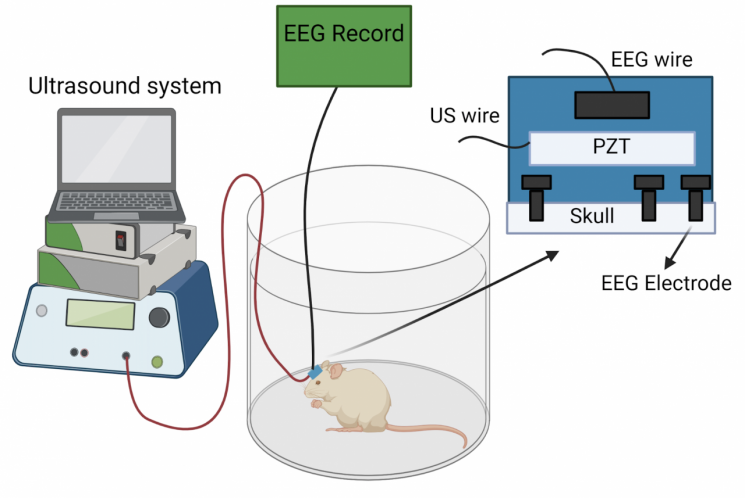
Through this study, the research team succeeded in reducing the amount of amyloid beta in brain tissue, one of the causes of Alzheimer's disease, using ultrasound without drugs. In particular, they achieved a non-drug, non-invasive reduction of amyloid beta, which is one of the major challenges in developing treatments for Alzheimer's disease.
Despite many efforts, the development of Alzheimer's disease drugs based on the amyloid beta hypothesis has not shown significant progress, and the only treatment recently conditionally approved by the U.S. FDA is based on antibodies against amyloid beta. This study suggests the possibility of developing non-drug treatments and is attracting attention as a method that can overcome the limitations of existing drug treatments.
For the development of the new treatment, the research team stimulated the brains of Alzheimer's disease animal models with ultrasound at a 40 Hz gamma rhythm. An ultrasound generator was attached to the skull of the mice, and ultrasound stimulation was applied for 2 hours a day for 2 weeks while the mice were freely moving. As a result, a decrease in amyloid beta levels in the brain was confirmed in the stimulated group.
The research team also fixed electrodes capable of measuring brain waves on the skull and analyzed changes in brain waves before and after ultrasound stimulation. An increase in brain waves in the 40 Hz band and an increase in phase-frequency coupling were observed, and this improvement in brain connectivity indicates enhanced brain function.
The research team stated, "The method of reducing amyloid beta non-drug and non-invasively using ultrasound is relatively safe and has fewer concerns about side effects, so if its efficacy is confirmed in Alzheimer's patients, it is expected to be clinically applied in the near future."
The results of this study were published online on the 7th in the international journal Translational Neurodegeneration (impact factor 8.014).
© The Asia Business Daily(www.asiae.co.kr). All rights reserved.


















