Seoul National University Research Team: "Promoted Through Specific Genetic Factors Activated in Environments with High Reactive Oxygen Species"
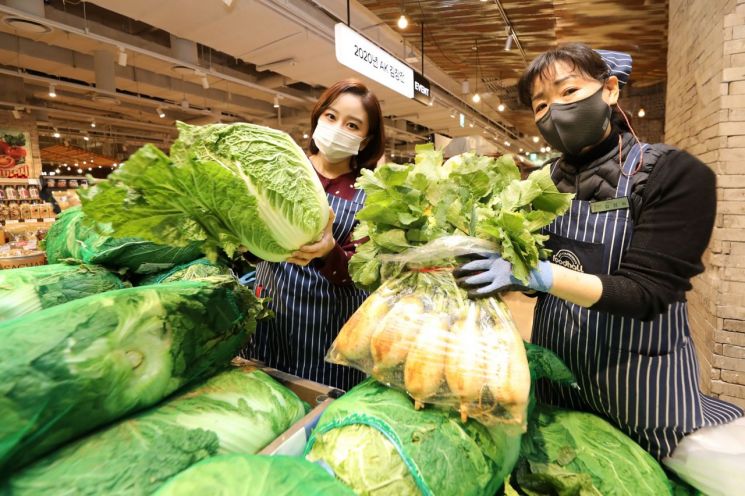
[Asia Economy Reporter Kim Bong-su] Radish, used as an ingredient in kimchi and kkakdugi and known for adding a refreshing flavor to various stews and soups, is a flavorful supporting player on Korean dining tables and one of the major sources of income in rural areas. However, radishes sometimes exhibit a phenomenon where, despite appearing fine on the outside, their interiors become hollow and crumbly when cut open. Domestic researchers have analyzed the genetic causes behind this hollowing phenomenon in radishes.
On the 16th, Seoul National University reported that Professor Lee Ji-young’s team from the Department of Biological Sciences, together with Park Soo-hyung, a radish breeding expert at the National Institute of Horticultural and Herbal Science, conducted a study to identify the genetic factors that promote hollowing. Using radish lines prone to hollowing as materials, they employed next-generation sequencing to find genes expressed during the occurrence of hollowing and tracked those genes associated with the hollowing trait.
As a result, the research team identified that the hollowing phenomenon is promoted through cell death induced by NAC013, a transcription factor activated under environmental conditions that increase reactive oxygen species. A genotype with enhanced activation of NAC013 was found in radishes prone to hollowing. The team was able to elucidate this by comparing various results revealing NAC013’s function in Arabidopsis, a model plant used in basic research, with the findings in radishes.
The research team explained, "This could be utilized to develop molecular markers for predicting and preventing hollowing or to improve cultivation conditions," adding, "It is also necessary to study whether the hollowing phenomenon found in fruits like pears and peaches is a physiological disorder caused by similar factors."
The results of this study were published in the online edition of 'The Plant Journal,' a scholarly journal in the field of plant science.
© The Asia Business Daily(www.asiae.co.kr). All rights reserved.
![Clutching a Stolen Dior Bag, Saying "I Hate Being Poor but Real"... The Grotesque Con of a "Human Knockoff" [Slate]](https://cwcontent.asiae.co.kr/asiaresize/183/2026021902243444107_1771435474.jpg)
















