Seoul, Gyeonggi-do, Sejong See Sharp Drop in Buying Demand
Prices Fall Over 100 Million Won in Dongducheon, Gwangmyeong
Listings Pile Up as "Housing Price Peak" Perception Spreads
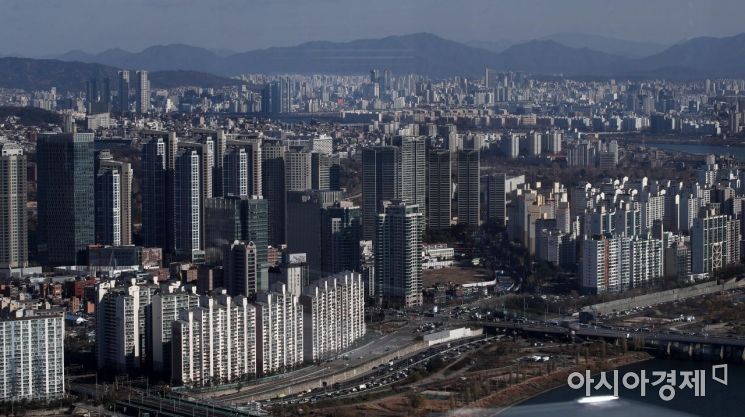
The downward trend in housing prices is deepening in major metropolitan and regional areas such as Gwangmyeong and Dongducheon in Gyeonggi Province, Sejong, and Daegu. This is due to a sharp decline in buying demand caused by high loan interest rates, the burden of property taxes, and the widespread perception that housing prices have peaked. In some apartment complexes, it is not difficult to find prices that have dropped by tens of millions of won compared to previous market prices.
According to the Korea Real Estate Board on the 11th, nationwide apartment prices rose by 0.13% this week, continuing a nine-week streak of shrinking growth. This week’s increase rate is the lowest in about 1 year and 2 months since the last week of October last year (0.13%). This reflects a slowdown in housing price growth not only in Seoul and the metropolitan area but also in major regional areas.
In Gyeonggi Province, where housing prices had surged sharply due to various development benefits such as the Metropolitan Area Express Train (GTX), the downward trend is also spreading. According to KB Real Estate, apartment prices in Gwangmyeong, Gyeonggi Province, fell by 0.01% in the first week of this month, becoming the second area in Gyeonggi to turn negative after Dongducheon, which fell by 0.05% the previous week.
In Gwangmyeong’s Haan-dong A complex, an 84㎡ unit (exclusive area) was previously traded at 1.16 billion won but recently sold for 1 billion won, dropping by more than 100 million won. Similarly, in Iljik-dong B complex, the transaction price that once reached 1.5 billion won plunged to 1.25 billion won last month. Although Gwangmyeong’s housing prices rose significantly due to the opening of the Sinansan Line, the buying demand has started to weaken, leading to an accumulation of listings.
Dongducheon, which experienced a 'bull market' until the first half of this year, has recently seen its real estate market freeze solidly. After the government designated six neighborhoods near Jihaeng Station (Dongducheon, Bosan, Sangpae, Saengyeon, Songnae, and Jihaeng-dong) as regulated areas in August, regulations tightened and outside buyers decreased, resulting in an accumulation of listings. Some apartments in Jihaeng-dong have seen actual transaction prices drop by tens of millions of won over the past few months.
The atmosphere is similar in regional areas such as Sejong and Daegu. According to Korea Real Estate statistics, apartment prices in Sejong fell by 0.33% this week, marking the largest drop in 7 years and 4 months since July 2014. Daegu also dropped by 0.02% this week, continuing a four-week consecutive decline. In Sejong, as of October, there were 129 unsold houses, signaling a red flag for unsold inventory for the first time in 5 years and 6 months since April 2016 (3 units).
Looking at this month’s Housing Sales Sentiment Index (HSSI) released by the Korea Research Institute for Housing Industry, Daegu and Ulsan recorded 62.5 and 76.9 respectively, down from last month. When this index falls below 100, it indicates poor expectations for the housing sales market. The government explains that due to strengthened loan regulations and increased interest burdens from rising base interest rates, a cold wave is hitting not only the apartment sales market but also the pre-sale market.
The government also expects the upward trend in apartment prices in Seoul to soon slow down. On the 8th, Hong Nam-ki, Deputy Prime Minister and Minister of Economy and Finance, said at a real estate market inspection meeting, “In Seoul, apartment prices in some areas have stabilized at levels just before entering a decline,” adding, “Half of the transactions in November were flat or down compared to previous transactions, and the number of areas with price declines is increasing in regional areas.”
© The Asia Business Daily(www.asiae.co.kr). All rights reserved.
![Clutching a Stolen Dior Bag, Saying "I Hate Being Poor but Real"... The Grotesque Con of a "Human Knockoff" [Slate]](https://cwcontent.asiae.co.kr/asiaresize/183/2026021902243444107_1771435474.jpg)
















