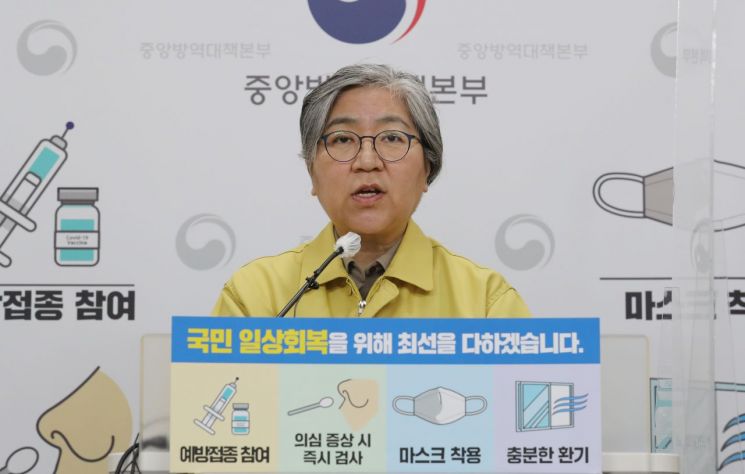
 Jung Eun-kyung, Commissioner of the Korea Disease Control and Prevention Agency Photo by Yonhap News
[Asia Economy Reporter Lee Chun-hee] The government has once again strongly recommended COVID-19 vaccination for adolescents, stating that while the risk of COVID-19 infection among unvaccinated youth is gradually increasing, the benefits of vaccination are becoming clearer.
On the afternoon of the 9th, Jeong Eun-kyung, Commissioner of the Korea Disease Control and Prevention Agency (KDCA), said at a "COVID-19 Vaccination Special Briefing," "As the quarantine situation worsens, the risk for unvaccinated adolescents is gradually increasing, while the benefits of vaccination have been clearly confirmed," adding, "We strongly recommend vaccination for adolescents." She continued, "During the vaccination of high school seniors and those aged 12 to 17, we confirmed a 96% effectiveness in preventing infection, and serious adverse reactions were very rare, confirming the vaccine's efficacy and safety," emphasizing again, "Based on this, we strongly recommend vaccination to protect adolescents' health and to safely restore daily activities such as attending school."
Currently, as concerns about COVID-19 infection among adolescents grow, the government has introduced a vaccination certificate and negative test confirmation system (the "quarantine pass") for multi-use facilities frequently used by adolescents, such as academies, study rooms, and study cafes, since the 6th. Furthermore, starting February next year, the exemption age for the quarantine pass, currently set at 18 years and under, will be lowered to 11 years, expanding the quarantine pass application to those aged 12 to 18. In response, some have strongly opposed this move, arguing that the government is effectively forcing vaccination due to sluggish adolescent vaccination rates amid concerns about side effects such as myocarditis and pericarditis.
Regarding this, Commissioner Jeong explained, "Currently, all vaccinations in our country are conducted based on the individual's consent," and "Vaccination is not mandatory." She acknowledged, "Introducing the quarantine pass may give the impression of forcing vaccination," but clarified, "The government's stance has changed to more strongly and actively recommend vaccination, reflecting the significantly changed situation since the start of vaccination for those aged 12 to 18."
According to the government on this day, the risk exposure to COVID-19 infection among adolescents aged 12 to 17 is severe. The number of confirmed cases has steadily increased from 3,630 in September to 4,837 in October, and 6,612 last month. Notably, the infection rate per 100,000 people under 18 over the past four weeks was 210.1, higher than the 167.3 for those aged 19 and above.
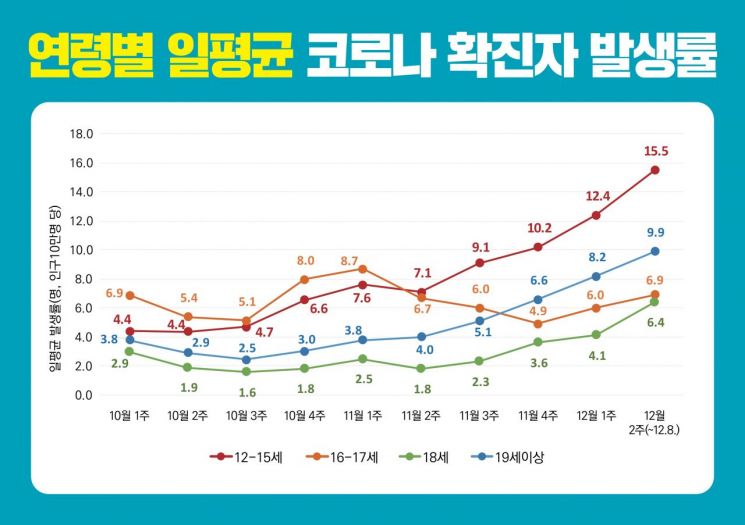 Average Daily COVID-19 Infection Rates by Age Group (Photo by Korea Disease Control and Prevention Agency)
It was also emphasized that the incidence rate per 100,000 population among middle school students (aged 12 to 15), who have a relatively lower vaccination rate than high school students (aged 16 to 17), has been steadily rising from 7.6 in the first week of November to 12.4 in the first week of December.
The government stressed the importance of adolescent vaccination, noting that this spread is concentrated among the unvaccinated. Commissioner Jeong highlighted that among 3,220 confirmed COVID-19 cases in 12 to 17-year-olds over the past two weeks, "Only 5 cases, or 0.2%, were fully vaccinated, while 99.8% were unvaccinated or partially vaccinated," underscoring the effectiveness of vaccination.
On the other hand, all 11 adolescents who progressed to severe or critical illness after COVID-19 infection since February this year were confirmed to be unvaccinated. According to the government's analysis of vaccination effectiveness for those aged 12 to 17 from July 19 to last month 27, the incidence rate of COVID-19 in the unvaccinated group was 25.3 times higher than that of the fully vaccinated group, and no severe cases occurred in the fully vaccinated group, indicating a 100% effectiveness in preventing severe illness.
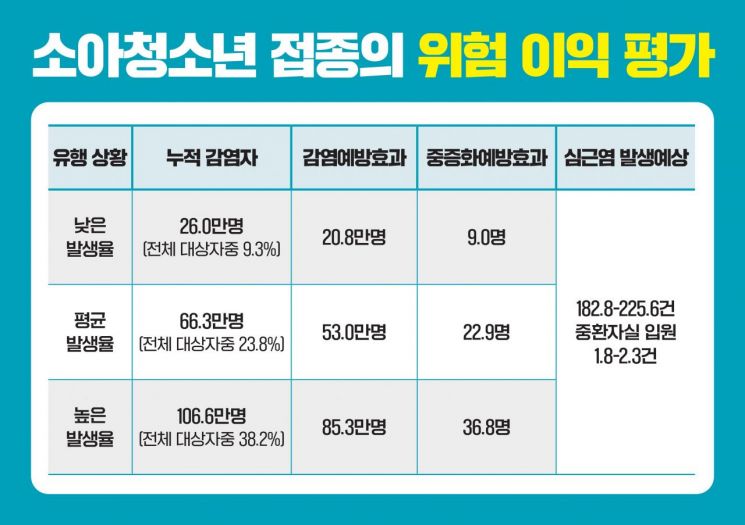 Risk-Benefit Assessment of Pediatric and Adolescent Vaccination (Photo by Korea Disease Control and Prevention Agency)
Regarding concerns about vaccine side effects among adolescents and their parents, the government emphasized safety by reporting a lower rate of suspected adverse reaction reports compared to adults. Commissioner Jeong stated, "The adverse reaction reporting rate among adolescents aged 12 to 17 is 277 cases per 100,000 people, about 0.28%, which is lower than the 0.37% rate among adults aged 19 and older," adding, "Most are general adverse reactions, and the proportion of serious adverse reaction reports is lower than that of adults."
Regarding the most concerning myocarditis and pericarditis, 27 suspected cases were reported among those aged 12 to 17, with 5 cases finally confirmed, all of whom have since recovered. For 18-year-olds, among 908,101 vaccinations, 41 suspected reports were made, with 23 confirmed cases of myocarditis or pericarditis. All of these individuals have also recovered.
The government plans to provide maximum convenience to increase adolescent vaccination rates. Starting from the 10th, it will be possible to designate a vaccination date two days after making a reservation, and same-day vaccination will be available by visiting vaccination centers without prior reservation.
Additionally, in cooperation with the Ministry of Education, a "Vaccination Intensive Support Week" will be held for two weeks from the 13th to the 24th, during which school-based vaccination will be conducted.
© The Asia Business Daily(www.asiae.co.kr). All rights reserved.



















