Larry Summers, Former U.S. Treasury Secretary, Claims
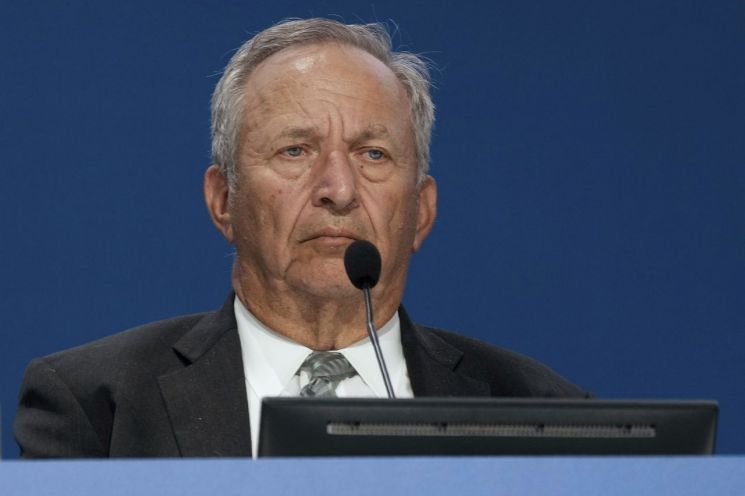
[Asia Economy Reporter Byunghee Park] Former U.S. Treasury Secretary Larry Summers (photo) warned of the possibility of a U.S. economic recession, citing increased inflation risks.
At the Wall Street Journal (WSJ) CEO Council Summit on the 7th (local time), former Treasury Secretary Summers said, "Inflation has become evident," and added, "The central bank, the Federal Reserve (Fed), is less likely to curb prices without causing a recession." He emphasized, "I see a 30-40% chance that the U.S. economy will enter a recession within the next two years." He also stated, "The probability of a soft landing for the U.S. economy is low," adding, "The chance of a soft landing is 20-25%."
With the U.S. consumer price inflation rate in October reaching 6.2%, the highest in 31 years, concerns are growing that the Omicron variant could further fuel price increases. This is because the Omicron variant may delay supply chain recovery and exacerbate labor shortages. Former Treasury Secretary Summers also expressed concerns about labor shortages, saying, "The current labor shortage in the U.S. is the worst in my lifetime."
However, WSJ reported that there is also analysis suggesting that the Omicron variant will not stimulate prices as it did during the early COVID-19 outbreak or the spread of the Delta variant. This is because demand is weaker than before due to the absence of government stimulus measures.
The U.S. federal government passed a $2.2 trillion stimulus package in March last year immediately after the COVID-19 pandemic began, and the Joe Biden administration approved a $1.9 trillion stimulus plan in March this year just before the Delta variant spread.
Whenever COVID-19 concerns increased, government stimulus measures expanded U.S. household spending capacity, generating massive demand. However, direct support measures for households, such as special unemployment benefits maintained for one and a half years after the COVID-19 pandemic, ended in September, and such stimulus measures are gradually decreasing.
Therefore, WSJ diagnosed that even if the newly emerged Omicron variant causes supply disruptions, demand is also shrinking, so prices will not rise as strongly as before.
© The Asia Business Daily(www.asiae.co.kr). All rights reserved.
![Clutching a Stolen Dior Bag, Saying "I Hate Being Poor but Real"... The Grotesque Con of a "Human Knockoff" [Slate]](https://cwcontent.asiae.co.kr/asiaresize/183/2026021902243444107_1771435474.jpg)
















