Disclosure of Home Treatment Center Management Results
Home Treatment Patients Rarely Become Infection Sources
"Elderly and Patients with Underlying Conditions Require Hospitalization"
"Too Early to Conclude" Warning Also Issued
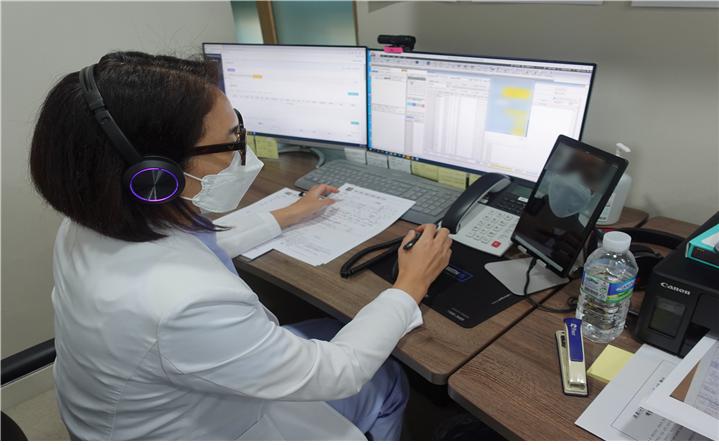 The Home Treatment Team at Hana ENT Hospital in Gangnam-gu, Seoul is managing COVID-19 home treatment patients. (Photo by Hana ENT Hospital)
[Asia Economy Reporter Lee Chun-hee] The government announced a policy of ‘mandatory home treatment’ for COVID-19 confirmed cases starting from the 26th of last month. Medical institutions that actually implemented home treatment management have disclosed the results of one month of management. Transmission to cohabitants, which was a major concern, was extremely rare, and there were no cases of severe symptoms progressing during home treatment. However, as the number of home treatment subjects has surged recently due to the mandatory home treatment policy, concerns have been raised that cases of inadequate response to emergency situations may increase.
Most Complete Home Treatment Without Issues
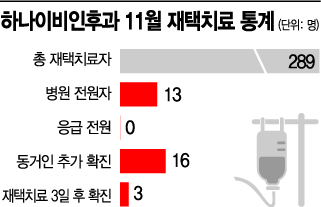
Hana ENT Hospital, designated as a home treatment cooperation hospital in Gangnam-gu, Seoul, operating a home treatment center, disclosed statistics on the 298 patients managed under home treatment for one month starting from the 1st of last month on the 7th. According to the hospital, infections among cohabitants, which is the biggest concern related to home treatment, were not frequent. Among the managed patients, 5.4% (16 people) had cohabitants who tested positive, but most were confirmed positive at the start of home treatment or within three days, suggesting a high possibility of transmission before home treatment began. Three people tested positive three days after starting home treatment and were presumed to be cases of transmission to cohabitants, but the hospital stated, "It is not possible to confirm whether they were infected by family members undergoing home treatment," and added, "Cases where home treatment patients become infection sources leading to additional confirmed cases are considered minimal."
Among the 298 home treatment patients under management, there were no cases transferred to hospitals due to severe symptom deterioration. 93.3% (278 people) completed home treatment without any particular issues, and only 6.7% (20 people) were transferred to COVID-19 dedicated hospitals. Seventeen were hospitalized following the manual because mild symptoms such as sore throat, cough, and fever did not improve for three days. The remaining three were hospitalized voluntarily either at their own request or to accompany their children, unrelated to symptom severity.
Medical Community: Elderly and Patients with Underlying Conditions Should Receive Hospital Treatment
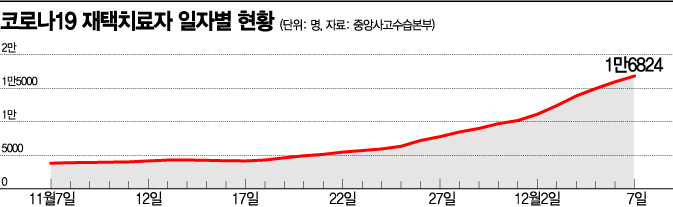
However, it is difficult to conclude the safety of home treatment based solely on these results. This is because the data does not fully reflect cases after the government implemented ‘mandatory home treatment’ on the 26th of last month amid worsening medical response capacity. According to the Central Disaster and Safety Countermeasure Headquarters, as of midnight on that day, the number of home treatment subjects was 16,824, more than double the 7,193 on the 26th of last month when mandatory home treatment was decided. Before mandatory home treatment, home treatment was only conducted for asymptomatic or mild confirmed cases under 70 years old without hospitalization indications and with the patient’s consent. Afterward, except for those with hospitalization indications, residents in vulnerable environments such as goshiwons, or those without caregivers, all others were mandated to undergo home treatment, causing a rapid increase in subjects.
The quarantine authorities have not yet secured statistics on cases where cohabitants were confirmed positive during home treatment. Regarding this risk, they emphasize minimizing the possibility of additional transmission through strict compliance with quarantine rules and prohibiting going to work during the isolation period, as there are infection risk factors.
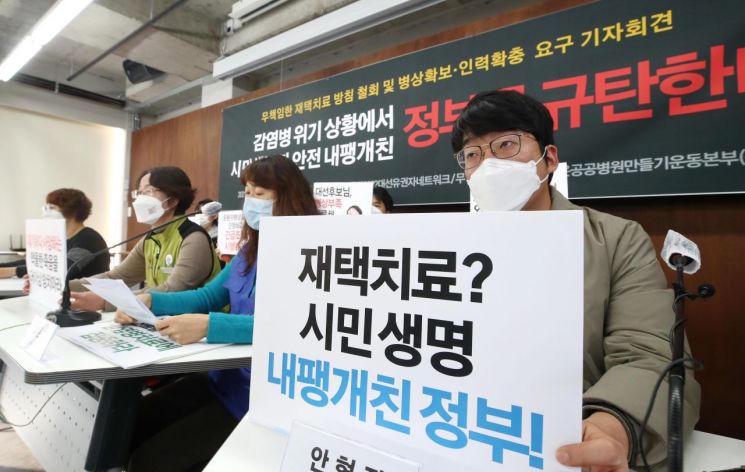 On the morning of the 2nd, members of organizations such as Bulpyeongdeungkkjangnet and the Health and Medical Workers' Union hold signs at a press conference demanding the withdrawal of the irresponsible home treatment policy and the expansion of hospital beds and personnel, held at the People's Solidarity for Participatory Democracy in Jongno-gu, Seoul. [Image source=Yonhap News]
Experts also express significant concern about the risk of severe symptoms in high-risk groups such as the elderly and the possibility of transmission to cohabitants. Professor Eom Jung-sik of the Department of Infectious Diseases at Gachon University Gil Medical Center said, "There have been many cases where the condition of elderly and high-risk groups worsened during home treatment," and emphasized, "People aged 70 and above should preferably be excluded from home treatment, and those in their 60s with underlying conditions should be hospitalized in hospitals or living treatment centers." He added, "The intensity of home treatment monitoring should also be subdivided," and "For those aged 50 and above with concerns about severe symptoms, more detailed interviews regarding symptoms and signs are necessary."
Professor Cheon Eun-mi of the Department of Respiratory Medicine at Ewha Mokdong Hospital also pointed out, "Current home treatment is closer to home management," and said, "Given the current situation where deaths are increasing and patients have to wait 300 hours to be admitted to emergency rooms, it is premature to consider home treatment safe." Professor Cheon particularly noted, "Even if cohabitants are careful, the possibility of infection is high," and added, "In cases where children or elderly live together, cohabitants should be managed to ensure hospitalization in hospitals or living treatment centers."
The Korean Medical Association also held an emergency press conference on COVID-19 home treatment this morning and issued recommendations to strengthen home treatment. The association emphasized that home treatment cannot detect symptom worsening early in high-risk groups, so a system utilizing local medical institutions for outpatient care and management is necessary. They also suggested administering antibody treatments at outpatient or short-term treatment centers or living treatment centers for early treatment. Additionally, they called for expanding and reorganizing the transfer system to prepare for symptom worsening and emergencies, while emphasizing the need for thorough infection control to prevent transmission and spread during home treatment.
© The Asia Business Daily(www.asiae.co.kr). All rights reserved.
![Clutching a Stolen Dior Bag, Saying "I Hate Being Poor but Real"... The Grotesque Con of a "Human Knockoff" [Slate]](https://cwcontent.asiae.co.kr/asiaresize/183/2026021902243444107_1771435474.jpg)


















