[Asia Economy Reporter Choi Dae-yeol] Last month, the order backlog at South Korean shipyards increased compared to the previous month. This contrasts with China and Japan, which both saw decreases in the global shipbuilding market. The order backlog is an indicator showing how much work remains from orders placed by shipowners and other clients, meaning that the volume of new orders exceeds the volume of ships being built.
According to data from Clarkson Research, a shipbuilding and shipping market analysis firm, as of the end of last month, the global order backlog stood at 90.07 million CGT (Compensated Gross Tonnage), down by 0.5 million CGT from the previous month. South Korea's backlog increased by 0.31 million CGT to 28.99 million CGT during the same period, while China and Japan saw decreases of 0.42 million CGT and 0.25 million CGT, respectively. By country, China holds the largest share of the order backlog at 41%, followed by South Korea at 32%, and Japan at 10%.
More than half of the ship orders placed worldwide last month were secured by South Korean shipyards. A total of 1.32 million CGT was ordered during the month, with South Korea winning 770,000 CGT (58%). China accounted for 460,000 CGT, or 35%, showing a gap of over 20 percentage points compared to South Korea. South Korea's shipyards have seen their order backlog increase for three consecutive months.
The cumulative ship orders from January to November totaled 45.07 million CGT. This represents an increase of more than 138% compared to the 18.97 million CGT ordered during the same period last year. It is the highest level since 2013, when 53.63 million CGT were ordered. Of this, China secured 21.92 million CGT, or 49%, while South Korea won 16.96 million CGT, accounting for 38%.
With the surge in ship orders this year, shipyards have been able to secure work and strengthen their negotiating position on ship prices, allowing selective orders focused on high value-added vessels. The average price per ship ordered by South Korea last month reached $102.3 million. In comparison, China’s average was $35 million, about 3.5 times lower than South Korea’s. The Clarkson Newbuilding Price Index rose by 1.3 points from the previous month to 153.6 points, marking 12 consecutive months of increase since November last year.
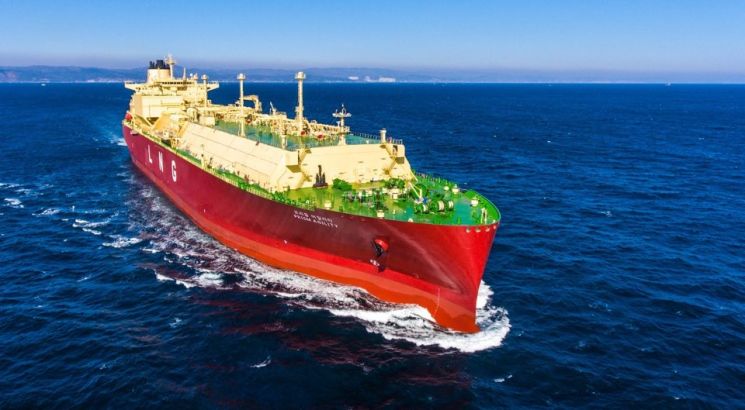
The newbuilding price for liquefied natural gas (LNG) carriers, mostly ordered by domestic shipyards, was $205 million, up about 10% from $186 million during the same period last year. As the International Maritime Organization’s environmental regulations come into full effect, LNG demand is expected to continue rising, leading LNG carriers to account for 45% of total orders last month.
© The Asia Business Daily(www.asiae.co.kr). All rights reserved.

















