Positive Outlook Including New Car Price Increases
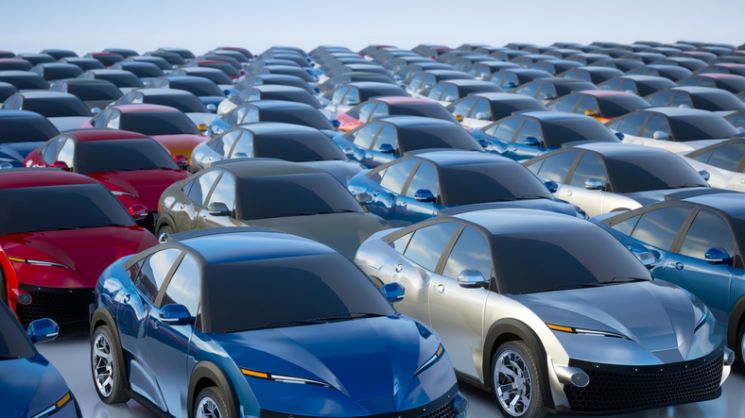
[Asia Economy Reporter Gong Byung-sun] Foreign investors and institutions have been buying automobile-related stocks since December. They appear to be focusing on growth momentum after the semiconductor shortage.
According to the Korea Exchange on the 7th, foreign investors net purchased 57.7 billion KRW of Kia and 20.2 billion KRW of Hyundai Motor during December. Institutions also bought 50.7 billion KRW of Kia and 20.9 billion KRW of Hyundai Motor during the same period. This is more than seven times the amount compared to last month, when foreign investors and institutions net purchased 9.3 billion KRW and 11.9 billion KRW respectively for Hyundai Motor and Kia combined.
The buying momentum from foreign investors and institutions led to a rebound in stock prices. Hyundai Motor rose 5.63% since the beginning of this month. Kia also increased by 7.84% during the same period. However, as of 9:26 AM on the day, Hyundai Motor was down 0.73% (1,500 KRW) from the previous day at 205,000 KRW, and Kia was down 0.95% (800 KRW) at 83,100 KRW, showing some hesitation.
Although stock prices are on the rise, the actual performance of finished car manufacturers has yet to improve. The semiconductor supply issue is still holding them back. In November, Hyundai Motor’s global wholesale and retail sales decreased by 17% and 14% respectively compared to the same month last year. Kia’s global wholesale and retail sales also fell by 14% and 10% respectively. Even U.S. sales, which drove the third-quarter performance this year, dropped 9% year-over-year in November.
Nevertheless, investors such as foreign investors and institutions seem to be anticipating the post-semiconductor period. They appear to believe that the semiconductor problem is unlikely to worsen further and is gradually improving. On the 4th, Hyundai Motor conducted weekend overtime work, operating all five Ulsan plants simultaneously. Due to semiconductor issues, the entire Ulsan plant had not conducted weekend overtime simultaneously this year, but as supply issues ease somewhat, production is being accelerated.
The supply shortage caused by semiconductor problems and the rise in manufacturing costs due to raw material price increases have also created a background for new car price hikes. In fact, the value of used cars in the U.S. market rose 29% over one year, and new car prices also increased by 8.3%, leading to the coining of the term “carflation,” combining inflation and automobiles.
Im Eun-young, a researcher at Samsung Securities, explained, “There is strong short-term demand, and the rise in used and new car prices is a global phenomenon except for China,” adding, “The increase in vehicle value through software improvements will also lead to new car price hikes.”
© The Asia Business Daily(www.asiae.co.kr). All rights reserved.

















