Goldman Sachs Lowers US Economic Growth Forecast to 4.2% for Next Year
Global Stock Markets Decline Since Late November
Significant Capital Outflows from Airline and Crude Oil Stocks
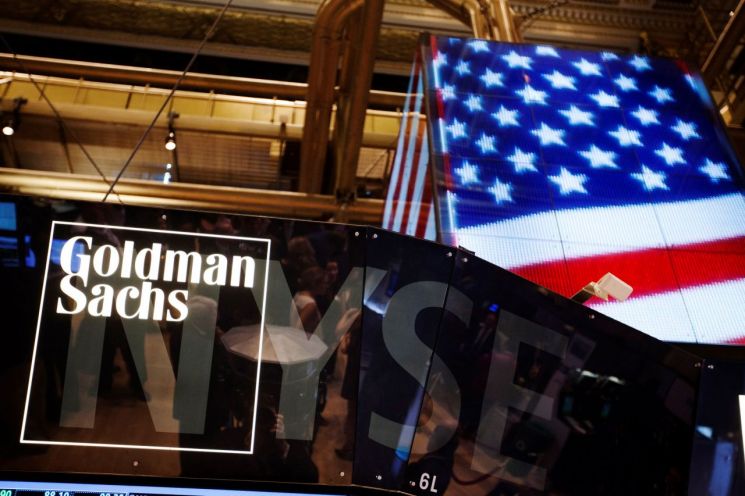
[Asia Economy reporters Byunghee Park and Jaehee Kwon] Economic growth rate forecasts are expected to be revised downward one after another due to the spread of the Omicron variant. Goldman Sachs has already lowered its forecast for next year's U.S. economic growth rate, and the International Monetary Fund (IMF) has also hinted at the possibility of lowering the global economic growth forecast. As concerns about the slowdown in the global economic recovery grow, it has been confirmed that the global stock market capitalization loss exceeded 4,000 trillion won following the spread of the Omicron variant.
According to Bloomberg News, Joseph Brics, an economist at Goldman Sachs, announced in a report released on the 4th (local time) that the forecast for next year's U.S. economic growth rate has been lowered from the previous 4.2% to 3.8%. This implies a drop of about 2 percentage points compared to this year's growth forecast of 5.6%.
Economist Brics pointed out that the emergence of the Omicron variant has increased uncertainty and risks for the U.S. economy. He also predicted that the labor shortage in the U.S. could be prolonged as the return to workplaces is delayed due to the spread of the Omicron variant.
Kristalina Georgieva, Managing Director of the International Monetary Fund (IMF), also stated on the 3rd that the global economic growth forecast could be revised downward due to the spread of the Omicron variant. In the economic outlook report released in October, the IMF projected global economic growth rates of 5.9% for this year and 4.9% for next year.
As concerns about the global economic slowdown increase, financial markets are shaking. According to the Nihon Keizai Shimbun, since the emergence of Omicron at the end of November, the market capitalization of global stock markets has evaporated by about 410 trillion yen (approximately 4,298 trillion won).
In particular, capital outflows were prominent in sectors directly affected by COVID-19, such as airline stocks and international commodities like crude oil. The price of the U.S. Global Jets ETF, which reflects the movement of global airline stocks, plunged 9% within a week after the emergence of Omicron.
Even in the soaring commodity markets, a decrease in demand due to the spread of Omicron infections is being detected. The price of West Texas Intermediate (WTI) crude oil futures on the New York Mercantile Exchange (NYMEX) plummeted 13.1% in one day on the 26th of last month amid growing concerns over the spread of Omicron infections. The WTI price, which was close to $80 per barrel, suddenly dropped to around $68 per barrel.
The WTI price fell to around $62 per barrel during intraday trading on the 2nd but is rebounding. In after-hours trading on the morning of the 6th Korean time, it rose more than 2% compared to the previous trading day and is trading around $67 per barrel.
Norwegian research firm Rystad Energy forecasted that if city lockdowns or entry restrictions expand due to the spread of Omicron infections, global oil demand could decrease by 3 million barrels per day from January to March next year.
The bond market was also hit. Concerned about a mid- to long-term economic downturn caused by Omicron, yields on U.S. 10-year and 30-year Treasury bonds fell. The spread between 5-year and 50-year bonds narrowed to around 0.56%, the first time since March 2020. Takashi Yamawaki, head of bond research at JP Morgan, diagnosed, "This indicates market anxiety about the economic outlook."
© The Asia Business Daily(www.asiae.co.kr). All rights reserved.

















