The Forest Biomass Energy Association announced that it has proposed measures to foster the domestic industry based on the utilization of biomass in the international community. Through cases from the United States, Germany and the EU, and Japan, it emphasized that systematic support is necessary for industrial growth.
Accordingly, the association reviewed biomass industry development plans through examples from various countries. First, the United States identified biomass as the core effort for decarbonizing the energy sector in its "Long-term Strategy for Achieving Carbon Neutrality by 2050." It also highlighted the importance of policies and incentives that support enhanced carbon sinks through reforestation.
The EU announced the "Fit for 55" policy package in July to achieve carbon neutrality by 2050, stating that power generation using biomass will account for a significant share by 2050. In this process, it plans to provide continuous incentives when attaching CCS or transitioning from fossil fuels to biomass. Germany emphasized the role of "sustainably produced biomass" as a major energy source contributing to the energy system and prioritized the use of biological by-products to limit land-use changes.
Additionally, Japan set renewable energy introduction targets to reduce greenhouse gases by 2030, aiming to expand biomass facility capacity from about 4.5 GW in 2019 to approximately 8 GW by 2030, focusing on forest resources. For reference, South Korea plans to increase its bioenergy facility capacity from 2.3 GW in 2017 to 3.3 GW by 2030 under the 3020 Renewable Energy Plan.
According to the climate technology classification for greenhouse gas reduction sectors by the IPCC, the utilization of forest resources for energy supply is specified as a replacement for fossil fuels. The EU’s classification system clearly shows that "power generation, combined heat and power, and heating/cooling using bioenergy" meet all six sectoral assessment criteria in terms of climate change mitigation and adaptation.
Domestically, the "2050 Carbon Neutral Energy Technology Roadmap" announced plans to develop zero-carbon boiler technology by applying oxy-fuel combustion technology linked with CCUS, utilizing carbon-neutral biomass fuels. Furthermore, the National Science and Technology Advisory Council mentioned that bioenergy is a "carbon-neutral" energy source where the carbon absorbed during growth offsets the carbon emitted during combustion, replacing fossil fuels in thermal power generation.
Through various cases, it is evident that the appropriate utilization of forest resources is crucial to supply sustainable bioenergy. South Korea has successfully commercialized the unused forest biomass system since 2018, which is gaining international attention in terms of sustainable forest resource utilization linked to the climate crisis. Europe has also concretized the concept of unused forest biomass in its 2021 "Fit for 55" package to address the climate crisis.
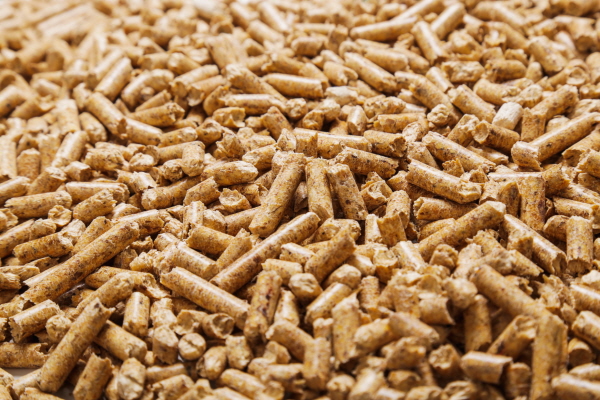
Unused forest biomass refers to "low economic value forest products such as branches left unattended in forests." Collecting and processing these into high-quality energy sources like wood pellets reduces risks directly related to public safety, such as forest fires and methane gas from decay, while directly replacing fossil fuels. Advanced manufacturing facilities at the regional level are positively evaluated for revitalizing struggling local economies and logistics industries.
A representative of the Forest Biomass Energy Association stated, "Unused forest biomass is special as it is the world’s first to use low-value forest by-products such as branches as an energy source," adding, "Systematic support is needed to foster the industry so that it can be disseminated worldwide as a model case of forest biomass utilization."
Researcher Su-min Lee of the National Institute of Forest Science explained, "Carbon neutrality is not just a proposition for individuals, society, or nations, but a proposition for humanity today. Reducing carbon emissions to achieve a carbon-neutral society must start with replacing fossil resources. Increasing the efficient and sustainable use of our resources is important to create a future carbon-neutral society." She further stated, "To efficiently utilize domestic biomass, including forest biomass, it is necessary to establish systems and market structures that allow integrated use of various biomass types. To advance a resource-circulating society, it is also necessary to improve the complex fuel categories centered on forest resources."
© The Asia Business Daily(www.asiae.co.kr). All rights reserved.

















