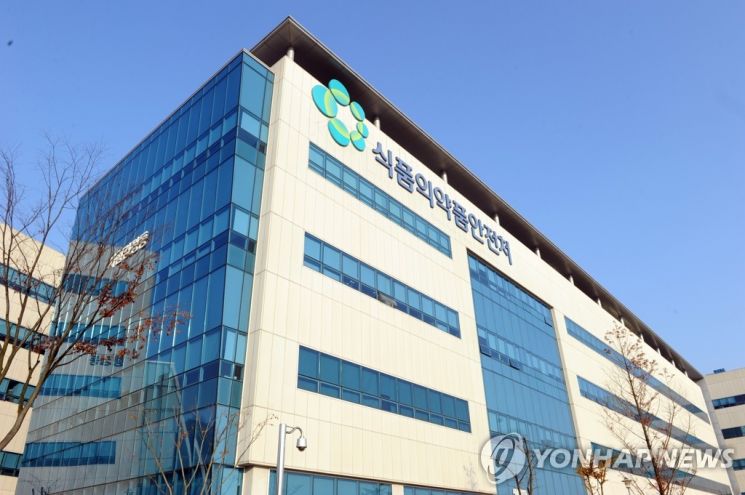
[Asia Economy Reporter Jang Hyowon] The Ministry of Food and Drug Safety's budget for next year has been set at 664 billion KRW, an increase of 53.1 billion KRW (8.7%) compared to this year.
According to the Ministry of Food and Drug Safety on the 3rd, the budget for next year, which was confirmed after passing the National Assembly plenary session today, will be primarily used to overcome the COVID-19 crisis, respond to quarantine measures, and adapt to the changed dining-out environment.
The Ministry allocated 62.8 billion KRW to ensure the stable supply of COVID-19 vaccines. To strengthen the national verification capabilities for vaccine safety, a dedicated special testing laboratory for national lot release approval will be established, and the 'Vaccine Safety Technology Support Center' will support domestic vaccine development through basic consultations for next-generation vaccine development, quality, non-clinical and clinical trial analysis, and technical support.
Additionally, the operation of the nationally designated 'Central Clinical Trial Review Committee' for domestic COVID-19 drug development will be expanded to simplify the review system, and a counseling project for compensation for clinical trial participants will also begin. Research and development for responding to new infectious diseases will be expanded, including safety and efficacy evaluation of next-generation vaccines such as messenger ribonucleic acid (mRNA) vaccines and development of post-market safety management technologies.
1.974 trillion KRW will be invested to ensure food safety. Radiation inspection equipment for imported foods will be reinforced, and a new on-site inspection office will be established at seafood wholesale markets.
To prevent mass food poisoning in collective catering and manage nutrition and hygiene, the 'Children's Meal Management Support Centers' will conduct on-site guidance and support activities at 40,000 nationwide children's meal sites without nutritionists more than six times a year.
The designation of the 'Restaurant Hygiene Rating System' will be expanded to franchises and delivery restaurants, and a 'Hazardous Food Sales Blocking System' that can be used in small unmanned sales stores will be developed and distributed.
To strengthen hygiene management of imported kimchi, the application of HACCP (Hazard Analysis and Critical Control Points) certification for imported kimchi will be expanded, and on-site inspections of all overseas kimchi manufacturers will be completed. Furthermore, the current HACCP system will be reinforced, and an automatic HACCP record management system will be established.
13.79 billion KRW has been allocated for expanding medical device item classification and cybersecurity verification for medical devices with communication functions.
Moreover, to introduce the 'Food Consumption Period Labeling System' to be implemented from 2023, 50 recommended consumption periods by food type will be established, and through public education and promotion, the system's establishment and carbon reduction policies will be actively supported.
Integrated risk assessments for harmful substances in food and pharmaceuticals will be conducted, and a response system will be established to address safety and efficacy concerns regarding domestic herbal medicines.
At the Jeju 'National Herbal Medicine Resource Management Center,' support for domestic herbal resource preservation and natural medicine development research will be strengthened following the enforcement of the Nagoya Protocol. The Nagoya Protocol is an international agreement that requires prior notification and approval from the provider country’s government when using foreign biological genetic resources to develop medicines, cosmetics, etc., and mandates fair sharing of resulting benefits.
Research and development of toxicity evaluation technologies based on 'organoids,' which are organ-like structures cultured or recombined from stem cells, will be expanded, and professional workforce development will be supported by producing 600 master's and doctoral graduates through regulatory science talent cultivation projects.
© The Asia Business Daily(www.asiae.co.kr). All rights reserved.

















