Identification of Anti-Aging Protein MNO2 That Induces Autophagy
[Asia Economy Reporter Kim Bong-su] Domestic researchers have discovered a new anti-aging protein while studying parasites smaller than fingernails. This discovery is attracting attention as another breakthrough in longevity, a hope for all people.
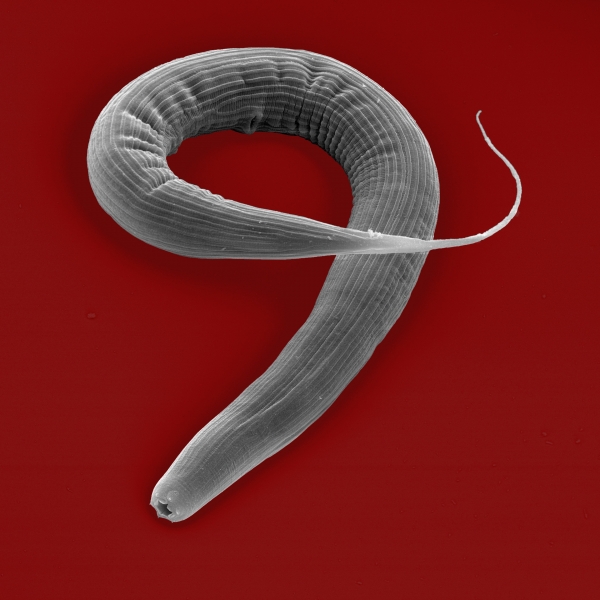
The National Research Foundation of Korea announced on the 4th that a research team led by Dr. Lee Seung-jae and Dr. Lee Cheol-joo from the Korea Advanced Institute of Science and Technology (KAIST) and Professor Park Seung-yeol from Pohang University of Science and Technology jointly discovered a new anti-aging protein through research using Caenorhabditis elegans, a tiny worm smaller than a fingernail that shares 83% of its genes with humans.
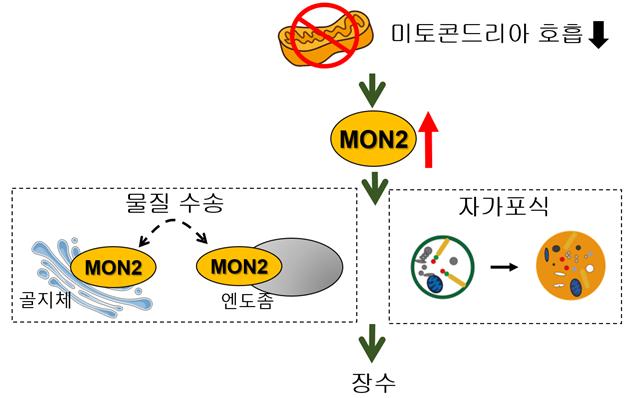
The protein discovered by the research team, MON2, is located in the Golgi apparatus and was previously known primarily as a key factor regulating material transport. It acts like a cellular post office that modifies or sorts proteins produced within the cell according to their purpose and delivers them to the required locations.
While conducting research using Caenorhabditis elegans, the team confirmed that the MON2 protein induces longevity through autophagy. Autophagy is a recycling process essential for sustaining life, in which proteins and other components that have fulfilled their roles are continuously removed or appropriately modified within the cell to prevent cellular overload.
Based on previous research findings that longevity is induced when the function of mitochondria, the cell’s energy factories, is slightly slowed, the team focused on the relationship between aging and the Golgi apparatus and mitochondria, cellular organelles where material transport and protein modification occur. Using proteomics technology, they identified about 1,000 proteins, including the Golgi protein MON2, that were specifically increased or decreased in mutant Caenorhabditis elegans with reduced mitochondrial respiration and extended lifespan compared to normal worms. They then examined lifespan changes in these mutant models. As a result, they found that the Golgi protein MON2 is necessary for longevity not only in mitochondrial mutants but also in dietary-restricted Caenorhabditis elegans.
If methods to increase the expression or activity of MON2 are developed, it could contribute to human longevity and the suppression of aging-related diseases, making it potentially valuable medically, socially, and economically.
Professor Lee Seung-jae stated, "It is significant that we have suggested the organic communication among three cellular organelles?the mitochondria, Golgi apparatus, and autophagosome?is related to longevity," adding, "Future molecular-level mechanistic studies are needed to understand how material transport within cellular organelles induces enhanced autophagy."
The research results were published on the 3rd in the international academic journal Science Advances.
© The Asia Business Daily(www.asiae.co.kr). All rights reserved.


















