Chairman Woo Hyeong-chan of the Transportation Committee Completes Budget Review Based on '5 Key Principles' to Enhance Transportation Welfare for Seoul Metropolitan Area Residents... Urges Seoul City Administration to Make Best Efforts to Ensure Transportation Welfare
[Asia Economy Reporter Jong-il Park] The Seoul Metropolitan Council's Transportation Committee (Chairman Woo Hyung-chan) completed the preliminary review of the 2022 budget proposal under the Urban Transportation Office during the 303rd regular session on December 1, increasing the transportation-related budget for next year by 26.1 billion KRW (decreasing by 16.2 billion KRW) to a total of 3.0393 trillion KRW, in accordance with the '5 Major Principles' (① Ensuring Children's Safety ② Supporting Transportation Industry Affected by COVID-19 ③ Improving Seoul Subway Transportation Services ④ Expanding Mobility Convenience for the Transportation Vulnerable ⑤ Continuous Expansion of Public Bicycles).
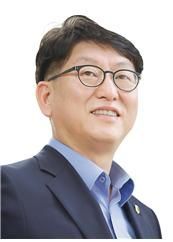
The Transportation Committee, considering the difficult financial conditions of the city due to the COVID-19 pandemic, reduced budgets for conventional and non-urgent projects and additionally allocated budgets necessary to enhance transportation safety and convenience for citizens suffering from the COVID-19 crisis, aiming to secure transportation welfare for the common people through the preliminary budget review.
The transportation-related budget areas that the Transportation Committee focused on expanding and reviewing were ▲ Ensuring Children's Safety ▲ Supporting Transportation Industry Affected by COVID-19 ▲ Improving Seoul Subway Transportation Services ▲ Expanding Mobility Convenience for the Transportation Vulnerable ▲ Continuous Expansion of Public Bicycles (commonly known as Ddareungi).
First, considering the need to prevent accidents and ensure children's traffic safety in school zones strengthened by the Min-sik Act and others, the budget for facility improvements was increased by 4.5 billion KRW to create a safe traffic environment on children's school routes in cooperation with the Seoul Metropolitan Police Agency and the Autonomous Police Committee.
The expansion of the Seoul-style standard model for children's protection zones (3.1 billion KRW) and the increase in installation of facilities such as ground traffic lights and smart pedestrian assistance voice devices (1.4 billion KRW) are expected to enhance driver visibility and pedestrian compliance with traffic signals within children's protection zones.
Second, support for losses at airport bus operation facilities suffering from reduced transportation income due to COVID-19, as well as incentives for village bus operations and card fee support for taxi drivers (increased by 11.5 billion KRW), will alleviate the burdens on operators and transportation workers.
In addition to supporting companies with simple deficits caused by COVID-19, the incentive budget for village bus operators who have made efforts in accident prevention and improving the treatment of transportation workers was increased by 1.5 billion KRW to encourage more active operation and service enhancement.
For airport buses, as most routes and vehicles have suspended operations due to the prolonged COVID-19 pandemic, raising concerns about the industry's survival, the budget for airport bus service improvement was increased by 2 billion KRW to guarantee mobility rights for air travelers in the With-Corona era and support the industry's crisis recovery amid prolonged disaster situations.
To reduce the burden on taxi drivers who are facing livelihood threats due to recent decreases in transportation income and to improve public service, the budget for taxi card fees and communication expenses was increased by 8 billion KRW, aiming to provide convenience for citizens' card payments and support transportation workers.
Third, the Seoul Transportation Corporation, which is struggling financially due to decreased transportation income, will continue to be supported in improving transportation services and air quality, helping to create a pleasant and safe subway usage environment.
Due to losses from free rides and accelerated fare income decreases caused by COVID-19, the Seoul Transportation Corporation is recording its largest financial deficit since opening. A budget of 100 billion KRW was allocated to compensate for losses and support the normalization of subway operations.
To address the long-standing issue of fine dust in the Seoul subway, a budget of 46 billion KRW was allocated to install air purification facilities in subway stations, trains, and tunnels, actively supporting the creation of a pleasant and safe subway environment.
Fourth, continuous investment in projects to improve mobility convenience for the transportation vulnerable will enhance the completeness of Seoul's transportation system by expanding and operating low-floor buses (45.3 billion KRW) and disabled call taxis (68.9 billion KRW), providing the best transportation welfare for the transportation vulnerable.
In 2022, 511 low-floor buses (net increase of 305 buses, replacement of 206 buses) will be introduced, enabling the use of low-floor buses on 286 routes (out of 6,564 buses) where low-floor buses can operate, covering 74.8% of such routes.
Additionally, the disabled call taxi fleet, currently operating 620 vehicles, will be increased by 30 vehicles and replaced by 80 vehicles, aiming to reduce waiting times to within 30 minutes and improve passenger inconvenience.
Fifth, to create an environment where eco-friendly transportation means like bicycles can be used anytime and anywhere, continuous support for the stable operation of public bicycles (Ddareungi) and the expansion of new Ddareungi (32.4 billion KRW) will promote bicycle usage convenience and activation.
Public bicycles are one of the most popular policies among Seoul citizens. Since their introduction in 2015, an annual budget of over 20 billion KRW has been allocated to maintain affordable usage fees and continuously expand the fleet by more than 3,000 new Ddareungi annually, supporting bicycles to quickly become a daily transportation means for citizens.
Chairman Woo Hyung-chan stated, “Due to the prolonged COVID-19 situation, the city's financial conditions are difficult, and the 2022 budget proposal has decreased by about 16% (down 572.6 billion KRW) compared to last year, which caused much deliberation among the standing committee members.” He added, “Since the top priority of the budget review was to support citizens suffering from COVID-19 to use Seoul's public transportation safely and conveniently, I urge the Seoul city government to consider this purpose and do their best in future budget execution.”
© The Asia Business Daily(www.asiae.co.kr). All rights reserved.
















