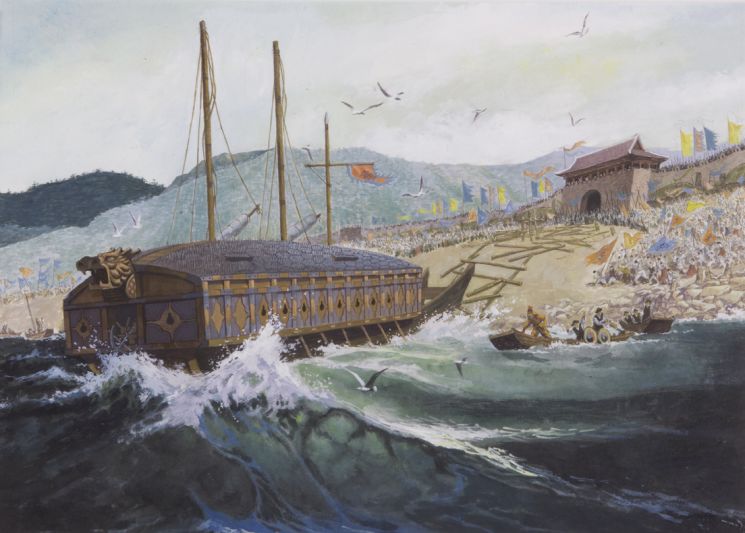
The Turtle Ship we have known may be somewhat different from the original Turtle Ship. By around 2026, we will be able to see a Turtle Ship capable of actual navigation. For over 80 years, the original form of the Turtle Ship has been surrounded by numerous debates. Currently, there are four restored Turtle Ships in Korea, each with a different model: the Turtle Ship made by Dr. Hulbert (1903), the 1:6 scale model Turtle Ship produced by Dong-A Ilbo (1969), the Turtle Ship restored by the Naval Academy (1980), and the Turtle Ship built by the Gyeongnam Development Corporation (2011). So, which one is closest to the true original Turtle Ship?
 Hong Sunjae, Curator at the National Research Institute of Maritime Cultural Heritage
◆ Four Turtle Ships in Korea... Two differ from the original = The answer to this question from Hong Sunjae, a curator at the National Research Institute of Maritime Cultural Heritage (age 50), is surprising. "The models made by Dr. Hulbert and Dong-A Ilbo are close to the original. The other Turtle Ships have a structure where the ‘gungji’?the end of the protruding wooden beam called ‘gamok’?supports an upper structure. This does not match the contents in ‘The Complete Works of Admiral Yi Sun-sin (李忠武公全書),’ the posthumous collection of Admiral Yi Sun-sin." Gamok refers to the straight and thick yoke laid across the side of the ship, and gungji is the railing placed on the end of the gamok.
The National Research Institute of Maritime Cultural Heritage in Mokpo, Jeollanam-do (Director Kim Yeonsu) is beginning research on the Turtle Ship. This is the eighth research topic following the completion of research on the Panokseon, the warship that showed its might during the Imjin War. During the restoration process of the Panokseon, the seventh research subject, the institute discovered errors in the previously known external shape of the Turtle Ship. The issue was the ‘do (櫂).’ Do refers to the oar of a large ship. "To actually move the Panokseon, the oar must be about 6 meters long. Some oars are made by joining pieces of wood, but then they cannot withstand force. They must be a single piece. Although single-piece oars were considered Western-style, historical records show such oars existed even in the late Joseon period. Since the height to the deck of the Turtle Ship is 2.7 meters, the oar must be a single piece about 6 meters long to withstand the force structurally." Using a long single-piece oar is necessary to receive power and charge forward quickly. This is the explanation from Hong Sunjae, a maritime archaeology expert with 27 years of experience.
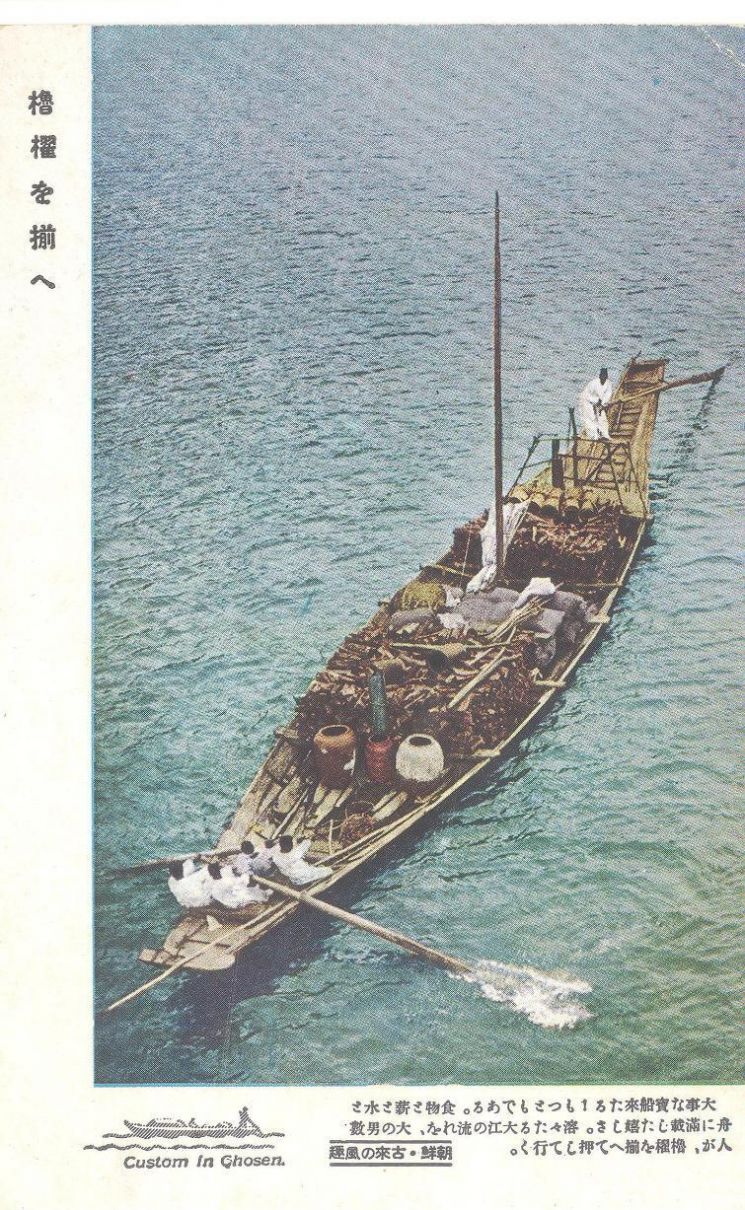 This is a paddle. The paddle at the front of the boat is made by attaching two pieces of wood, whereas the paddle at the back is integrated. Daedonggang ferry boat, Photo by Jeonju Museum Collection
◆ Five years required for Turtle Ship restoration = Restoring the Turtle Ship is a painstaking process. It takes 2 years for additional research and 3 years for wood collection and construction, totaling about 5 years. "To identify the basic principles and problems of previously made Turtle Ships, we collect and analyze Korean, Chinese, and Japanese historical documents, research papers, and pictorial materials. We clarify the original form through analysis of the Turtle Ship’s size, weight, detailed structure, ornamental design, and shipbuilding engineering, and conduct model production experiments to test joint structures, manufacturing methods, wood sourcing, and shipbuilding techniques." He plans to travel extensively across the country. The old Turtle Ships were made from Korean pine, alder, fir, elm, and hornbeam, so securing materials is fundamental and essential for accurate restoration. Since drying the wood alone takes about a year, swift action is required.
In fact, these challenges are not the biggest difficulty. Hong emphasizes, "There are many difficulties due to lack of basic data," and stresses the need for an open attitude to collaborative research. He also pointed out that experts in ship research sticking only to their own theories make research exchange difficult. The National Research Institute of Maritime Cultural Heritage is the only specialized institution under the Cultural Heritage Administration in Korea that researches and restores ancient ships excavated underwater. Hong is responsible for researching and restoring traditional Korean ships excavated from coastal waters. Since 2008, he has restored various vessels including early-season mid-sized purse seiners from Gyeonggi Province, transport ships, cargo ships, and Joseon Tongsinsa (Joseon diplomatic mission) ships.
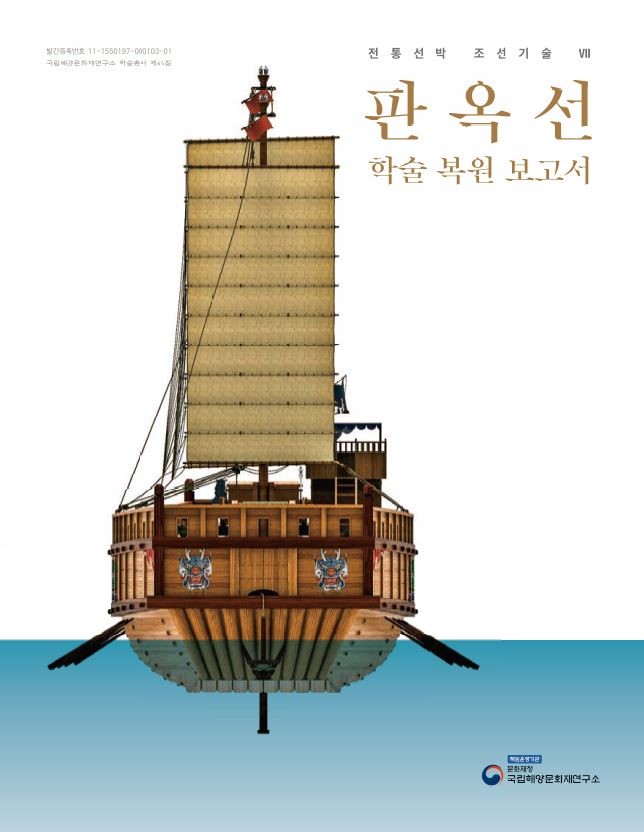
The most recent research is on the Panokseon. The Panokseon played a major role in Admiral Yi Sun-sin’s naval victories during the Imjin War. Last October, the institute published an academic research report scientifically clarifying the original form of the Panokseon. To find the original Panokseon, since 2019, the institute has collected and analyzed humanities materials such as Korean, Chinese, and Japanese warship-related documents, and included results from scientific analyses such as detailed design and shipbuilding engineering. With the publication of this academic restoration report, the Panokseon model will be released 1 to 2 years ahead of the Turtle Ship. The Turtle Ship will undergo the same process.
© The Asia Business Daily(www.asiae.co.kr). All rights reserved.



















