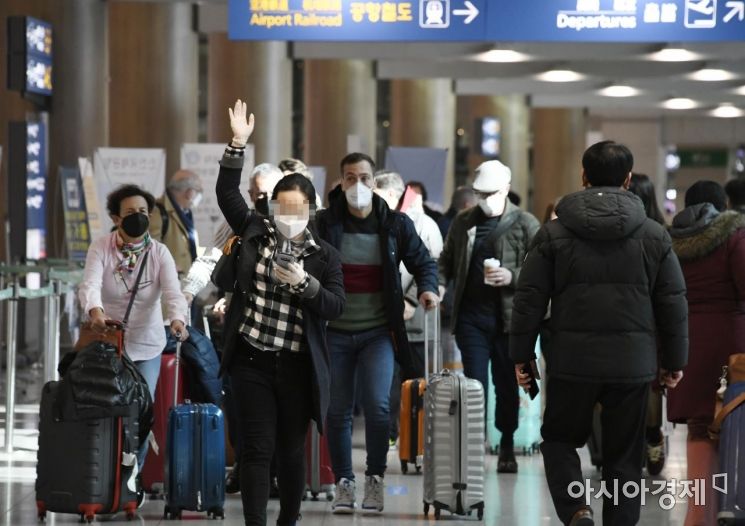
 On the 28th, Terminal 1 of Incheon International Airport as the government banned entry from eight African countries to prevent the domestic influx of the COVID-19 variant 'Omicron' spreading across South Africa.
[Asia Economy Reporter Seo So-jeong] The government has designated Nigeria as an enhanced quarantine country, a high-risk country, and an exclusion country from quarantine exemption due to the occurrence of Omicron variant confirmed cases in Nigeria. Additionally, to block the influx of Omicron, all domestic and foreign nationals entering from any country will be required to quarantine for 10 days regardless of vaccination status for the next two weeks.
The Central Disease Control Headquarters held the 71st Overseas Inflow Situation Evaluation Meeting with related ministries at 8 p.m. today and announced that it decided on these additional measures to prevent the influx of Omicron.
First, starting from 0:00 on the 3rd, Nigeria will be newly designated as an enhanced quarantine country, a high-risk country, and an exclusion country from quarantine exemption, applying the same quarantine measures as the eight countries including South Africa. The Central Disease Control Headquarters explained, "One confirmed case of the Omicron variant has been reported in Nigeria, and there have been confirmed cases among travelers from Nigeria (two cases in Canada). A suspected case entering Korea from Nigeria was confirmed to be infected with the Omicron variant."
Quarantine measures for overseas arrivals from all countries except the nine countries including South Africa and Nigeria will also be strengthened.
From 0:00 on the 3rd to midnight on the 16th, for the next two weeks, all domestic and foreign nationals entering from any country must quarantine for 10 days regardless of vaccination status. The enhanced quarantine exemption system will be applied, minimizing the issuance of quarantine exemption certificates limited to attending funerals, official duties, etc. Even those who previously received quarantine exemption certificates as overseas vaccinated persons, such as visiting immediate family members or businesspersons, will be subject to quarantine for two weeks.
Specifically, Korean nationals and long-term foreign residents must self-quarantine for 10 days and undergo three PCR tests (pre-departure PCR, on the first day after entry, and before release from quarantine). Short-term foreign residents must quarantine for 10 days in temporary living facilities.
From 0:00 on the 4th to midnight on the 17th, direct flights from Ethiopia, which is one of the nine countries with a high influx including Nigeria, will be suspended from entering Korea for the next two weeks. However, since this is the only direct flight from the African region and is temporarily suspended, the government plans to arrange irregular flights to ensure the safe return of Korean nationals.
The Central Disease Control Headquarters stated, "We will continue to monitor the risk and spread of the overseas Omicron variant virus and plan to expand or adjust the designation of enhanced quarantine countries accordingly."
© The Asia Business Daily(www.asiae.co.kr). All rights reserved.
![Clutching a Stolen Dior Bag, Saying "I Hate Being Poor but Real"... The Grotesque Con of a "Human Knockoff" [Slate]](https://cwcontent.asiae.co.kr/asiaresize/183/2026021902243444107_1771435474.jpg)
















