Government "No Logistics Disruptions Yet, but Monitoring Closely"
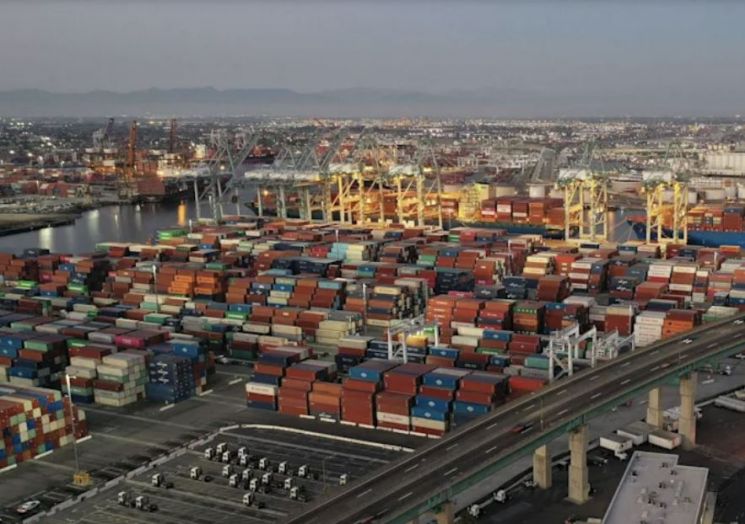
[Sejong=Asia Economy Reporter Moon Chaeseok] The government has decided to conduct a special inspection of quarantine systems at port logistics sites to prevent the spread of the new COVID-19 variant, Omicron. As logistics difficulties continue, measures for export companies such as securing shipping space, and support for freight rates and infrastructure will also continue to be implemented.
On the 1st, the government held the 4th meeting of the 'Export-Import Logistics Emergency Response Task Force (TF)' to review export-import logistics trends related to the spread of Omicron and discuss response directions. At the meeting, the Ministry of Oceans and Fisheries, Ministry of Land, Infrastructure and Transport, and others explained that "Although there are currently no concerning situations or additional disruptions in logistics related to the spread of Omicron, if the variant spreads and port closures or crew change bans in some countries become a reality, logistics difficulties may worsen, so close monitoring is necessary."
To prevent the spread of Omicron, the government will conduct a special inspection of foreign crew members entering the country and the port quarantine system. Inspections will be conducted at port cargo handling sites and port transportation business sites until the 24th. Related organizations attending the meeting, including KOTRA, Small and Medium Business Corporation, Korea International Trade Association, and Korea Shipping Association, reported that although ocean freight rates have recently stabilized, they remain at a high level. They evaluated that logistics remain difficult due to continued congestion at overseas ports and inland transportation.
In a survey conducted by the Korea International Trade Association from the 17th to the 30th of last month targeting 437 export companies, export-import companies responded that they are concerned about deteriorating profitability due to soaring logistics costs (response rate 60.1%), damage to trust with overseas buyers (40.6%), and occurrence of additional logistics-related costs (34.6%). They expressed hopes that government support for logistics costs (69.4%), securing shipping space (6.0%), and loan support (6.0%) will continue next year. For mid- to long-term policies, they suggested expanding ship supply and enlarging national shipping companies (49.5%), establishing an emergency response system related to global supply chain restructuring and export-import regulations of major countries (35.6%), and improving convenience for shippers to use digital logistics technologies (platforms) (25.7%).
The TF plans to continue monitoring global logistics situations and variant virus spread trends while promoting adjustments to shipping routes and scale, and support for freight rates and infrastructure. First, in addition to the US ports of Los Angeles (LA) and Long Beach (LB), ships will be rerouted to northwest ports such as Tacoma and Seattle, and exclusive shipping space will be allocated for small and medium shippers in cooperation with national shipping companies. The recruitment announcement for next year's export voucher (logistics cost) companies will be made this month, and early applications for the overseas joint logistics center project will be accepted from the 6th to the 10th of this month. Additionally, Asiana Airlines will operate a total of three flights transporting cargo for small and medium shippers at reasonable rates compared to market prices (Incheon→Germany Frankfurt), and a platform providing comprehensive logistics information will launch its service from the 3rd of this month.
Jeon Jae-woo, Director of the Shipping and Logistics Bureau at the Ministry of Oceans and Fisheries, said, "Due to sustained demand in the US and supply chain bottlenecks caused by COVID-19, the current export-import logistics situation is expected to continue until next year. We will do our best to resolve logistics difficulties for domestic export companies by continuously implementing export-import logistics support measures in cooperation with national shipping companies." Moon Dong-min, head of the response team (TF) and Director of the Trade and Investment Office at the Ministry of Trade, Industry and Energy, said, "We will make every effort to prepare effective measures in line with the logistics situation and policy support demand surveys of our companies going forward."
© The Asia Business Daily(www.asiae.co.kr). All rights reserved.

















