Expanded Provision of Renewal and New Contract Information by Ministry of Land
Increasing Dual Pricing in Jeonse and Wolse Market
Similar Deposits but Monthly Rent Differs by 1 Million Won
Acceleration of Monthly Rent Conversion Due to Comprehensive Real Estate Tax Burden Transfer
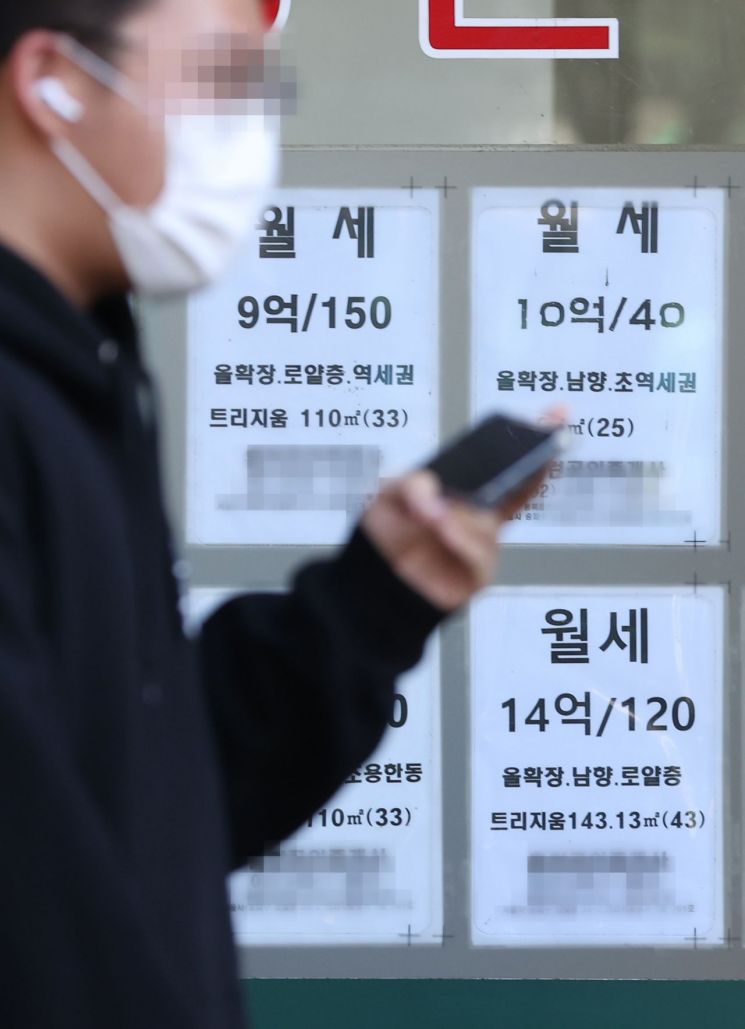
The phenomenon of ‘dual pricing’ between renewal contracts and new contracts in the housing rental market is becoming increasingly severe. Renewal contracts are subject to a 5% cap on rent increases due to the Lease Protection Act, but in new contracts, which are not subject to this cap, deposits and monthly rents are rising sharply. This trend has recently intensified, especially as landlords pass on taxes to tenants.
According to the Ministry of Land, Infrastructure and Transport on the 1st, the government has started to additionally disclose the contract periods and renewal contract information for apartment jeonse (lump-sum deposit lease) and monthly rent contracts in Seoul through the ‘Ministry of Land Real Transaction Price Disclosure System’ since the day before. Previously, only the complex name, contract date, and rent were disclosed, but with the implementation of the Lease Reporting System in June, the government has been able to secure more information, and to increase transparency in the rental market, it decided to disclose renewal and new contract information as well.
Looking at the disclosed jeonse and monthly rent information, the ‘dual pricing’ phenomenon has recently worsened. For example, in Goduk Gracium, Gangdong-gu, Seoul, for a 59.78㎡ (exclusive area) apartment, most renewal contracts were signed with a jeonse deposit of around 400 million to 450 million KRW, but new contracts were made with a deposit of 400 million KRW plus monthly rent of 1 million to 1.15 million KRW. Although the deposit amount is similar at around 400 million KRW, the increase in jeonse price has been converted into monthly rent for the contract.
In Mapo-gu, at Mapo Raemian Prugio Complex 1, 84.89㎡, the renewal contract on the 9th of last month saw the deposit increase by only 35 million KRW from 750 million to 785 million KRW, whereas the new contract on the 8th of the same month was signed at 1.05 billion KRW. Similarly, at Eunma Apartment in Gangnam-gu, 76.79㎡, renewal contracts were made with a deposit of 200 million KRW and monthly rent of 1.07 million KRW, while new contracts were made with the same deposit but monthly rent of 1.85 million KRW.
The industry believes that as landlords face increasing burdens from comprehensive real estate tax and property tax, cases of converting jeonse contracts into monthly rent or semi-monthly rent contracts are increasing. In fact, at Goduk Gracium, among 20 new lease contracts reported last month, 9 contracts (45%) involved some form of monthly rent. Tenants, too, often choose monthly rent reluctantly due to soaring jeonse prices and rising interest rates.
There have also been many cases where tenants did not exercise their right to request contract renewal but instead agreed to monthly rent or deposit increases exceeding 5%. According to the Ministry of Land, since the implementation of the Lease Reporting System, out of a total of 100,231 renewal contracts reported by October, 23,084 cases (23.0%) did not exercise the right. While this may be due to conflicts with landlords, it is also interpreted that some tenants postponed exercising their rights once, fearing that jeonse prices might rise further since they can exercise the right again after two years.
Deputy Prime Minister and Minister of Economy and Finance Hong Nam-ki has pledged to prepare measures by the end of the year to address the worsening jeonse shortage and the intensifying dual pricing, but there is no clear solution yet. The Ministry of Land stated, "Rather than introducing new measures, we intend to more thoroughly implement existing jeonse policies and short-term supply plans," adding, "We believe that once supply is secured, jeonse and monthly rent prices will stabilize."
© The Asia Business Daily(www.asiae.co.kr). All rights reserved.

















