Industry Impact
Large Corporations, IT, and Telecommunications Sectors
Already Shifting in Similar Trends
The 'Promotion When Time Comes' Atmosphere Disappears
Situations Vary by Industry and Company
Some Expect It to Be Limited to Certain Companies
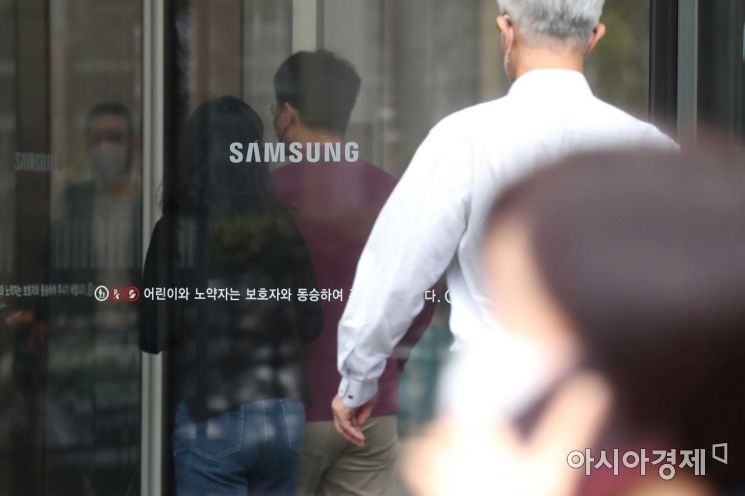
[Asia Economy Reporter Choi Dae-yeol] Samsung's consideration of reforming its employee personnel system based on performance rather than seniority is drawing attention as to whether this will spread throughout the industry. Since a similar trend has already been seen mainly among some large corporations and IT/telecommunications sectors, there is a forecast that it will further expand, while some also predict it will be limited to certain companies due to differing circumstances by industry and company.
On the 29th, a representative from a major domestic corporation said, "In principle, some companies in Korea have already abolished promotion seniority and introduced personnel systems based on work performance or evaluation," adding, "Whether such systems have been properly established in each company and achieved their intended goals will vary depending on each company's situation."
According to the industry, SK Innovation abolished its rank system, which was used internally for management purposes along with titles, earlier this year. Except for executives, the company uniformly applies the rank of PM (Professional Manager) and organizes the personnel system by appointing PLs, equivalent to team leaders, according to each department's situation. A company official stated that since operating a role- or task-based system since 2007, the internal culture has naturally accepted the idea of "treating employees according to performance." SK Telecom had already unified titles and abolished promotion seniority, revising its personnel system accordingly. The previously segmented salary system was also simplified into two levels.
Hanwha Group operates a personnel system where employees accumulate points based on work performance or capabilities to get promoted, while maintaining rank systems in its major affiliates. Hyundai Heavy Industries simplified the rank system in support departments to manager, senior, and responsible levels, but in shipbuilding sites where ships are constructed, personnel are managed in detail by considering work experience and hiring periods.
Among major domestic corporations, the notion of "promotion at a certain time" has largely disappeared, and the argument that recognition should be based on performance or ability has long been raised. However, there are criticisms that if introduced without considering individual circumstances or industry characteristics, it could be a "token" innovation. An anonymous employee from a large corporation said, "Although seniority has been abolished, thorough and in-depth evaluations for each employee are not properly conducted, so dissatisfaction exists not only among long-serving employees but also among younger staff."
© The Asia Business Daily(www.asiae.co.kr). All rights reserved.

















