Received improper solicitation and violated contract law to sign a contract with a specific pharmaceutical company worth 2.1667 billion KRW over 44 cases
Suspicions of sample manipulation and swapping to select a specific pharmaceutical company confirmed through three rounds of verification
[Asia Economy Reporter Lim Cheol-young] The Seoul Metropolitan Government announced on the 28th that it conducted an audit of the Seoul Water Reuse Facility Corporation and identified 17 issues, including cases where contracts were made with specific pharmaceutical companies in violation of the Contract Act after receiving improper solicitations, and cases that appear to involve sample manipulation and sample swapping to select specific pharmaceutical companies, and notified the corrective actions.
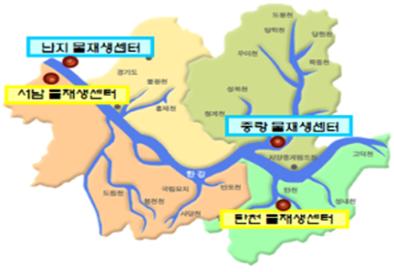
In January, Seoul established the Seoul Water Reuse Facility Corporation by merging two private consignment companies and operates four water reuse centers, with two centers under consignment operation and two centers directly managed. The Audit Committee conducted an institutional operation audit of these four ‘Water Reuse Centers’ operated by Seoul from June 8 to July 16.
The Seoul audit results pointed out 17 issues including ▲ purchasing wastewater treatment chemicals from specific companies in violation of the Improper Solicitation and Graft Act ▲ selecting specific suppliers for government-supplied materials during the construction of the Seoul Water Reuse Facility Corporation’s office building ▲ violating the Local Contract Act by making private contracts when purchasing office furniture ▲ budget waste due to the habitual use of patented construction methods during the cutoff pipe water blocking work ▲ and other issues such as private use of official vehicles.
First, when purchasing wastewater treatment chemicals to meet discharge water quality standards, it was found that improper solicitations were received from specific companies requesting the purchase of their chemicals, and handwritten notes were issued instructing the selection of these specific companies as contractors, resulting in continuous purchase contracts with these companies, violating the Improper Solicitation and Graft Act and the Local Contract Act related to contracts.
The Audit Committee stated, "When purchasing water treatment chemicals, improper solicitations were received from specific companies, and contracts worth 2.1667 billion KRW were signed with these companies in violation of contract laws, restricting the bidding opportunities of many pharmaceutical companies and hindering fair competition," adding, "This not only greatly lowered public trust in Seoul’s investment and contribution institutions but also resulted in the loss of budget-saving opportunities, causing waste of Seoul’s finances."
In particular, to fulfill improper solicitations, it was found that the purchasing officer received unsealed chemical samples for testing from 5 to 8 pharmaceutical companies 10 times from April 2017 to March of this year without disclosing the evaluation method. The Audit Committee conducted three rounds of verification to uncover this fact.
The Audit Committee explained, "Verification results confirmed that after sealing samples in the presence of pharmaceutical companies and storing them in the Seoul Water Reuse Facility Corporation’s audit office, three companies passed the test, and after sealing the samples and disclosing detailed evaluation methods to the pharmaceutical companies, five companies passed," adding, "It was confirmed through verification that there is a possibility of ‘sample manipulation’ or ‘sample swapping’ to give preferential treatment to specific companies by submitting unsealed samples and providing evaluation methods only to specific companies."
It was also confirmed that during the selection of government-supplied material suppliers for the Seoul Water Reuse Facility Corporation’s office building construction, handwritten notes were issued instructing the inclusion of specific companies’ products in the design in violation of the Local Contract Act. The Audit Committee judged that notes were issued to include products from six specific companies in the design, resulting in contracts worth 362.03 million KRW for 17 items from five specific companies, and verbal instructions led to contracts worth 160.34 million KRW for four items.
The Audit Committee judged, "This excluded other companies from participating in fair competition, disrupting contract order and losing opportunities to save budget through price comparisons among multiple products," and "It resulted in preferential treatment by allowing specific companies to supply government-supplied materials."
Furthermore, when purchasing office furniture for the Seoul Water Reuse Facility Corporation, it was pointed out that the Local Contract Act was violated by making private contracts collectively for items not directly produced by facilities producing products for persons with severe disabilities, and that the production facilities violated the Market Support Act by delivering products from other companies during delivery.
In addition, the Audit Committee reported other issues including ▲ budget waste due to the use of patented construction methods with no special difference from general methods during cutoff pipe water blocking work ▲ private use of official vehicles for purposes such as golf courses or arboretums ▲ and multiple cases such as allowing tenants of official residences to use the residences under separate names for parents and children despite the residences being limited to employees themselves.
Lee Gye-ryeol, Seoul’s Audit Officer, said, “We have notified the relevant institutions of the audit results to ensure corrective actions are taken for the identified issues, and after a one-month re-examination period, we will disclose the final audit results in December,” adding, “Since many issues related to the newly launched Seoul Water Reuse Facility Corporation in January this year were identified, we will strengthen guidance and supervision to prevent illegal and improper cases from occurring until the organization stabilizes, focusing on newly established investment and contribution institutions.”
© The Asia Business Daily(www.asiae.co.kr). All rights reserved.

















