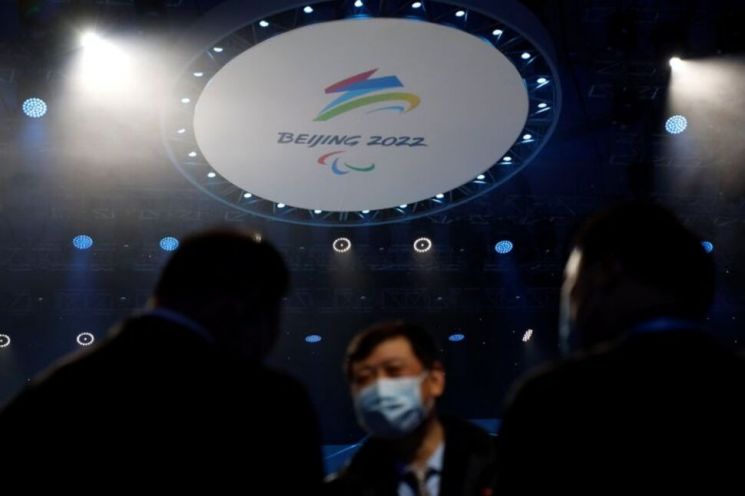
[Asia Economy Reporter Yujin Cho] Following the United States and the United Kingdom, Australia is also reportedly considering a diplomatic boycott of the Beijing Winter Olympics, set to open in February next year, according to the daily newspaper The Sydney Morning Herald on the 25th (local time).
The government of Prime Minister Scott Morrison is said to be receiving demands from politicians across party lines to boycott participation in the Beijing Winter Olympics, similar to Western countries such as the US and the UK, the media reported. A diplomatic boycott of the Olympics means sending athletes to compete but not dispatching delegations composed of government or political officials.
Regarding this, the Australian Department of Foreign Affairs declined to comment. Richard Colbeck, Australia's Minister for Sport, stated in an email response that "a decision has not yet been made on whether to participate in the Beijing Winter Olympics."
Earlier, US President Joe Biden said on the 18th at a press conference following a meeting with Canadian Prime Minister Justin Trudeau at the White House that when asked if he supports a diplomatic boycott of the Beijing Winter Olympics, "It is something we are considering."
Among other US allies in Europe, including the UK, there is a growing trend to reconsider sending government delegations to China in line with the Beijing Winter Olympics.
The UK’s The Times recently reported that "active discussions" are underway within the government regarding a diplomatic boycott of the Beijing Winter Olympics.
The Times also reported that within the UK government, a plan is being considered where Prime Minister Johnson would not attend, and only Caroline Wilson, the British Ambassador to China, would attend the Beijing Winter Olympics.
All these countries are using a diplomatic boycott to pressure China in protest against human rights violations committed in regions such as the Xinjiang Uyghur Autonomous Region.
The Sydney Morning Herald reported that the Australian government plans to wait for the Biden administration’s decision before making a final judgment on whether to boycott.
China is Australia’s largest trading partner, but tensions began when Australia, in 2018, aligned with the policy of the former Trump administration in the US and decided to exclude Chinese Huawei equipment from building its 5G network.
Subsequently, in April last year, when Australia called for an investigation into the origin of COVID-19 and raised accountability issues, the conflict between the two countries escalated into a trade dispute. China retaliated by banning imports of Australian beef, wine, timber, and other products, while Australia has been strengthening its vigilance against China by lowering its dependence on China and forming security alliances with the US and countries in the Indo-Pacific region.
© The Asia Business Daily(www.asiae.co.kr). All rights reserved.
![Clutching a Stolen Dior Bag, Saying "I Hate Being Poor but Real"... The Grotesque Con of a "Human Knockoff" [Slate]](https://cwcontent.asiae.co.kr/asiaresize/183/2026021902243444107_1771435474.jpg)
















