[Seoul District News] Gwanak-gu Establishes Customized Support Policies for Single-Person Households with 40 Projects in 4 Areas Worth 22.4 Billion KRW; Launches 'Hankki Nanum Regional Coexistence Project' to Support Young Small Business Owners and Vulnerable Single-Person Households... Jongno-gu Becomes 'Innovation Champion' through Urban Emptying Project... Nowon-gu Opens Train Cafe at Hwarangdae Railroad Park and Time Museum... Seongdong-gu's 'Smart Volunteer Group' Reduces Digital Divide for Seniors with Visits to Senior Centers and Homes, Teaching Ordering Food and Purchasing via Text and Mobile Messenger... Songpa-gu, Transparent Pe...
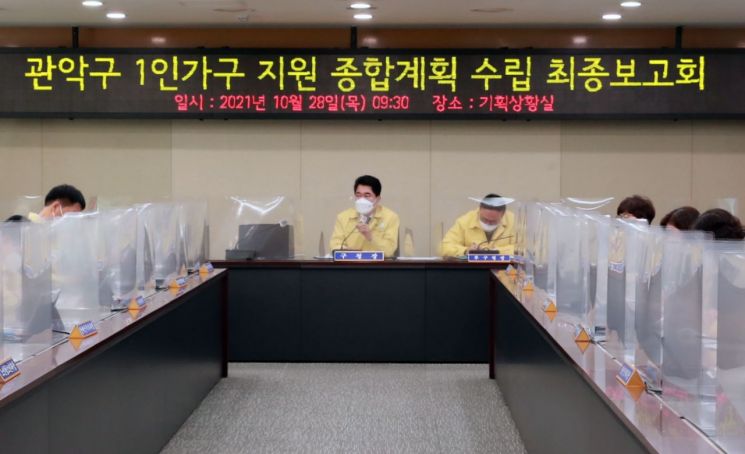
[Asia Economy Reporter Park Jong-il] Gwanak-gu (Mayor Park Jun-hee) has recently established a comprehensive plan to support the rapidly increasing number of single-person households and will promote customized support policies worth a total of 22.4 billion KRW by 2024.
As of September 2021, Gwanak-gu is a district with a high proportion of single-person households, accounting for about 60% of the total households (164,000 single-person households out of 276,000 total households), the highest ratio among Seoul's autonomous districts.
Accordingly, the district has paid more attention to establishing a customized comprehensive plan to support single-person households and, after careful review of each project, selected 40 projects across four major areas.
From 2022 to 2024, the district plans to actively promote 40 projects supporting single-person households through organic cooperation among 16 related departments in four areas: ▲housing and jobs ▲safety ▲health and care ▲formation of social networks.
Especially, given that 62% of single-person households in the district are young adults, many policies specialized for the youth have been prepared, such as operating an AI-VR interview experience center, youth employment mentoring and talk concerts, running the Gwanak Youth Center, and community classes for young single-person households.
Among them, the ‘Youth Small Business One-Meal Sharing Regional Coexistence Project’ supports young small business owners, economically vulnerable young delivery workers, and vulnerable single-person households, contributing to youth job creation and strengthening the connection network between vulnerable groups and the local community.
Projects for vulnerable groups, middle-aged, and elderly people, which have been the focus of existing single-person household policies, will be greatly expanded, and new projects such as community-based health and welfare support for single-person households, meal kit support for middle-aged single-person households, and the middle-aged single-person program ‘Happy Companion’ will be launched.
In addition, considering the relatively vulnerable characteristics to crime in areas densely populated by single-person households, the district will actively promote projects to strengthen daily safety, creating an environment for crime prevention through the nation’s first urban ‘autonomous driving-based safety patrol service’ project.
To ensure the effectiveness of the single-person household support projects, the district enacted and promulgated the ‘Gwanak-gu Single-Person Household Support Ordinance’ on the 11th, and plans to expand and reorganize the Single-Person Household Support Center by June next year, accelerating the establishment of an institutional foundation for support.
Furthermore, the district will continuously monitor whether detailed project performance indicators are achieved during project implementation, check the progress and results semiannually, and ensure that projects established according to the comprehensive plan for single-person household support are carried out without delay.
A district official said, “We will continue to collect diverse opinions and discover and promote policies that are practically needed by single-person households to alleviate their anxiety and support a healthy life.”
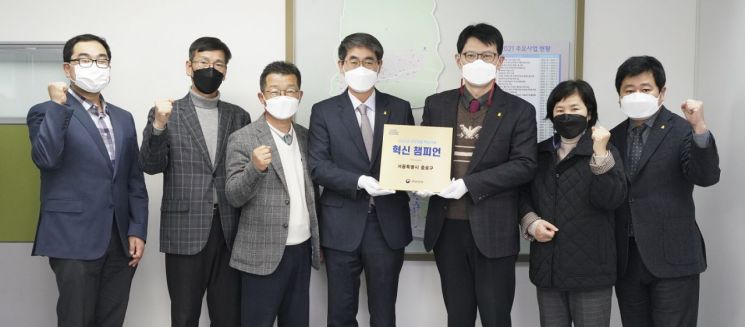
Jongno-gu received the ‘Presidential Award’ at the ‘2021 Local Administrative Innovation Merit Award Ceremony’ hosted by the Ministry of the Interior and Safety and was selected as the recipient of the Resident Life Innovation Case Expansion Award for the ‘Urban Clearing Project,’ receiving the Innovation Champion Plaque.
The Ministry of the Interior and Safety’s ‘Resident Life Innovation Case Expansion Support Project’ aims to discover and analyze excellent local cases, verify project performance, resident perception, sustainability, and spread them to other local governments. This time, a total of 34 cases in five fields, including Jongno-gu’s Urban Clearing Project, were selected.
The ‘Urban Clearing’ project, a representative environmental maintenance project of Jongno-gu, involves demolishing unnecessary or functionally obsolete urban facilities to ‘clear,’ consolidating and merging facilities with similar functions to ‘reduce,’ maintaining and repairing old, corroded, or damaged facilities to ‘organize,’ and minimizing and optimally installing new facilities to ‘pre-clear.’
The district has focused on this as a key project and has strived to create pedestrian-first, people-centered streets.
Previously, a dedicated team was established in 2013, and legal frameworks were set through related ordinances enacted in 2015, with about 30,000 clearing actions carried out to date.
Additionally, the ‘Pre-Clearing’ project before installation has saved about 1 billion KRW in budget.
Since 2020, the concept of urban clearing has been expanded to ‘tidying up,’ removing rust from facilities on major streets such as Sejong-daero, and efforts are underway to transform long-neglected vacant lots into resting places for residents.
This year, the district is minimizing newly installed facilities and actively maintaining facilities such as abandoned utility poles that have lost their original function or hinder pedestrian safety.
A district official said, “Since receiving the Minister of Land, Infrastructure and Transport Award in 2018 for the Urban Clearing Project, we have now received the Innovation Champion Plaque, being recognized as a model local government striving for public innovation. We will continue to leverage our long experience to clear, reduce, and organize urban facilities.”
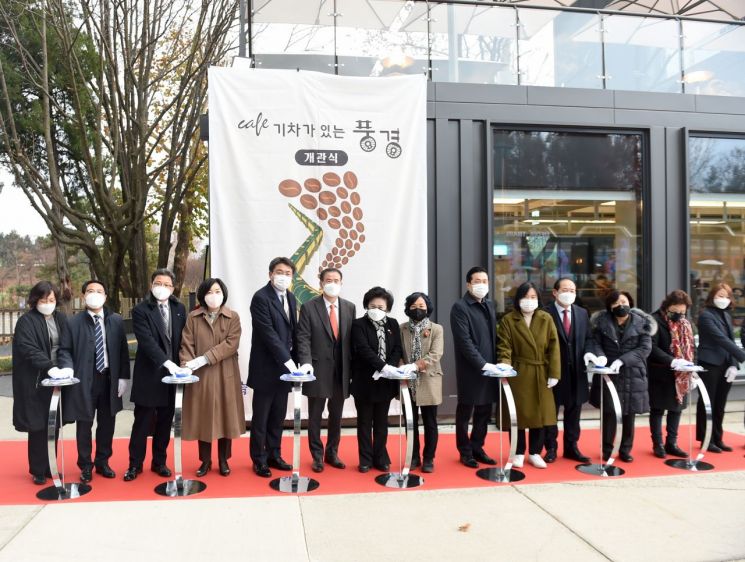
Nowon-gu (Mayor Oh Seung-rok) held the opening ceremony for the Train Cafe and Time Museum at Hwarangdae Railroad Park at 4 p.m. on the 24th.
The district additionally established the unique cafe ‘Scenery with a Train’ and the ‘Time Museum,’ where visitors can embark on a time travel journey centered on time and clocks, within the Gyeongchun Line Forest Trail Hwarangdae Railroad Park.
‘Scenery with a Train’ has a total floor area of 388.66㎡ and three floors, offering a unique service where two mini trains deliver coffee. Inside the cafe, there is a mini train exhibition and a spaceship launch pad that stimulate children’s curiosity and imagination. Part of the second floor is designed as an outdoor terrace to enjoy the park view leisurely.
The ‘Time Museum’ is located opposite the train cafe, utilizing six retired Mugunghwa train cars. It consists of four themed spaces: ▲Time and Humanity ▲Time and Art ▲Time and Resonance ▲Time and Sharing, exhibiting 95 unique clock artworks matching each theme.
The event was held to introduce and widely promote the new space of Gyeongchun Line Railroad Park to local residents, as the opening ceremony could not be held earlier due to COVID-19.
The opening ceremony proceeded with progress reports, congratulatory speeches, unveiling, commemorative photos, and rounds of the train cafe and time museum, attended by Mayor Oh Seung-rok and local residents.
Mayor Oh Seung-rok said, “A new landmark of the Gyeongchun Line Healing Town has been born. I hope Hwarangdae Railroad Park will become a more beloved resting place.”
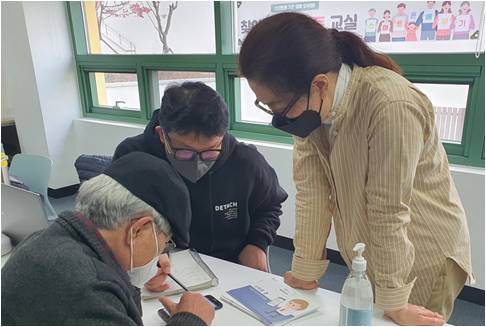
Seongdong-gu (Mayor Jung Won-oh) will expand the operation of the ‘Visiting Smart Classroom’ starting this month.
The district increased the number of ‘Smart Volunteer Teams’ from two to eight and expanded the education target locations from the existing community centers to local senior centers. In cooperation with the Seoul Metropolitan Seongdong Senior Welfare Center’s customized care service life support workers, the district also provides direct home visits to improve convenience for those with mobility difficulties.
The ‘Visiting Smart Classroom’ targets the digitally marginalized, providing customized one-on-one education on basic smartphone usage such as portal sites and mobile messengers.
It helps install and use related apps to order food and purchase goods via smartphones and provides detailed guidance on communication apps like text messaging and messengers.
The program also offers a ‘smartphone cleansing’ service to organize indiscriminately accumulated data on smartphones and transfer it to cloud or portable storage devices. Using educational apps, it helps users practice using kiosks (unmanned terminals) commonly found in restaurants, cafes, and cinemas, enabling them to practice independently.
With 236 participants completing the education over two months since May and showing high participation and response, the program aims to provide an emotional communication space for the digitally marginalized who feel fatigue and depression due to social distancing, fostering interest in smartphones and enabling them to access and benefit from the digital world independently.
The education is available to residents who have completed the second dose of vaccination and can attend by making a reservation in advance through the Seongdong-gu Office website and visiting the community center.
Previously, the district launched the ‘It’s Okay to Be Slow’ campaign by installing kiosks with slow usage time at frequently used places like marts and cinemas. The district plans to continue creating an atmosphere where the digitally marginalized can use digital devices without psychological burden and prepare various policies to reduce the digital information gap between generations.
Mayor Jung Won-oh said, “We must all work together for those who acquire digital skills relatively slowly. We will actively strive to reduce the information gap through various policies so that smart technology can be utilized by everyone.”
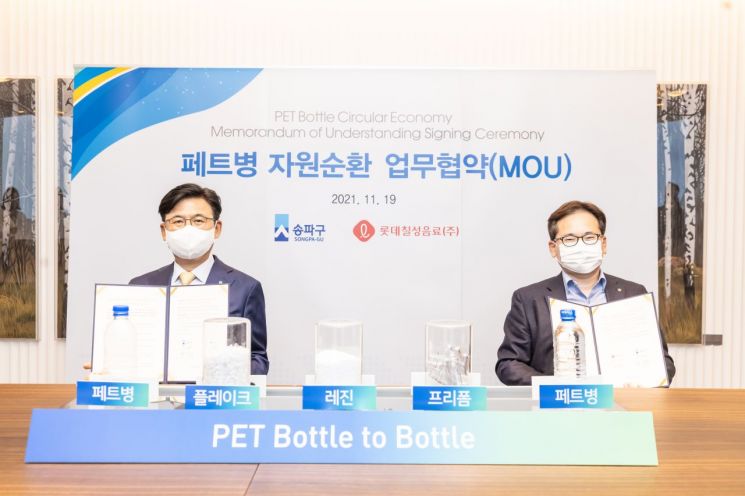
Songpa-gu (Mayor Park Sung-soo) signed a ‘Business Agreement to Expand Transparent PET Bottle Recycling’ with Lotte Chilsung Beverage Co., Ltd. at Lotte Signiel Hotel on the 19th.
On this day, the two organizations joined forces to expand transparent PET bottle recycling and resource circulation.
The agreement involves collecting transparent waste PET bottles discharged from detached houses in Songpa-gu, delivering some to Lotte Chilsung Beverage, which will recycle and commercialize these PET bottles into recycled PET products for sale.
Through this, the district expects transparent PET bottles to be recycled into high-quality recycled raw materials, transformed into eco-friendly products, contributing to environmental conservation and advancing the realization of a sustainable resource circulation society.
Additionally, before the separate collection system for transparent PET bottles is fully implemented on December 25, the district plans to hold events with Lotte Chilsung Beverage to encourage resident participation, widely promote the system, and increase transparent PET bottle recycling.
Mayor Park Sung-soo said, “As Songpa-gu established the ‘Carbon Neutral City Implementation Plan’ in 2020, the first among Seoul’s autonomous districts to respond to climate change, we will strengthen cooperation with local companies for carbon neutrality and environmental protection through this agreement. We will do our best to make Songpa a leading city in resource circulation.”
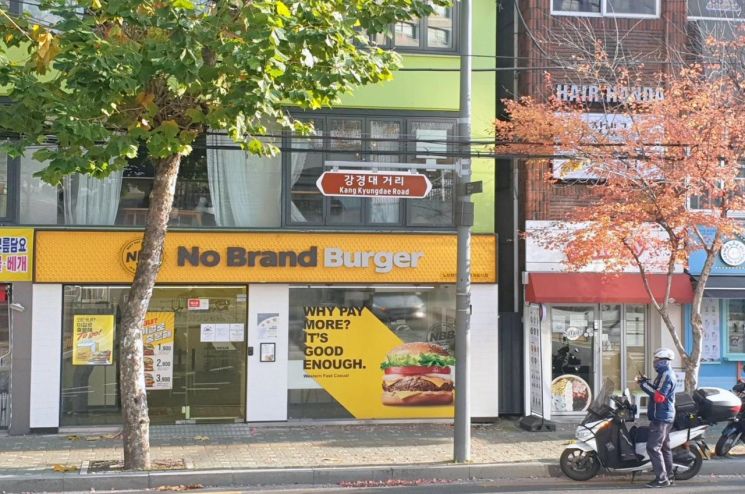
Seodaemun-gu (Mayor Moon Seok-jin) announced on the 24th that it will assign the honorary road name ‘Gang Gyeong-dae Street’ for five years starting from the 1st of next month on the street in front of the main gate of Myongji University in Namgajwa 2-dong.
The street is about 270 meters long, extending from ‘Geobukgol-ro 21’ to ‘Geobukgol-ro 50.’
This location is where Kang Gyeong-dae, a first-year economics student at Myongji University in April 1991, collapsed due to beatings by plainclothes police officers. Kang died while being transferred to the hospital.
The district stated that the honorary road name is given to commemorate the martyr Kang Gyeong-dae, who died from police violence while calling for academic autonomy and the overthrow of the military regime.
‘Gang Gyeong-dae Street’ is the second honorary road name in Seodaemun-gu, following ‘France-ro’ near the French Embassy in Chunghyeon-dong, assigned in June 2019.
Honorary road names are given separately from legal road names and cannot be used as general addresses.
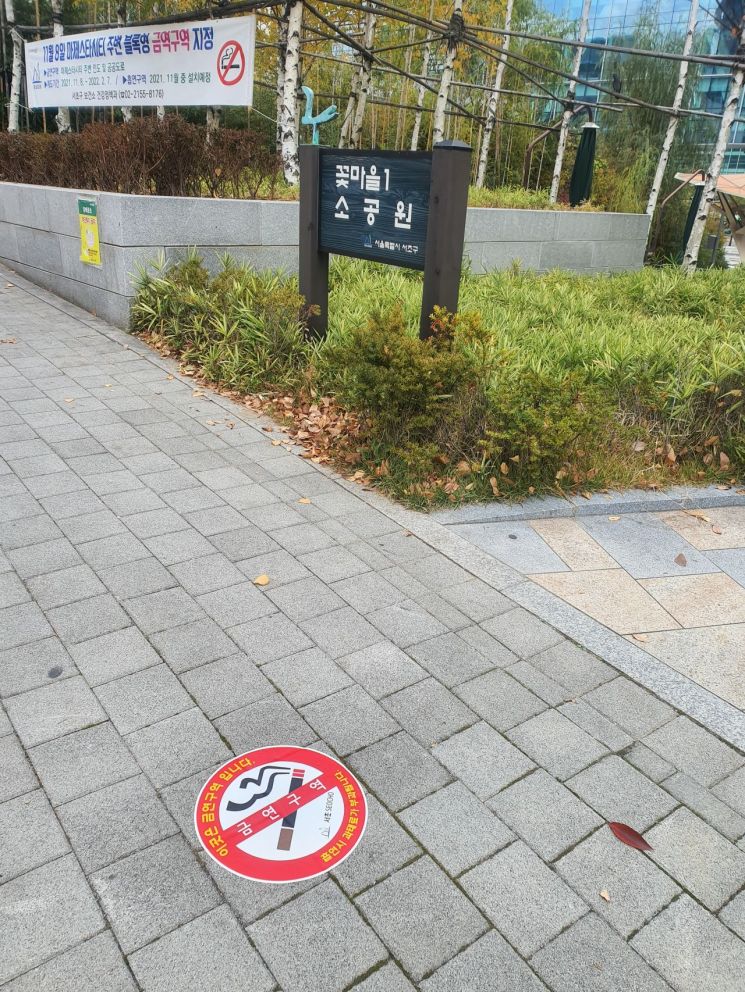
Seocho-gu designated the entire area around Majesta City, a large-scale mixed-use complex located opposite Seocho Station and the Supreme Court, as a block-type non-smoking zone as of November 8.
The newly designated non-smoking zone covers all roads and sidewalks around Majesta City in Seocho-dong, with a length of 430 meters and an area of 4,000㎡.
This is the second block-type non-smoking zone following the designation of Seoripul Culture Square opposite the Supreme Court as the first phase in April 2019. With this, the total length of non-smoking roads and sidewalks around Majesta City is 650 meters, covering an area of 8,500㎡, making it a large-scale ‘block-type non-smoking zone.’
The district plans to conduct a three-month guidance period starting from the 8th and will begin strict enforcement against smokers in the non-smoking zone from February 8 next year, imposing a fine of 50,000 KRW for violations.
Majesta City is a large mixed-use complex with two office buildings and two apartment buildings on a total site area of 15,957㎡. It has a high floating population and is near Seoripul Culture Square, which houses a toy library, picture book library, and Seocho Maternal and Child Health Center, areas where complaints about secondhand smoke have been frequent.
Before designating the non-smoking zone, the district conducted a survey from the 1st to the 22nd of last month targeting 1,705 people, including store and office workers and local residents around Majesta City. 85.4% of respondents supported the designation, gaining strong resident support.
Along with this, the district installed a non-face-to-face smoking booth near the designated non-smoking zone. To prevent the spread of cigarette smoke and odor inside the booth, a ventilation system will be installed soon.
Last April, the district designated Bangbae Overpass Road as the nation’s first block-type non-smoking zone, and in November, designated the entire public road in Yangjae-dong as a non-smoking zone, currently conducting focused guidance.
Choi Young-geun, Director of the Health Policy Division, said, “We will continue to promote smoking cessation and guide smoking areas to create a smoke-free Seocho, doing our best to protect the health of residents and nearby workers through focused guidance.”
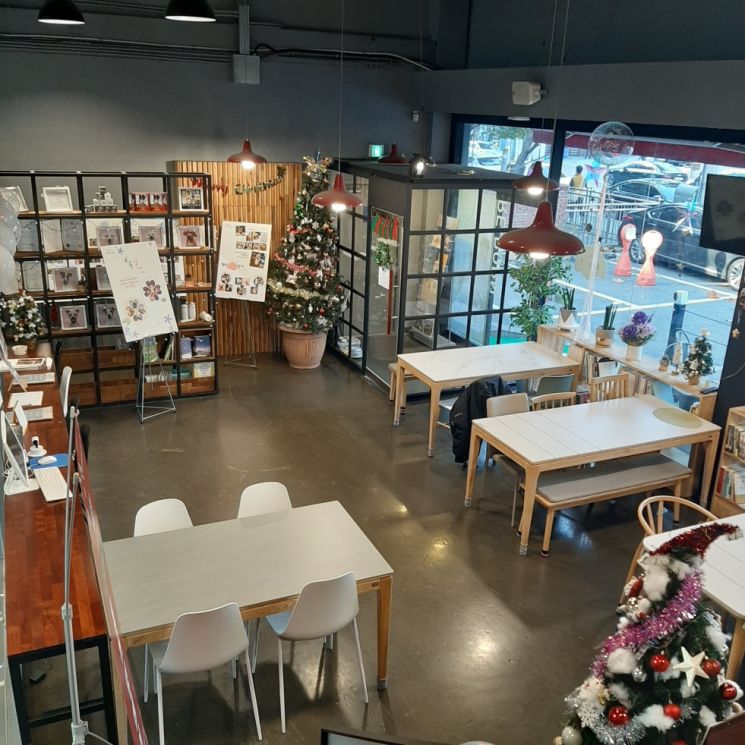
Gangdong-gu (Mayor Lee Jung-hoon) will hold the ‘Adoptive Family Homecoming Day’ from November 24 to December 25 to celebrate the 4th anniversary of the opening of the abandoned animal adoption center ‘Reborn’ (Yangjae-daero 81-gil 73).
‘Adoptive Family Homecoming Day’ is a cultural event for adoptive families held annually since 2019 on the center’s anniversary to maintain continuous communication and aftercare with families who adopted companion animals from Gangdong-gu.
This event is supported by partner organizations such as ‘Bridgetail,’ ‘Komangse,’ ‘JY Lab,’ and ‘Vans Studio,’ companies related to companion animals, and will feature various programs for adoptive families of abandoned dogs, including ▲adopted animal photo exhibitions ▲family memory photo shoots ▲Christmas tree decorations ▲problem behavior correction counseling ▲distribution of hometown visit support items.
Mayor Lee Jung-hoon said, “We prepared this cultural event to express our gratitude to residents who adopted abandoned animals in our district. We hope adoptive families create happy and joyful memories with their companion animals at the center, becoming complete families.”
The abandoned animal adoption center ‘Reborn’ was the first animal welfare facility established by a local government in 2017 to improve awareness of abandoned animals and promote adoption. To date, it has protected precious lives by adopting out or returning about 500 abandoned animals to their original owners.
For more details about the ‘Adoptive Family Homecoming Day,’ visit the abandoned animal adoption center ‘Reborn’ website or inquire by phone.
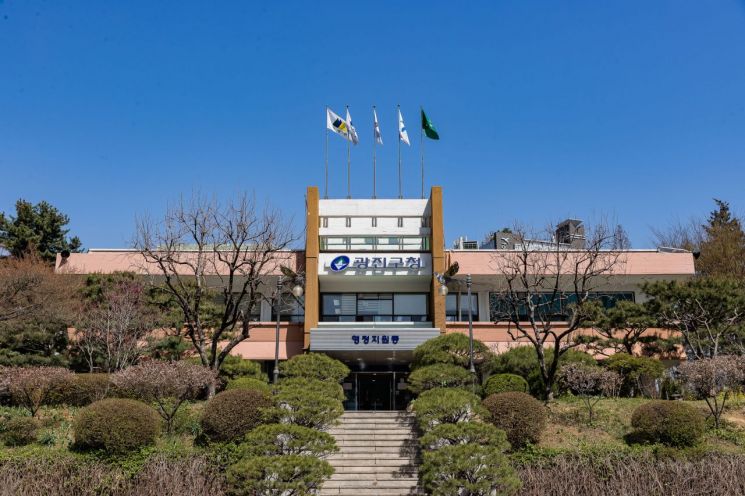
Gwangjin-gu (Mayor Kim Sun-gap) will promote the 2022 first half public work project to support employment-vulnerable groups affected by the prolonged COVID-19 pandemic.
The recruitment target is residents aged 18 or older with work ability who are unemployed or daily workers without regular income, whose combined assets of the applicant, spouse, and family do not exceed 300 million KRW. Eligibility will be confirmed based on household income and employment support status.
The recruitment fields include 45 projects in four areas: ▲digital jobs ▲public service support ▲environmental maintenance ▲safety management projects.
Specifically, projects include ▲computer input of sewer network maps ▲monitoring of back roads ▲assistance with dementia screening programs ▲inspection of illegal filming in safe restrooms ▲collection of trash along rivers and roadsides ▲children’s safety management in school zones, among others.
A total of 248 people will be recruited, divided into 182 for general projects (aged 18 or older) and 66 for senior projects (aged 65 or older).
Working conditions are from January 10 to June 30, 2022, five days a week, three to four hours a day, with a minimum wage of 9,160 KRW per hour, including weekly holiday and annual leave allowances and four major insurances.
Residents wishing to participate can apply by visiting their local community center by November 30.
The district increased the number of recruits by 10 compared to last year and adjusted the hourly wage from 8,720 KRW last year to 9,160 KRW in 2022 according to the minimum wage.
Mayor Kim Sun-gap said, “We are promoting the public work project to support residents going through difficult times due to COVID-19. We will prepare various policies to provide practical help for residents’ livelihoods.”
Nowon-gu (Mayor Oh Seung-rok) selected and announced the ‘Top 10 News of Nowon-gu in 2021’ that supported residents’ lives.
The survey was conducted on the district website from the 11th to the 18th, where residents voted by selecting five out of 30 major policies and projects promoted during the 7th local government term. Despite the short eight-day voting period, a total of 10,640 people participated, showing strong interest.
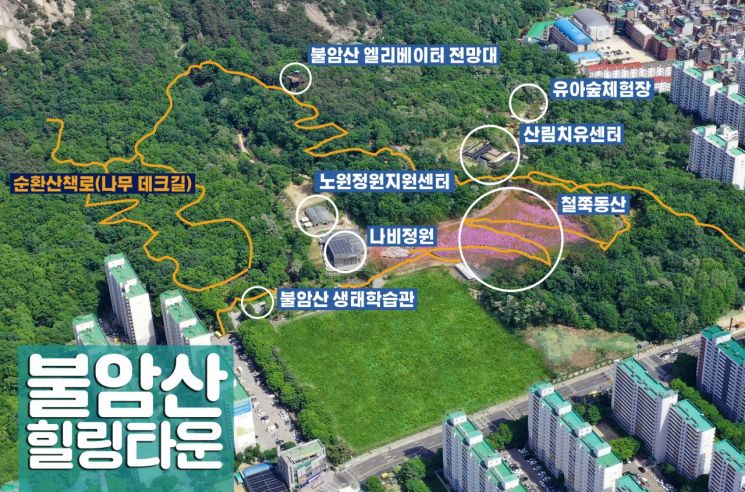
The top news chosen by residents was ‘Creation of Bulamsan Healing Town,’ receiving 4,295 votes (40.4%). The survey showed that residents preferred healing-related projects the most.
These include ▲‘Butterfly Garden’ and ‘Ecological Learning Center’ where butterflies can be observed year-round ▲‘Garden Support Center’ with a greenhouse cafe, companion plant hospital, and children’s cypress grass ▲‘Azalea Hill’ dyed red with 100,000 azaleas in April and May ▲‘Forest Healing Center’ offering foot baths, tea therapy, and five-sense healing ▲‘Forest playground for children’ ▲a 2.1 km circular walking trail and elevator observatory for the disabled and elderly, loved by all ages. Along with Bulamsan’s natural environment, facility and content improvements from the user’s perspective have made it a healing destination attracting residents and visitors from various regions.
Next, ‘GTX-C Line (Uijeongbu~Kwangwoon University~Samseong Station~Suwon Nowon) Construction Confirmed’ ranked second with 3,564 votes (33.5%). When the metropolitan area express railway GTX C line opens in 2027, it will take about 10 minutes from Kwangwoon University Station to Gangnam Samsung Station and about 30 minutes to Suwon, bringing a revolutionary transportation change. Residents expect Wolgye-dong to become a new center of the northeastern metropolitan area in transportation, economy, and residential environment through the GTX-C line opening and Kwangwoon University Station area development.
Third place was ‘Promotion of Relaxed Safety Diagnosis Standards for Old Apartment Reconstruction,’ with 3,185 votes (29.9%). Nowon-gu has the most reconstruction safety diagnosis target apartments in Seoul, with 39 sites and about 59,000 households. However, recent stricter safety diagnosis standards have hindered reconstruction. The district is actively supporting local reconstruction projects by conducting its own research to develop grounds and reasonable guidelines for relaxing safety diagnosis standards to resolve housing environment deterioration and resident inconvenience caused by reconstruction delays.
Fourth place, also a healing-related facility, was ‘Creation of Gyeongchun Line Healing Town,’ with 2,662 votes (25.0%). It is a local attraction combining the serene scenery of the old Hwarangdae Station, Seoul’s last simple station, with a modern healing theme, loved by residents. It features Seoul’s first nighttime light garden, the unique themed cafe ‘Scenery with a Train,’ and the ‘Time Museum’ exhibiting rare clocks from around the world, adding depth to leisure experiences. Recently, the ‘2021 Gyeongchun Line Forest Autumn Concert’ was held again after two years on November 11, delivering unforgettable emotions.
Fifth place was the establishment of various educational infrastructures in Nowon, an educational special zone, including the popularization of mathematics through the Mathematics Culture Center, the opening of the first children-only theater in the northeastern area, and operation of the Nowon Education Platform, receiving 2,472 votes (23.2%).
Other daily life projects that added small happiness to residents’ lives also received great responses: ▲6th place, support for installing air conditioners in hot security offices and mediation of security guard dismissal ▲7th place, installation of shade shelters at crosswalks, heated seats at bus stops, and LED floor signals ▲8th place, distribution of masks to all residents as a COVID-19 response ▲9th place, winning first place in the 2021 Seoul City Urban Cleanliness Evaluation as the cleanest city ▲10th place, operation of the Nowon Smart Care Team for elderly living alone.
Mayor Oh Seung-rok said, “This survey is meaningful as projects aligned with the district’s goal to make Nowon a healing city received deep interest and love from residents. We will carefully manage both field administration that does not miss even small but certain happiness in residents’ daily lives and long-term tasks to proactively prepare for Nowon’s future.”
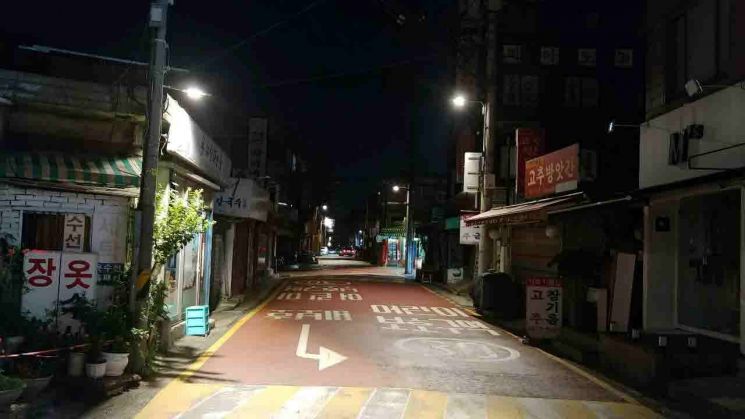
Guro-gu (Mayor Lee Sung) will install ‘Smart Security Lights’ mainly in safety-vulnerable areas.
On the 24th, Guro-gu announced, “We plan to complete the installation of ‘Smart Security Lights’ by early next year so that single-person households can live without fear of crime.”
The target area is about 350 locations in Guro 2-dong (Gamasan-ro 12-gil 20 to Gurodong-ro 7-gil 54), where small households including single-person households are densely populated.
‘Smart Security Lights’ are LED security lights equipped with IoT (Internet of Things) beacons based on near-field communication, linked with Seoul’s ‘Ansim-i App’ to provide residents with a safe nighttime walking environment.
In emergencies, app users can shake their smartphones to connect to the ‘Emergency Report’ function of the Ansim-i App, immediately notifying the Guro Integrated Operation Center and the local police station. Also, flashing ‘Smart Security Lights’ allow police and nearby pedestrians to quickly identify the location of the danger.
A Guro-gu official said, “We expect the Smart Security Light project to alleviate residents’ anxiety when walking through alleys late at night. We will do our best to make Guro a safe place where residents can live with peace of mind.”
In addition, Guro-gu operates ‘Safe Village Security Guards’ patrolling single-person household dense areas at night (9 p.m. to 2:30 a.m. the next day) and runs the ‘Safe Return Scout’ project to assist safe returns for women and youth around seven subway stations including Guro Station and Sindorim Station.
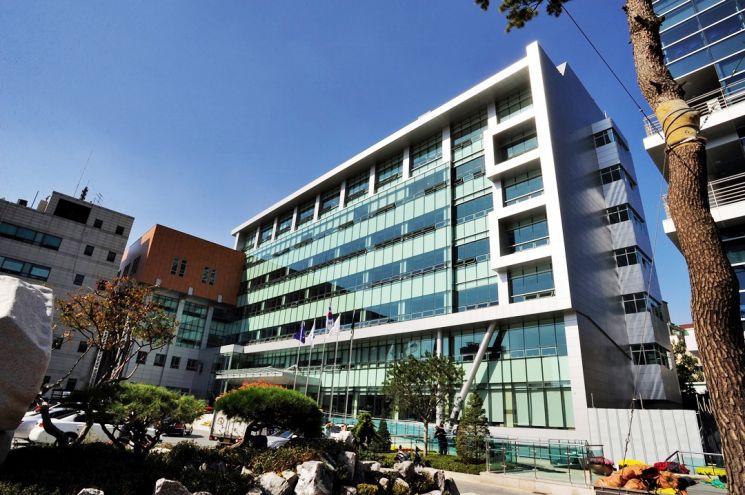
Eunpyeong-gu (Mayor Kim Mi-kyung) announced that it will recruit participants for the ‘2022 Disabled Employment Project’ to expand social participation and income security for people with disabilities until December 3.
The recruitment target is a total of 86 people in the general job category: ▲60 full-time workers working 40 hours per week for five days ▲26 part-time workers working 20 hours per week for five days. After the first document screening for eligibility, final selection will be made through a second job competency interview.
Selected participants will work for one year from January to December next year. They will be assigned to the district office, community centers, social welfare facilities, and organizations to perform administrative assistance, environmental maintenance, welfare service support, and guidance and enforcement of disabled parking zones.
Applicants must be registered unemployed disabled persons aged 18 or older. However, those participating in job projects promoted by government ministries or local governments, those with business registration certificates or unique number certificates, and those insured under workplace health insurance are excluded.
Applications can be submitted by visiting the Eunpyeong-gu Office Disability Welfare Division with required documents. Application forms can be downloaded from the recruitment announcement board on the Eunpyeong-gu website. For inquiries, contact the Disability Welfare Division of Eunpyeong-gu Office.
Mayor Kim Mi-kyung said, “I hope this employment project helps disabled people facing difficulties in finding jobs to expand social participation and secure income. We will continue to do our best to prepare employment policies for people with disabilities.”
© The Asia Business Daily(www.asiae.co.kr). All rights reserved.

![Clutching a Stolen Dior Bag, Saying "I Hate Being Poor but Real"... The Grotesque Con of a "Human Knockoff" [Slate]](https://cwcontent.asiae.co.kr/asiaresize/183/2026021902243444107_1771435474.jpg)

















