"Estimated Release of Over 30 to 35 Million Barrels"
International Oil Prices Rebound Amid Possible OPEC+ Production Adjustment
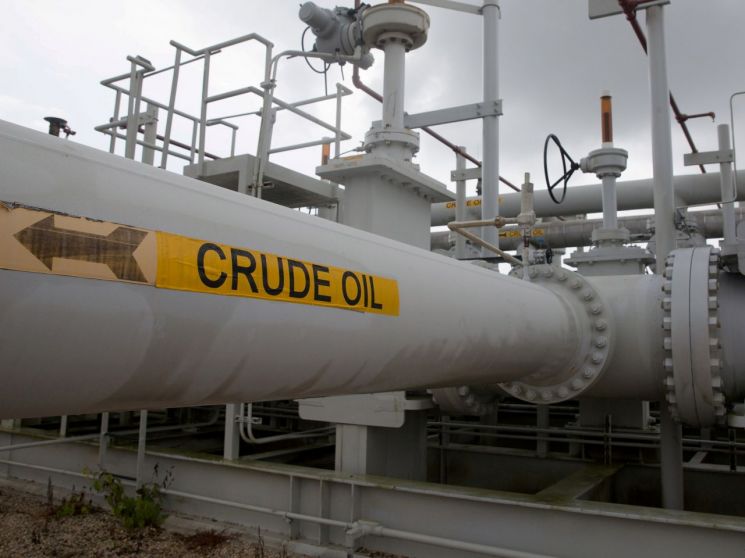
[Asia Economy Reporter Hyunwoo Lee] As the U.S. government is reportedly about to announce a plan to release Strategic Petroleum Reserves (SPR) to stabilize international oil prices, a power struggle between major oil-consuming and producing countries surrounding the oil market is showing signs of intensifying. The major oil-producing group OPEC Plus (+) reacted against this by suggesting a reduction in production increases, causing international oil prices to rebound. Some also raise the possibility that oil prices could plunge due to decreased demand as COVID-19 spreads again, especially in Europe, and countries resume lockdown measures.
On the 22nd (local time), Bloomberg News cited U.S. government sources saying, "President Joe Biden may announce the SPR release plan as early as the 23rd," adding, "South Korea, China, Japan, and India are likely to join the SPR release, with a release volume of over 30 to 35 million barrels under consideration." Earlier, the White House announced that President Biden is scheduled to give an economic-related speech on the 23rd, addressing recent inflation conditions.
Following a virtual summit between President Biden and Chinese President Xi Jinping on the 15th, it was reported that a request for cooperation in SPR release was made, leading to expectations that major oil-consuming countries would join the release plan. According to major foreign media, the Chinese government is already conducting reserve oil release operations. The South Korean and Japanese governments have stated that they will decide on releasing reserves after observing the movements of other countries responding to the U.S. request, while the Indian government is expected to announce specific measures after coordinating opinions with other countries.
The reason the U.S. government is planning an unusually large-scale SPR release in cooperation with major countries is interpreted as a measure to stabilize the sharply rising gasoline prices in the U.S. this year. According to CNBC, the American Automobile Association (AAA) reported that as of the 21st, the average price of regular unleaded gasoline across the U.S. was $3.41 per gallon (about 4,000 KRW), nearly a 70% increase from $2.01 in November last year.
In response to the SPR release plans by the U.S. and other major oil-consuming countries, OPEC+ is directly opposing by suggesting a possible reduction in production increases. According to the U.S. political media Politico, OPEC+ member countries plan to reduce the current monthly production increase of 400,000 barrels at the production adjustment meeting scheduled for the 2nd of next month if the U.S. SPR release becomes full-scale.
International oil prices closed higher amid the power struggle between the U.S. and OPEC+, with concerns that OPEC+’s production cut might be larger than expected. West Texas Intermediate (WTI) crude oil traded on the New York Mercantile Exchange (NYMEX) closed at $76.75 per barrel, up 1.06% from the previous session. Brent crude on the London ICE exchange also ended the day up 1.03% at $79.70.
Some predict that concerns over reduced oil demand due to the recent resurgence of COVID-19 in Europe could lead to further declines in oil prices. Craig Erlam, senior analyst at foreign exchange brokerage OANDA, said, "The number of confirmed cases in some European countries is worryingly high, and governments may want to follow Austria’s example by reinstating strict lockdown measures," adding, "If multiple countries tighten regulations together, international oil prices are likely to remain weak for several weeks due to demand reduction concerns."
© The Asia Business Daily(www.asiae.co.kr). All rights reserved.


















