Establishment of Shopee Korea in 2019... Opening Overseas Markets
Small Business Owners Reaching Worldwide on the Wave of Hallyu
E-commerce Expansion Due to COVID-19... Entry into Latin America
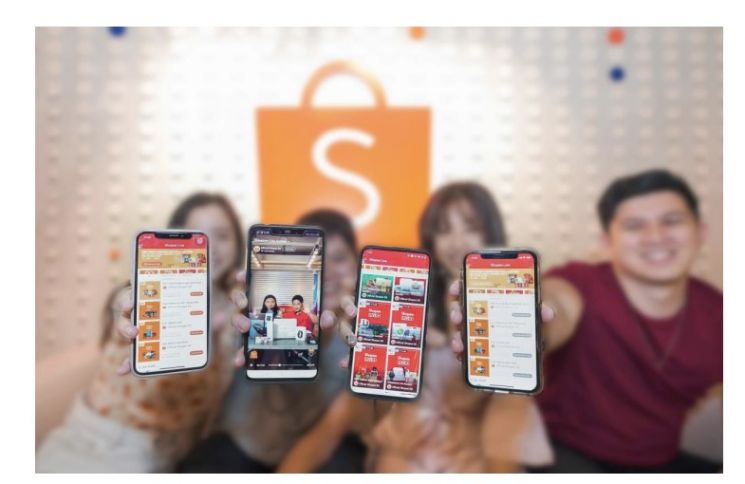
# Lee Chang-hyun, CEO of A-Market, started online sales as a side business and now generates annual sales exceeding 1 billion KRW. He sells a variety of Korean products, from health supplements to cosmetics, in Southeast Asian markets such as Singapore and Thailand. He utilized the global e-commerce platform Shopee. Lee said, "Compared to the domestic market, competition is relatively less intense, and thanks to the Korean Wave, Korean products have a good image in Southeast Asia, where we found greater opportunities."
# Yoon Jae-beom, CEO of Patir K-Shop, sells K-pop albums and merchandise online in six countries including Indonesia. Yoon, who visited Indonesia by chance in 2017, realized the strong local demand after receiving multiple requests to procure K-pop products and then fully launched his business. By resolving shipping costs and product reliability issues through Shopee, he achieved a tenfold sales growth within a year. He forecasted, "As more K-pop stars and content are introduced, the Korean Wave in Southeast Asia will continue."
Small business owners are not limited to the Korean domestic market. With the world connected via the internet, national borders are dissolving and online transactions are thriving. Overseas demand for Korean products is increasing due to the K-culture boom. Especially in Southeast Asia, Korean products are perceived as high quality, making business prospects bright. The e-commerce platform Shopee is taking the lead in helping small businesses explore overseas markets in partnership with government agencies such as KOTRA.
"Reducing Small Business Fees and Logistics Costs"
Established in Singapore in 2015, Shopee is the largest e-commerce platform in Southeast Asia and Taiwan, serving a population of 600 million. Its parent company, Sea Group, is Southeast Asia’s largest IT company providing digital entertainment, e-commerce, and fintech services, and was listed on the New York Stock Exchange in 2017. Last year, Shopee’s total transaction volume reached approximately 40 trillion KRW with 2.8 billion transactions. In the first half of this year, transaction volume soared to 32 trillion KRW, with 2.5 billion transactions recorded.

Kwon Yoon-ah, head of Shopee Korea, joined Shopee in 2018 and worked in Singapore before taking the position of head of Shopee Korea when the branch was established in March 2019. In an interview with Asia Economy, Kwon said, "We have built a system that allows sellers to focus on sales as much as possible and lowered entry barriers. We reduced fees to about 3% and eased concerns about shipping and customs with convenient logistics services."
Shopee’s logistics service allows sellers to send ordered products to a domestic logistics center, which then handles overseas local delivery in a one-stop process. This reduces logistics costs and shortens delivery times. Since sellers only need to ship the ordered quantity, inventory management is also easier. A-Market, mentioned above, uses this service to manage logistics for less than 100,000 KRW per month.
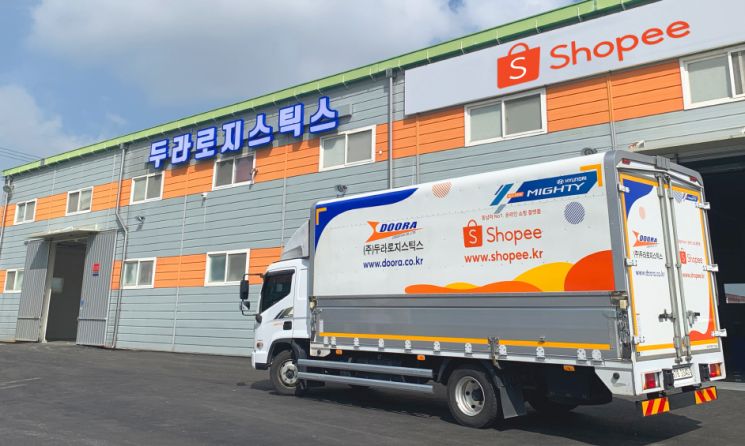
In September, Shopee Korea consolidated its logistics centers from Gimpo and Dongtan to a larger facility in Gimpo. The processing capacity increased 2.5 times compared to before, and automation equipment was introduced to speed up operations. With cost savings from this consolidation, the 'Shopee Pickup Service,' which transports products to the logistics center, will expand its service area by more than 20%. Additionally, Shopee Korea conducts overseas market entry training programs and various campaigns and promotions to maximize exposure of Korean sellers’ products.
Riding the Non-Face-to-Face Trade and Korean Wave... Targeting the Latin American Market
The COVID-19 pandemic and the Korean Wave have become opportunities for Shopee sellers. Kwon said, "Due to lockdowns and movement restrictions in Southeast Asia caused by COVID-19, the importance of e-commerce has increased." More Southeast Asians, from young to middle-aged and from urban to rural areas, have started using e-commerce. Kwon also noted, "Shopee headquarters even signed K-pop artists as official promotional models," adding, "Korean brands and products are naturally gaining promotional effects and steadily growing."
Shopee Korea launched logistics services to Brazil in April and expanded its Latin American online market reach to Mexico in September. Shopee Brazil, in particular, has rapidly grown to become the most downloaded shopping app locally within two years of its launch. This presents an opportunity for Korean sellers to expand their sales channels. Kwon said, "The Korean Wave’s influence is strong in Latin America as well," noting that K-pop planned products such as idol albums and merchandise are receiving positive responses. According to Spotify, K-pop listenership in Brazil grows by 47% annually, ranking fifth among 92 countries worldwide in K-pop consumption.
Meanwhile, Shopee has introduced various social features such as live commerce and games within its app to increase consumer engagement time. Sellers and customers can communicate in real time via live broadcasts and chat, and users can earn Shopee coins and brand-sponsored products as rewards by playing games. There is also a section where users can show off or share products they purchased with their followers. Kwon said, "We plan to launch a Shopee Seller Operation Center in Korean in the first half of next year," expressing hope that it will help small business owners hesitant about overseas expansion due to language barriers.
© The Asia Business Daily(www.asiae.co.kr). All rights reserved.
![Clutching a Stolen Dior Bag, Saying "I Hate Being Poor but Real"... The Grotesque Con of a "Human Knockoff" [Slate]](https://cwcontent.asiae.co.kr/asiaresize/183/2026021902243444107_1771435474.jpg)


















